
What was the hardest thing about quitting my job at Google?
Advice for those who are afraid of leaping into the unknown
In my previous blog post, I told you about how and why I left my position as Google’s Chief Decision Scientist after almost 10 years of service. This blog post is part 2, where I’ll get into the hardest thing about quitting.
What was the hardest thing about quitting Google?
Sure, the actual logistics were annoying. Being in the groove of a ten year gig means most of the little details are taken care of. You’ve got your team all specialized for what everyone is good at and you have plenty of space to think about the big ideas that interest you. When you leave, you discover all the tiny chores and paperwork in the universe. It’s all forms, forms, forms. (Which is why also I threw in moving house across state lines to keep things amusing.) But for me, the two hardest things about quitting were:
- losing my work identity
- information asymmetry
I’ll get into information asymmetry in my next blog post, but let me start by telling you about the inevitable identity crisis that hits when you leave a job you’ve devoted a large chunk of your life to. In my case, I spent almost 10 years at Google.

Spoiler: You’ll probably be more okay than you think
For anyone who quits a job they’ve been in for a long time, I have all the empathy for you. The identity crisis is real… and people won’t even wait until day 2 to ask what’s next for you. But now that I’ve been through it, I can report that these feelings have dissipated quite quickly (at least for me).
Losing my corporate identity: Whoooo are yoooou?
A social ritual I detest is “So, what do you do?” as the opening gambit for small talk*, especially when it’s pronounced so it sounds like, “Who are you? But make yourself easy to categorize.” (Or, worse, “Flex for me so I know if you’re worth my time.” Ugh.) It’s only small talk when the answer is straightforward, and even then, not always.
We spend large chunks of our lives working, so job and identity get pretty intermingled for most people. For all of my adult life, I’ve been under the aegis — in the career sense — of recognizable corporate or academic brands. That’s why, despite being a total weirdo, I had the option to make elevator-pitch-sense not just to strangers but also to myself.
I’d never experienced losing that option, so as much as I’d love to throw all my weight behind the “it doesn’t matter what other people think” slogan, I honestly had no idea what it would be like to be just me. One friend warned that loss of purpose is easy to fall into. (Hello, depression?) Another friend who left a long career described wanting to flee from strangers because talking to them was like having the caterpillar from Wonderland sitting on your shoulders all day. “But whoooo are yoooou?”
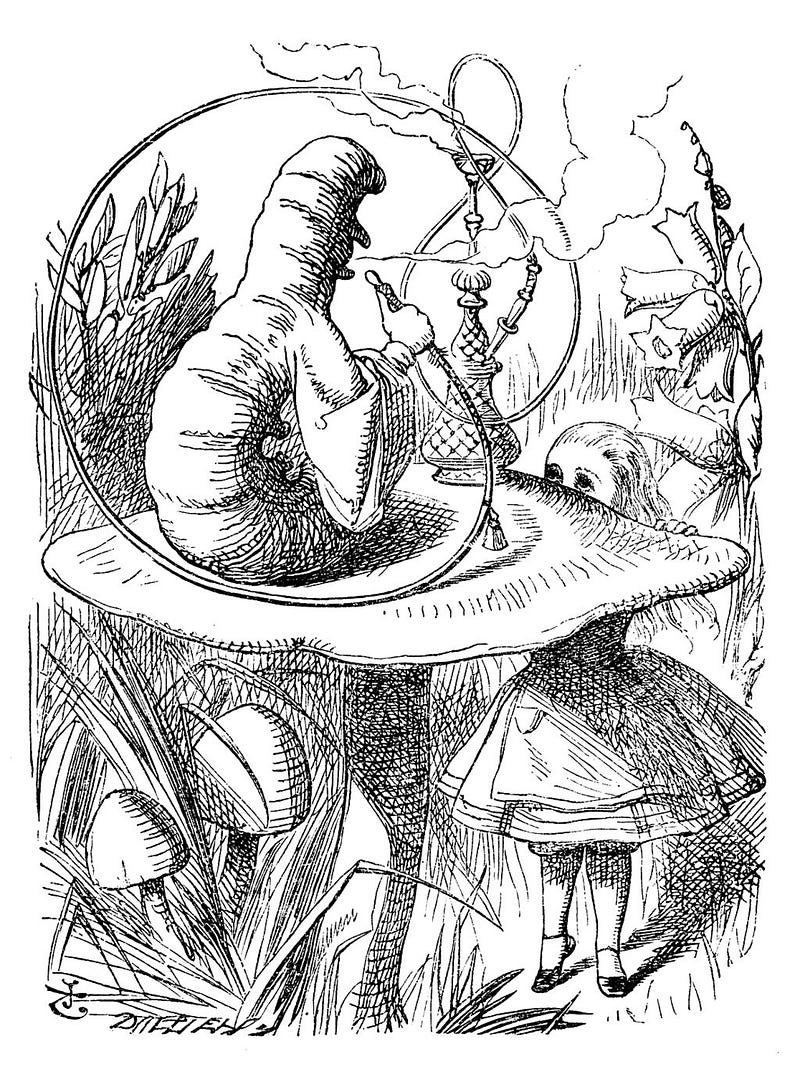
Do they love me for me? Which doors will close?
Less emotionally and more practically, there’s the uncertainty of whether your professional network loves you for you… or for your affiliation. Do people ask for your opinion because your ideas are good or because your employer’s name gives you gravitas? Are those doors opening for you or for your title? Which ones will close when it’s just you?
Even though my decision to quit my job was one I committed to more than 10 years ago, the choice to leave without a pre-decorated niche to jump into is an entirely different matter. Who I would be without my team, my title, my colleagues? Having something else lined up is a great bandaid: identity-in-box. It’s your plug-and-play way past having to face a lot of the questions that haunt your gloomier moments.

My work life felt so intertwined with Google that it felt like leaving a long marriage. This is something I have a spot of experience with, sadly, but I didn’t realize how similar those two situations are until I got to live through both of them. Do those friends love me for me or were they only my ex’s friends? What if all the open doors I’ve come to rely on are suddenly closed to me? What do I do now that I’m master of all my time? Who the hell am I when I’m on my own? It’s no mystery why people like having a sure thing lined up before leaving.
But, for what it’s worth, whether it’s a career or a relationship you’re leaving to go solo, you’ll probably be more okay than you realize.
New adventures will find you
New adventures find you if you just tell people that you’re open to them.
The world is a lot bigger than the jobs, roles, professions, companies that we tend to think of. We get caught in the trap of forgetting that there’s more out there than the few big ones we hear about all the time, triggering availability bias** and leading us to overestimate their share of activity. The world is teeming with things to get involved with, and no matter how bad the headlines get, there are always people trying to get things done who’re lamenting just how hard it is to find good people to work with. You’d be surprised what you can participate in.
A bonus aspect of giving yourself permission to be unaffiliated — whether we’re talking about employment or romance here — is that you’ll spend more time on activities that are authentically you, which means that the people you’ll bump into along the way are more likely to be on your wavelength. You won’t need to contort your lifestyle to others’ whims quite as much as if you try to make it work with something (or someone?) you applied to online. You do have to give yourself the time and space to encounter them, though, which takes courage.
How it’s going a few weeks later
In the few weeks I’ve spent being a genie released from my lamp, I’ve managed to try all kinds of fun things, from helping a sports hardware company rethink its strategy to finally launching a new course on Decision Intelligence (free if you have a LinkedIn account) to advising members of more than one parliament to being part of a French documentary. I even got the push I needed to get started on a book: if you arrange my favorite nonfiction books in piles according to which literary agent midwifed them into existence, you’ll notice two especially big piles. Both of those two legendary literary agents found their way into my inbox this month, so I guess I’ll be writing that book on decision leadership after all. (No self-respecting agent would let me pass up the opportunity to invite those of you who may be interested in an early copy of my book to put your names here: https://bit.ly/cassiebookinterest.)
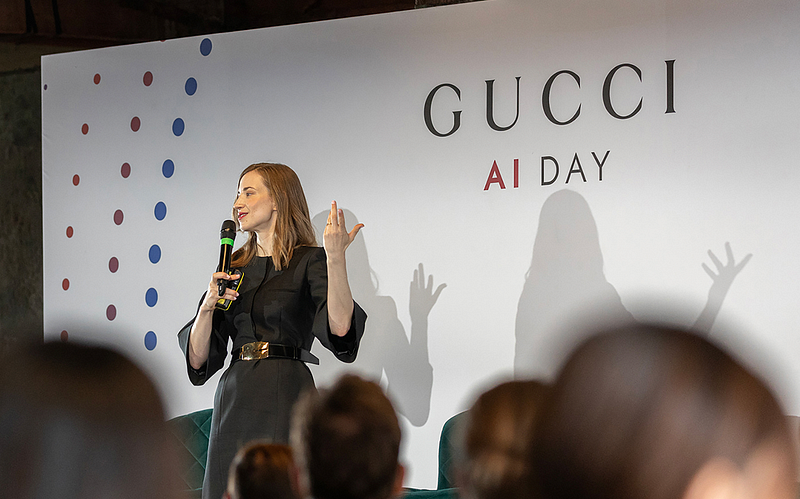
My favorite moments came from leaning into my public speaking, which I’m now able to pursue as an independent professional speaker. Though I didn’t do any advertising beyond putting up a little online request form (the creatively URL’d makecassietalk.com, go figure), requests have been trickling in steadily. I was even invited to speak at Gucci for Milan Fashion Week and attend their runway show, which put me within spitting distance of celebs like Anna Wintour. (I didn’t spit.)

Even with the amount of practice I’ve put into being world class at what I do, I’m only human. We all have our wobbly moments. I’ll admit to being relieved to confirm that people wanted me, not Google.
And then, in a surprise twist, my ex-employer invited me back for a day in my capacity as a free agent. So, last week, I spoke at Google. And yes, I can confirm that a month is enough for nostalgia to creep in; my favorite snack does taste different when it comes from a Google microkitchen as opposed to a 7-Eleven.
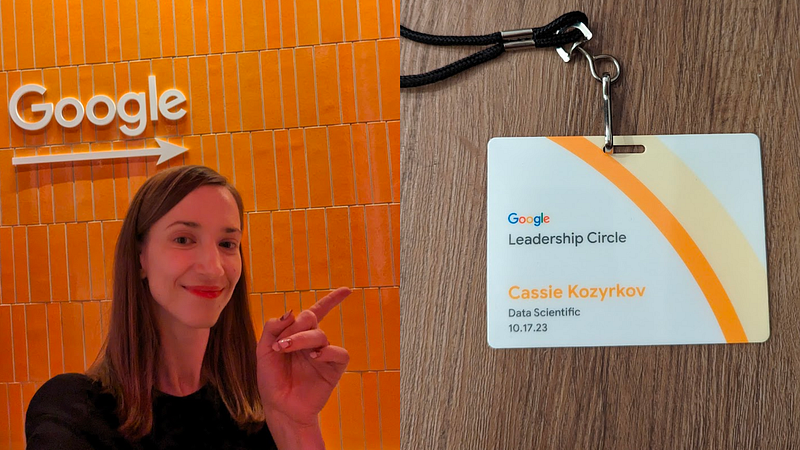
I’ve had the honor of listening to and learning from every organization I’ve spoken at, in industries from life insurance to investment and real estate. As an independent, I now get the inside scoop in ways that no one would have trusted me with when I was a representative of a large organization. I’ve been seeing hope, glory, success, and failure around AI adoption and data strategy. I’ve also been attending conferences to spend even more time getting immersed in the zeitgeist. What everyone seems to agree on is that technology at scale is hard and has always been hard. But you’d be impressed by the creativity, resilience, and willingness to be part of a huge technological revolution I’ve seen in most of the leaders I’ve spoken with. Ariely’s classic big data quote stands to be repurposed:
Implementing GenAI at scale in the enterprise is like teenage sex: everyone talks about it, nobody really knows how to do it, everyone thinks everyone else is doing it, so everyone claims they are doing it…
Not many companies or leaders feel confident they have a handle on it. Using ChatGPT to write a birthday poem is a world of difference away from having an enterprise AI strategy. These days, senior executives are wading through so much nonsense messaging about AI. Organizations with no business opening a Global Head of AI position are getting so desperate to have things simplified for them that they’re trying to hire their way out of their confusion. I’m feeling pretty inspired to soothe that pain and will be creating some in-person workshops for leaders to help them out so they can skip panic-hiring and get some straight-talk about what the industry is dealing with, what they can expect, and how they should approach AI without hurting themselves. (If that’s a workshop your organization needs, you can get in touch with my speaking manager here.)
I had some vague notions of being bored after quitting, but instead I’ve been awash with ideas. On top of everything else, I’ve started designing a decision tech product in stealth mode. I’m toying with the idea of founding a startup, which I appreciate is a path not for the fainthearted. As a good boss and a good leader, particularly in the early days, kindness and duty mean that you’re going to ask more of yourself than you’ll ask of anybody else. You’ll feel it in the bags under your eyes, your stiff joints, and your aching back. But people do say it’s tremendously rewarding. So, will I go for it? Won’t I? I guess I’ll have to leave you with that cliffhanger.
Despite so many things to keep me busy, I’m still wobbly when faced with people’s insistence on an elevator pitch that makes sense for their frame of reference. But here’s what I’ve learned from the experience: sometimes you don’t have one, and that’s okay. The constant choosing between glibness and authenticity takes a toll, but life is an adventure, and it’s okay to go it alone for a bit, even if people are deeply surprised when you answer “Where are you going to go next?” or “Who are you working for?” with…
“Well, just me.”
Part 3
If you’re keen to join me for a discussion of my other hardest thing about quitting (the information asymmetry problem) continue to part 3 here.
Footnotes
*Small talk
My favorite small talk question is, “What’s a skill you have that you’re weirdly good at but will never make money from?” Mine is getting cats to like me. I’m weirdly good at cats because when I was growing up in South Africa, my mom kept 15 rehabilitated feral cats at home. See? Plenty to keep small-talking about in there. Go ahead and drop your unmonetizable skill in the comments and see if you make some friends, or at least spark some conversation.

**Availability bias
Availability bias is a cognitive bias that causes us to rely on immediate examples that come to mind when evaluating the importance or probability of something. One example is how gory news headlines (easy to visualize and remember) lead to us overestimating how dangerous the world is. Availability bias is a symptom of imperfect human memory: the easier it is to recall examples of something, the greater we perceive its importance or probability to be. This puts us on a fast track to flawed decisions and judgments.


#/media/File:Alice_05a-1116x1492.jpg)