avatarSal

Free AI web copilot to create summaries, insights and extended knowledge, download it at here

3166

Abstract

ehicles per year.</p><p id="139f">However, these grand goals were seldom fulfilled. The <a href="https://www.historyanswers.co.uk/history-of-war/porsche-the-nazis-how-the-supercar-king-became-fascisms-favourite-engineer/">brochure for the car read</a>,</p><blockquote id="1872"><p>“Car must be suitable not only for personal use but also for transport and particular military purposes.”</p></blockquote><p id="452c">These subtle references to military purposes were given for a reason.</p><h1 id="47a7">The Misplaced Priorities of the Nazi Regime</h1><figure id="d035"><img src="https://cdn-images-1.readmedium.com/v2/resize:fit:800/0*IEQBjFt5ZuxB4QfZ.jpg"><figcaption>1945 Volkswagen “Beetles” | Photo Credits: <a href="https://1.bp.blogspot.com/-QUNJPtTP0L0/XZJrc7NmvrI/AAAAAAAARq4/QOfYUJM81JYWgA1ywJ5yAFMsRcpj-5qvgCLcBGAsYHQ/s1600/Building_Beetles%2B%25282%2529.jpg">Rare Historical Photos</a></figcaption></figure><p id="148b">During a Nazi rally, <a href="https://www.history.com/this-day-in-history/volkswagen-is-founded">Hitler said</a>,</p><blockquote id="ca1b"><p>“It is for the broad masses that this car has been built. Its purpose is to answer their transportation needs, and it is intended to give them joy.”</p></blockquote><p id="1873">In the era where only one in fifty Germans could afford a car, the Volkwagen was priced at 999 German Reichsmark.</p><p id="c625">The affordability of Volkswagen was intended to be its selling point. At the time, most Germans were using bicycles for transport.</p><p id="26f3">The Porshe program also offered a savings plan to reduce this dependence on bikes to make the vehicle more accessible. The weekly payment for this plan was to be no more than five marks.</p><p id="7ce3">The intention was that every German citizen, regardless of profession, could own a Volkswagen.</p><p id="bc52">However, the car’s usage made it apparent that it was intended for the German army instead of the initial claims of being a people’s car.</p><p id="681e">After the war ended, the car was <a href="https://jalopnik.com/the-real-story-behind-the-nazis-and-volkswagen-1733943186">renamed “<i>Beetle</i>” and was rebranded</a>. In 1939, World War II halted the production of Volkswagen.</p><p id="746e">The war left the factory in shambles; several people who had signed up for the savings plan did not receive their cars. Ever since it was established, the factory suffered from a lack of workforce.</p><h1 id="df15">The Atrocities Committed by Volkswagen</h1><p id="ee9b">Volkswagen <a href="https://encyclopedia.ushmm.org/content/en/article/volkswagen-1">employed forced labor during the war.</a> This labor consisted of Soviet prisoners of war, Jews residing in concentration camps, and migrant workers. Volkswagen has repeatedly come under scrutiny for its inhumane treatment.</p><p id="617f"><a href="https://www.volkswagenag.com/presence/konzern/documents/history/englisch/Katalog_Erinnerungsst%C3%A4tte_EN.pdf">According to reports</a>, a VW plant engineer selected 300 skilled workers from Auschwitz.</p><p id="4991">The Volkswagen factory used four concentration camps and eight forced-labor camps. By 1944, the factory

Options

had 4,800 “<i>eastern</i>” workers.</p><p id="2402">Approximately half of these workers were women, some of whom arrived pregnant when deployed. These women were treated in a manner that made the Nazi regime’s racial discrimination quite apparent.</p><p id="503f">The workers from the east were denied all liberties and basic amenities. For example, women harvesting autumn crops were not provided with essential winter clothing.</p><p id="f68f">Several women had to walk long distances barefoot in icy winter. Volkswagen also employed children of the “<i>eastern</i>” workers.</p><h1 id="2b51">The Future</h1><figure id="1bdb"><img src="https://cdn-images-1.readmedium.com/v2/resize:fit:800/0*C50aYCR3O6u5veui.jpg"><figcaption>Photo Credits: <a href="https://www.chicagotribune.com/resizer/zObEXUe49nz4Z7fGiwmLuw5gO0M=/1200x0/top/arc-anglerfish-arc2-prod-tronc.s3.amazonaws.com/public/UM4D2G3L7BBB5P2GFTA5HTBAFA.jpg">Chicago Tribune</a></figcaption></figure><p id="d592">After the war, allies attempted to revive Volkswagen to stabilize the German economy. Initially, the <a href="https://www.jstor.org/stable/3117336">sales were lower</a> since people associated the vehicle with the Nazi regime.</p><p id="ca77">The car was marketed as advantageous to consumers due to its compact size. The sales improved, and by 1960, the German government sold 60 percent of the company’s stock.</p><p id="7ad2">The company was effectively denationalized. In the next twelve years, the Beetle surpassed the record of selling 15 million cars.</p><p id="1494">As trends changed, the exterior of the vehicle was tweaked. These alterations assisted in increased sales.</p><div id="38e0" class="link-block"> <a href="https://sal.medium.com/membership"> <div> <div> <h2>Join Medium with my referral link - Sal</h2> <div><h3>As a Medium member, a portion of your membership fee goes to writers you read, and you get full access to every story…</h3></div> <div><p>sal.medium.com</p></div> </div> <div> <div style="background-image: url(https://miro.readmedium.com/v2/resize:fit:320/0*MxJD6oLH45A14Owb)"></div> </div> </div> </a> </div><h1 id="c3d5">References</h1><blockquote id="a872"><p><a href="https://www.jstor.org/stable/2638318">https://www.jstor.org/stable/2638318</a></p></blockquote><blockquote id="397a"><p><a href="https://repository.upenn.edu/cgi/viewcontent.cgi?article=1018&amp;context=hist_honors">https://repository.upenn.edu/cgi/viewcontent.cgi?article=1018&amp;context=hist_honors</a></p></blockquote><blockquote id="e7de"><p><a href="https://www.belfasttelegraph.co.uk/imported/hitler-the-holocaust-the-beetle-and-de-lorean-28091636.html">https://www.belfasttelegraph.co.uk/imported/hitler-the-holocaust-the-beetle-and-de-lorean-28091636.html</a></p></blockquote><blockquote id="f469"><p><a href="https://www.ndtv.com/world-news/nazi-past-overshadows-genius-of-porsche-554818">https://www.ndtv.com/world-news/nazi-past-overshadows-genius-of-porsche-554818</a></p></blockquote></article></body>

What Was Hitler’s Vision of a Dream Car?

Why did the Nazis need a People’s car?
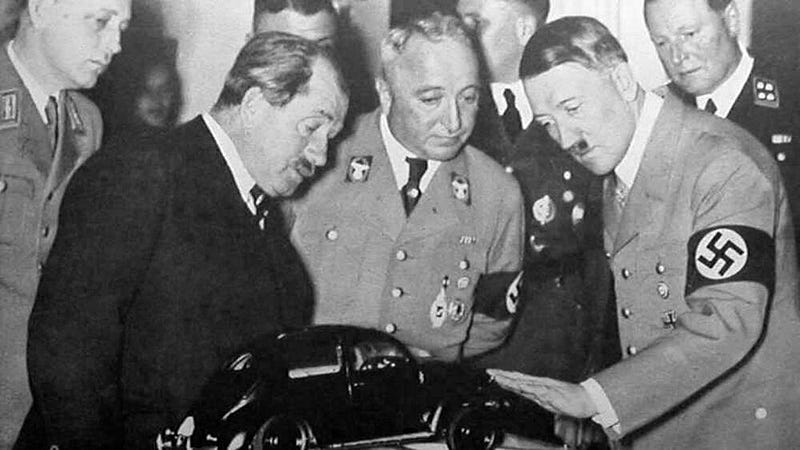
Ferdinand Porsche and Hitler | Photo Credits: Wiwo

Adolf Hitler wanted to build a “People’s car” that could be mass-produced with the German government’s assistance. He wanted this car to be fuel-efficient enough to carry two adults and three children across German highways.

Hitler wanted this car to be synonymous with the Nazi regime as other nations had their signature cars.

For instance, America owned Ford, Buick, and Chrysler. In his pursuit, Hitler joined hands with Ferdinand Porsche.

Ferdinand was his time’s most entrepreneurial engineer and was also a prominent member of the Nazi party.

Hitler’s Dream of Motorization

Nazi Germany’s key policies revolved around attempts at strengthening the economy. Hitler envisioned a network of highways brimming with cars owned by Germans.

Although Hitler himself did not have a driving license, nor did he know how to drive. Since a young age, Hitler had been fascinated with the motor industry.

One of Hitler’s early heroes was Henry Ford, the man behind Model T production.

During his imprisonment in 1924, Hitler read an article titled “Motorization of Germany.” This Article inspired Hitler, and he hoped to be the man behind Germany’s Model T. Richard Evans, in his book The Third Reich in Power, writes about Hitler’s aspirations. He writes,

“by the early 1930s, he was drawing rough sketches of a small family vehicle that would sell for less than a thousand Reichsmarks and so be within reach of the vast majority of the population.”
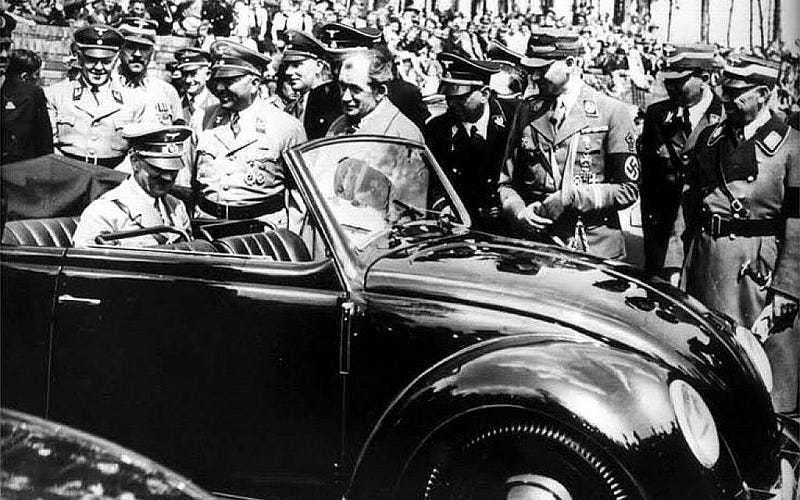
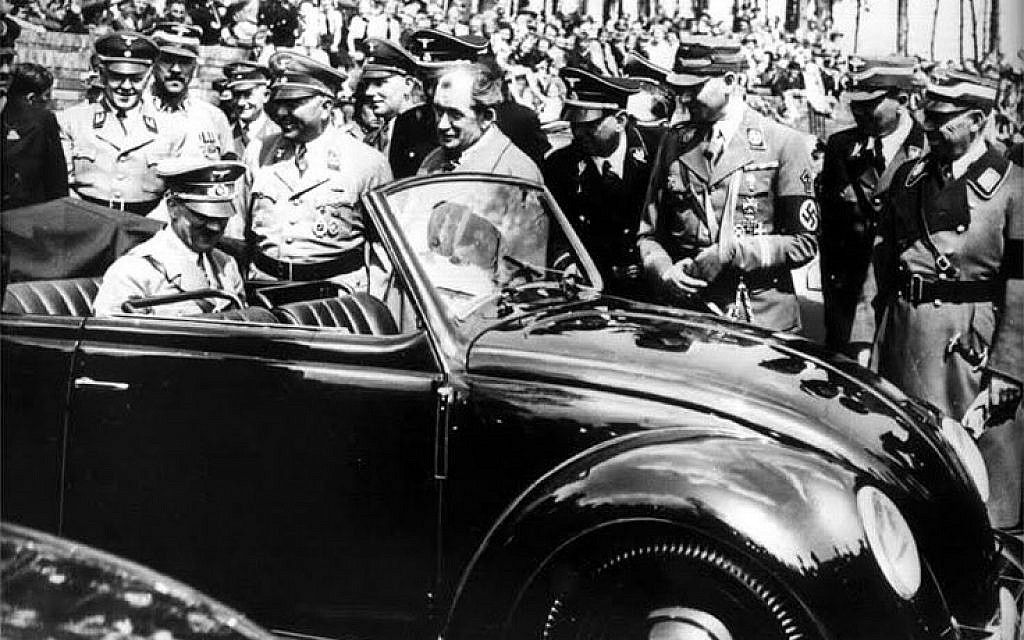
Photo Credits: The Times of Israel

The Reich Association of the German Automobile Industry reached out to Porsche in 1934.

The Association tasked Porsche with manufacturing a car that could encapsulate their motto, “strength through pleasure.” This motto was associated with the Nazi Organization designated for Leisure Activities. This mantra aimed to emphasize the advantages of National Socialism by combining it with leisure and travel.

In 1935, Hitler approved the prototype of the new car. In 1938, the Volkswagen factory was established in Wolfsburg. It was expected that the factory would produce 1.5 million vehicles per year.

However, these grand goals were seldom fulfilled. The brochure for the car read,

“Car must be suitable not only for personal use but also for transport and particular military purposes.”

These subtle references to military purposes were given for a reason.

The Misplaced Priorities of the Nazi Regime
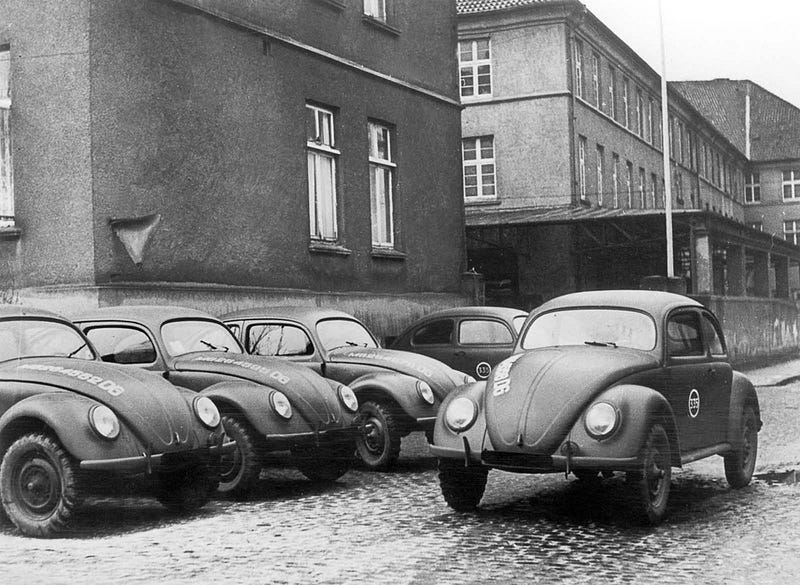
1945 Volkswagen “Beetles” | Photo Credits: Rare Historical Photos

During a Nazi rally, Hitler said,

“It is for the broad masses that this car has been built. Its purpose is to answer their transportation needs, and it is intended to give them joy.”

In the era where only one in fifty Germans could afford a car, the Volkwagen was priced at 999 German Reichsmark.

The affordability of Volkswagen was intended to be its selling point. At the time, most Germans were using bicycles for transport.

The Porshe program also offered a savings plan to reduce this dependence on bikes to make the vehicle more accessible. The weekly payment for this plan was to be no more than five marks.

The intention was that every German citizen, regardless of profession, could own a Volkswagen.

However, the car’s usage made it apparent that it was intended for the German army instead of the initial claims of being a people’s car.

After the war ended, the car was renamed “Beetle” and was rebranded. In 1939, World War II halted the production of Volkswagen.

The war left the factory in shambles; several people who had signed up for the savings plan did not receive their cars. Ever since it was established, the factory suffered from a lack of workforce.

The Atrocities Committed by Volkswagen

Volkswagen employed forced labor during the war. This labor consisted of Soviet prisoners of war, Jews residing in concentration camps, and migrant workers. Volkswagen has repeatedly come under scrutiny for its inhumane treatment.

According to reports, a VW plant engineer selected 300 skilled workers from Auschwitz.

The Volkswagen factory used four concentration camps and eight forced-labor camps. By 1944, the factory had 4,800 “eastern” workers.

Approximately half of these workers were women, some of whom arrived pregnant when deployed. These women were treated in a manner that made the Nazi regime’s racial discrimination quite apparent.

The workers from the east were denied all liberties and basic amenities. For example, women harvesting autumn crops were not provided with essential winter clothing.

Several women had to walk long distances barefoot in icy winter. Volkswagen also employed children of the “eastern” workers.

The Future
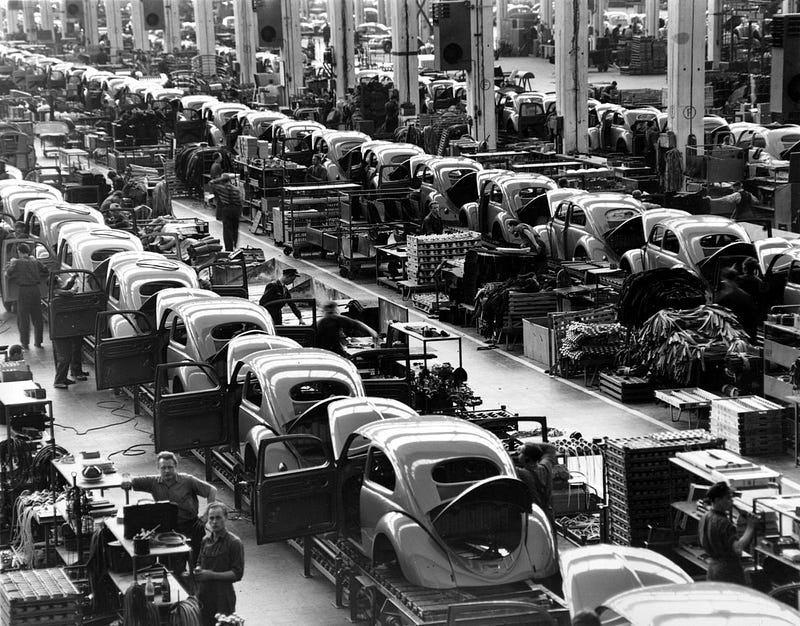
Photo Credits: Chicago Tribune

After the war, allies attempted to revive Volkswagen to stabilize the German economy. Initially, the sales were lower since people associated the vehicle with the Nazi regime.

The car was marketed as advantageous to consumers due to its compact size. The sales improved, and by 1960, the German government sold 60 percent of the company’s stock.

The company was effectively denationalized. In the next twelve years, the Beetle surpassed the record of selling 15 million cars.

As trends changed, the exterior of the vehicle was tweaked. These alterations assisted in increased sales.

References

https://www.jstor.org/stable/2638318

https://repository.upenn.edu/cgi/viewcontent.cgi?article=1018&context=hist_honors

https://www.belfasttelegraph.co.uk/imported/hitler-the-holocaust-the-beetle-and-de-lorean-28091636.html

https://www.ndtv.com/world-news/nazi-past-overshadows-genius-of-porsche-554818

History
Cars
Automotive
Hitler
Nazis
Recommended from ReadMedium