
Philosophy
What Was Descartes’ Method?
It wasn’t doubt.
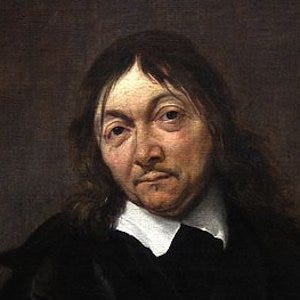
French philosopher René Descartes (1596–1650) is one of the few philosophers who is a household name. He is best known for the most famous quote in philosophy: “I think, therefore I am.” That quote, and that his most famous book is titled Meditations, have created the impression of Descartes as a kind of dreamy thinker detached from the world. This understandable conception is not true.
The real Descartes was thoroughly grounded in the world and the history of scholarship. His concerns were eminently practical, centered on how we can better understand science and mathematics the better to comprehend the world in which we live. Descartes claimed to have found a method of guiding his reason that was highly effective in helping him make significant discoveries in his scientific research. His method, and the philosophical conclusions to which his method led him, were immediately influential and remain so even today.
Descartes’ method is often described as a method of doubt. Part of his method is a willingness to doubt that which we take for granted, but in Descartes’ method, doubt is only a tool in service of a higher goal. His overarching purpose throughout all of his philosophy was to discover an ultimate truth — a certainty on which he could base all thought. His methodical philosophy was less a method of doubt than it was a method of avoiding error. To doubt methodically is different from a method of doubt. Descartes was not a true Skeptic because he believed that knowledge was possible. In fact, he believed that the human mind, when engaged in the proper method, is incapable of making an error of knowledge.
Descartes has two main assumptions: first, that there is objective truth that can be known; second, that every human is equally well endowed with reason and is capable of knowing the truth. Descartes believed that the essential nature of a human being is to be a rational animal. People have different opinions about the truth not because some people are better equipped with reason than others but because different people have varying degrees of success in applying their reason. Within all people is the power to know the truth; what people need is an effective method by which they can discipline their power of reason and guide it to success.
He proposes his method not as a set of rules that all must follow but as a description of the path he has followed in the hope that others might similarly profit from it. Descartes’ method is a plan for self-instruction, a do-it-yourself method for learning about the world. Descartes firmly believed that not only can individuals think for themselves but also that they should.
The Cartesian Method of Philosophy
Descartes marks a complete break from the classical-medieval focus on the letters of antiquity. He was raised in that Aristotelian-Thomist method of education and he roundly rejected it.
From my childhood, I have been familiar with letters; and as I was given to believe that by their help a clear and certain knowledge of all that is useful in life might be acquired, I was ardently desirous of instruction. But as soon as I had finished the entire course of study, at the close of which it is customary to be admitted into the order of the learned, I completely changed my opinion. For I found myself involved in so many doubts and errors, that I was convinced I had advanced no farther in all my attempts at learning, than the discovery at every turn of my own ignorance. (Discourse, I.4)
Leaving behind the staid education of his time, Descartes resolved to learn instead from “the great book of the world.” He decided to travel, choosing the odd method of in the 1620s serving in several armies in the Thirty Years’ War. He didn’t see much fighting; mostly he had time to think, of which he took full advantage. He wrote Rules for the Direction of the Mind sometime in those years, but the manuscript was only published in 1701, years after his death. He published in 1637 an expanded version of his ideas as Discourse on the Method of Rightly Conducting One’s Reason and of Seeking Truth, known by the shorthand, Discourse on Method. That book contained chapters on science and one on philosophy. He then published Meditations, a more lyrical version of the philosophical chapter in Discourse, in 1641. Also in 1637, he published Geometry, in which he set forth the principles of coordinate geometry and algebraic equations for circles and lines (like x + y = 5).
Descartes’ interest in geometry inspired his approach to science and philosophy. He saw the continuing disputations among philosophers of his time as accomplishing little more than increasing the level of doubt and confusion. He sought for all knowledge the certainty he found in mathematics and geometry. For example, if I ask you what one plus one equals, you instantly, automatically say, “Two.” You didn’t require any great reasoning to come up with the answer. You clearly and distinctly knew the answer. That is the type of knowledge Descartes is looking for.
To get to that level of clear and distinct knowledge about the world, Descartes sought to get past arguing over definitions to a more experiential form of cognitive understanding. Descartes’ revolution was to construct philosophy based not on any external authority but on the internal authority of the mind.
For since God has endowed each of us with some light of reason by which to distinguish truth from error, I could not have believed that I ought for a single moment to rest satisfied with the opinions of another, unless I had resolved to exercise my own judgment in examining these whenever I should be duly qualified for the task. (Discourse, III.5)
Because we have been born with the ability to reason, Descartes urges us to question and withhold assent to all external authorities and even the authorities of our own senses. Once we cast off all of our traditional authorities, we come to the point of accepting the only authority we can trust: our own mind. Our mind can find specific principles on which we can base further knowledge. Descartes believed that our mind is capable of finding and employing a method that makes it incorruptible to all manipulations of outsider sources.
In constructing his method, then, he saw it as more important than all else not to err, even if it meant advancing slowly.
But like one walking alone and in the dark, I resolved to proceed so slowly and with such circumspection, that if I did not advance far, I would at least guard against falling. I did not even choose to dismiss summarily any of the opinions that had crept into my belief without having been introduced by reason, but first of all took sufficient time carefully to satisfy myself of the general nature of the task I was setting myself, and ascertain the true method by which to arrive at the knowledge of whatever lay within the compass of my powers. (Discourse, II.5)
The true method must be disciplined, and its guiding principle must, of course, be reason. Nothing should be believed unless it is approved by reason. But on what should we base this rational discipline?
He considers the candidates that were traditionally given by the Scholastics as methods for knowing truth with certainty: logic, geometry, and algebra. He agrees that the true method should use the advantages of these three fields of learning. The advantages are their ability to construct, by means of deduction, knowledge of the truth. Through the operation of deductive reasoning, we can proceed from a self-evident axiom that is known to be certain and proceed step-by-careful-step to a new conclusion that is just as certain as our starting point.
The problem with logic, geometry, and algebra, though, is that they are insufficient in investigations of the unknown. Logic, Descartes says, is valuable mostly in the communication of what we already know (hello, William). Geometry and algebra, Descartes says, are so exclusively restricted to the consideration of figures, that they can exercise understanding only on condition of greatly fatiguing our ability to take in new concepts.
The type of learning Descartes is interested in is the discovery of new knowledge. Science is about exploring the unknown, venturing into uncharted territory to shine the light of reason and separate the true from the false. Descartes’ explorations in physics, anatomy, optics, and other hard sciences were to learn about the world and come to understand it. The numerous rules and formulas of geometry and algebra, while valuable to a point, can also hamper the mental faculties and result in confusion and obscurity. In short, logic, geometry, and algebra can’t be the basis of a useful method by which we can learn about the world. Rather than the multitude of laws of logic, geometry, and algebra, Descartes said we should have a simple set of rational rules that can be rigidly applied.
Descartes’ Four Rules
To that end, Descartes proposes four rules that he has found perfectly sufficient in his scientific exploration. He sets down four short, simple rules with “the firm and unwavering resolution never in a single instance to fail in observing them.”
The first was never to accept anything for true which I did not clearly know to be such; that is to say, carefully to avoid precipitancy and prejudice, and to comprise nothing more in my judgement than what was presented to my mind so clearly and distinctly as to exclude all ground of doubt.
The second, to divide each of the difficulties under examination into as many parts as possible, and as might be necessary for its adequate solution.
The third, to conduct my thoughts in such order that, by commencing with objects the simplest and easiest to know, I might ascend by little and little, and, as it were, step by step, to the knowledge of the more complex; assigning in thought a certain order even to those objects which in their own nature do not stand in a relation of antecedence and sequence.
And the last, in every case to make enumerations so complete, and reviews so general, that I might be assured that nothing was omitted.
The long chains of simple and easy reasonings by means of which geometers are accustomed to reach the conclusions of their most difficult demonstrations, had led me to imagine that all things, to the knowledge of which man is competent, are mutually connected in the same way, and that there is nothing so far removed from us as to be beyond our reach, or so hidden that we cannot discover it. (Discourse, II.7–11)
What we should notice first about the method is its emphasis on self-discipline. We can summarize his rules as follows and see how the bottom line of each rule is to avoid precipitancy, meaning not rushing to judgment.
Rule one: “Never to accept anything for true which I did not clearly know to be such.” Avoid precipitancy and reserve judgement until we have all the facts.
Rule two: Break down whatever we are examining into manageable parts. Avoid the precipitancy of trying to solve the whole problem in one go.
Rule three: Start with the simplest and progress step-by-step through the complex. Avoid precipitancy by methodically gathering and building our knowledge and understanding from simple ideas to more complex ideas.
Rule four: “Make calculations throughout so complete that I might be assured that nothing was omitted.” Avoid precipitancy by never jumping ahead in the process. Progress cautiously and thoroughly, leaving no step unconcluded.
We must, Descartes teaches, continually rein in our reasoning. We are all prone to accept ideas as true without weighing all considerations. Often we are not even consciously aware of this. We accept things without due critical inquiry, and this leads us to error. Instead, we should not too easily accept quick judgments or surface definitions.
Descartes has complete confidence in this methodology because he has complete faith in the power of the human mind. He agrees with the claim that the will controls the intellect, following the views of such philosophers as Augustine and John Duns.
Whence, then, spring my errors? They arise from this cause alone, that I do not restrain the will, which is of much wider range than the understanding, within the same limits, but extend it even to things I do not understand, and as the will is of itself indifferent to such, it readily falls into error and sin by choosing the false in room of the true. (Meditations IV.9)
When our will runs ahead of our intellect — which is what he means by precipitancy — we fall into error. Descartes therefore sees controlling the will as the key to discovering truth. Like other philosophers before him and after him, Descartes believes we need to be devoted to reason and follow the dictates of reason. When we explore the world this way, we cannot go wrong. He says as much when he says that when he avoids precipitancy and follows the proper method of reasoning, it is quite impossible for him to go wrong. “As often as I so restrain my will within the limits of my knowledge, that it forms no judgment except regarding objects which are clearly and distinctly represented to it by the understanding, I can never be deceived.” (Meditations, IV.17) Rigorously following his four rules will make our minds incorruptible and immune to the manipulations and distractions of the world. Or so Descartes claims.
Descartes’ project is a method of science to discover all of the truths about the physical world. Descartes had an unbridled optimism about what science with the proper method could accomplish.
All things, to the knowledge of which man is competent, are mutually connected … there is nothing so far removed from us as to be beyond our reach, or so hidden that we cannot discover it, provided only we abstain from accepting the false for the true, and always preserve in our thoughts the order necessary for the deduction of one truth from another. (Discourse, II.19)
Descartes argued that our senses alone cannot lead us to knowledge about the world. Ours senses can be deceived and are not beyond doubt, so we need something more to gain knowledge. Descartes, having provided us with the four rules for directing our minds, gives us several thought experiments to demonstrate what applying the rules can do for us.