
What Veterans and Their Families Can Teach Us About the Agony and Power of Love
In the wake of 9/11, families heeded the call to service for their country as loved ones were sent to war. After the fall of Afghanistan, they continue to struggle to reconcile the moral costs and reconstitute their relationships.
Co-written with Rita Brock, Senior Vice President and Director of the Shay Moral Injury Center at Volunteers of America and co-author of Soul Repair: Recovering from Moral Injury After War (Beacon 2012).
Angelina is a mother of three. When the burning Twin Towers appeared on the news, she was spooning oatmeal into her baby daughter’s mouth while her four-year-old twins wrestled for possession of the television remote that lay on the rug.
“Give it to me!” Angelina yelled with an intensity that made the boys freeze. She snatched the remote, cranked up the volume, and stared in stunned silence as the second tower collapsed and its smoky plume ballooned into the crystalline sky like a nuclear mushroom cloud.
Over the subsequent horrifying hours of news, the desperate search for bodies, and the days of speculations about who was behind the attacks and how to avenge them, her thoughts inevitably turned to her brother, who was serving in the Marines. What she hadn’t expected was that her husband Mike would announce that he too wanted to enlist.
“His family has a tradition of going to war,” Angelina explained. “Actually, of joining wars when they get going. I don’t think he ever thought our generation would see a war. But when 9/11 happened, he said it was his turn. He wanted to defend his country.”
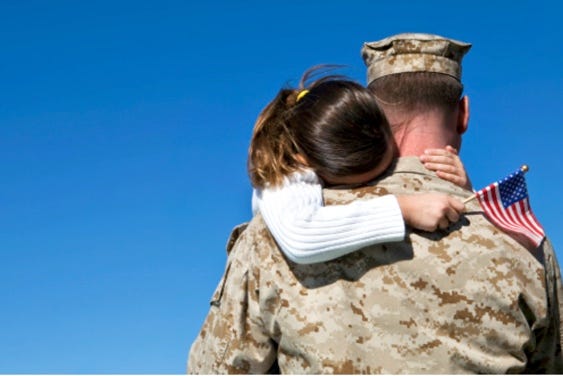
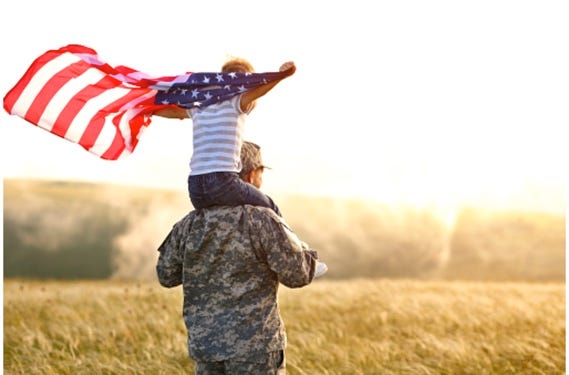
What military families know — or come to know all too soon — is that war is fought on more than one front. There is the armed fight for physical survival against enemy combatants, and there is the other struggle at home to keeping life going while a significant family member is absent and in danger. On Veterans Day we often forget this second front and neglect the fact that when a warfighter returns and starts to reintegrate into civilian life, that journey home can be as hard on the family as it is on the veteran.
What military families know — or come to know all too soon — is that war is fought on more than one front. There is the armed fight for physical survival against enemy combatants, and there is the other struggle at home to keeping life going while a significant family member is absent and in danger.
Like other military spouses, Angelina fought hard on the home front. The toll was vast: postponing her career plans to keep her household fully functioning; being a single parent as she oversaw the kids’ physical needs, education requirements, and psychosocial development; organizing vacations, birthdays, and major milestones; attending to the needs of Mike’s family and her own, with an ailing parent in a nursing home; delivering information to friends and loved ones about what was happening on the foreign front when Mike was either unable or too spent to write; managing her own chronic health condition while fighting bouts of depression; and finally, reconfiguring their lives when the news arrived that Mike was coming home with a devastating injury.
“Deployment isn’t a business trip,” Angelina said. “Our soldiers who went overseas didn’t go to some cushy hotel with a cocktail bar and lively chatter. They got dropped into a combat zone where life is fleeting and death is an inescapable fact. And those of us who stayed behind…not just spouses but also extended family…had to live with that uncertainty and somehow go on as ‘normal,’ trusting that our government would act in a way that supported the mission and upheld the values that we all were sacrificing for.”
Veterans and their families regard military service as the height of an honorable endeavor — which is why they do it and why generations in a single family serve. But after 20 years of the “war on terror” and the abrupt abandonment of Afghanistan, that sense of honor for many veterans has been replaced with moral injury. Prognostications from multiple generals and three presidents about shifting missions in two wars terminated where it began with the return of the Taliban, left many veterans and families feeling betrayed and wondering if all those years of hardship and sacrifice were wasted. During the two weeks of the evacuation in August, the VA suicide hotline received 35,000 calls, with over 500 more on August 14, the day Kabul fell.
Understanding moral injury
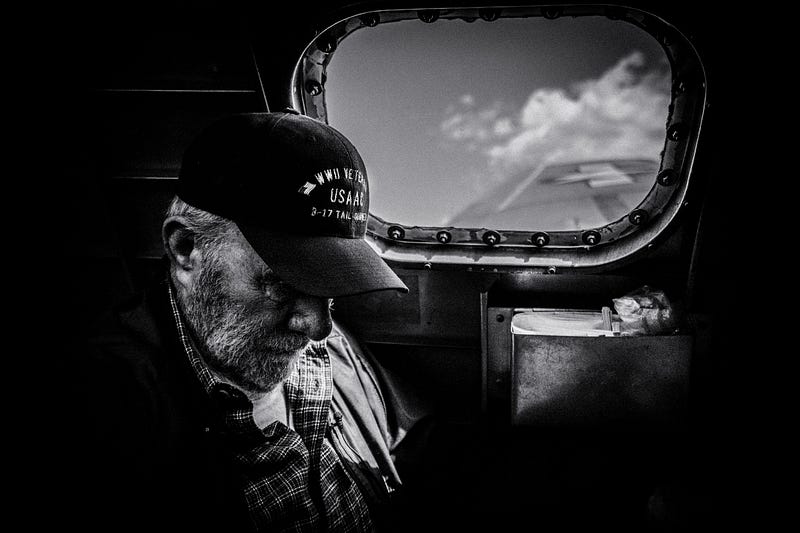
Moral injury happens when a person’s core moral foundations are violated in high stakes situations. This violation recasts the way people see themselves, others, and the world and causes changes in behavior that signal a loss of trust, self-worth, and meaning.
Moral injury happens when a person’s core moral foundations are violated in high stakes situations.
Our ability to trust and our sense of worth are built on the relational bond of love. By the time a military unit reaches a combat zone, enlistees will have been shaped by months of training to fight as a bonded unit. For many, their battle buddies are the deepest relationships of their lives, with members willing to die for each other. Many never get over losing a buddy in combat. When those deaths result from people in authority who should have done the right thing and did not, the fury, disgust, and despair at such a betrayal can be all-consuming. When the betrayal is by one’s own buddy, it can be that much more excruciating. Experts on military sexual assault, a profound breach of trust, estimated in 2014 that only 1.9% of men and 23.6% of women report the crime and that it is a significant factor in veteran suicides.
Betrayal is also related to elevated rates of posttraumatic stress disorder (PTSD), a fear-based response to physically life-threatening situations and terrifying experiences. Studies show that PTSD is higher in veterans who deployed. Studies also show that of the 2.7 million service people who served in Afghanistan and Iraq, roughly the same number who were diagnosed with PTSD (11% to 20%) were also coping with moral injury.
Moral injury is not only a response to the betrayals of others, but also the inner awareness that warfighters betrayed their own core moral expectations. That awareness results in feelings of guilt, shame, remorse, and grief, and often a judgment that they are so contaminated by evil, if people knew what they had done, no one would love them. Studies show that people who kill in war are twice as likely to kill themselves as other veterans and to be haunted by killing. As one veteran observed discussing his moral injury, “The first time I killed someone, I felt all kinds of terrible feelings. It really, really bothered me, but by my fifth kill, I began to feel energized about getting bad buys. I was good at it. It’s been years since I deployed, but I still feel this urge to want to kill evil people. It’s like a Dexter syndrome [a TV series about a vigilante serial murderer]. I seem okay, but inside I worry about how much I liked killing. I can’t figure out what to do with those feelings.”
People can also experience moral injury because of things they witnessed, things they were ordered to do against their will or better judgment, or things they couldn’t stop from happening. Regardless of the cause, veterans with moral injury have worse physical, mental, and spiritual health and elevated symptoms of PTSD and depression. For veterans already struggling with moral injury, whether it is self-imposed or imposed by others, an event like the withdrawal from Afghanistan can only compound it or send them into relapse from successful mental or physical treatment outcomes.
Yet, moral injury is still a relatively unknown concept, even among veterans themselves. It also tends to be seen as an individual problem that can be addressed using a medicalized model of mental health therapy. Unfortunately, this can lead to moral injury being mistaken for PTSD, with tragic consequences; moral injury often interferes with treatments for PTSD if it isn’t concurrently addressed.
Yet, moral injury is still a relatively unknown concept, even among veterans themselves.
While moral injury and PTSD have some overlapping symptoms, they are not the same. Unlike PTSD, moral injury is not a psychological disorder of the mind; rather, it is an existential suffering of the soul, or what some have called the “core-connected self”. The clash between a person’s conscience and overwhelming “edge” experiences, which uniquely defines moral injury, alienates them from life-sustaining relationships.
And therein lies one of the keys about understanding and healing from moral injury, not only for veterans but also for their families and loved ones: moral injury is the loss of a reliable meaning system that connects people to their world; it is, at its own heart, relational.
As a threat to love, moral injury affects the families of veterans as a secondary trauma, and they may also have their own moral injury from the strains of deployments. Veterans struggling to reintegrate into their families and settle into civilian life — which can seem alien and insipid compared to the intense bonds of a combat unit — discover what is often unacknowledged: their families have changed without them. As the changes in themselves and their loved ones and their memories of deployments sink in, which can take years, moral injury can be like a hidden infection that keeps festering in broken hearts until it becomes systemic, acute, and life-threatening to an entire family system.
The agony of love
Despite VA efforts to provide access to services that ease the transition to civilian life, many veterans still carry the invisible scars of war that make it difficult to relate to themselves or their families, friends, and communities. Not fitting in, not feeling normal, not feeling worthy or “clean,” they no longer share values, beliefs, and principles with people they love or with their fellow citizens. They distrust leaders and institutions while struggling to hold onto a sense of purpose and meaning, all of which casts them into “existential solitary confinement,” as Mike termed it.
Despite VA efforts to provide access to services that ease the transition to civilian life, many veterans still carry the invisible scars of war that make it difficult to relate to themselves or their families, friends, and communities.
Angelina said Mike withdrew into himself after the collapse of Afghanistan and erected the same barrier to intimacy with her as he had all those years before. His shutdown had once threatened their marriage; and now, after all that time and struggle to reemerge and reengage, it was faltering again.
“Mike would go to “the bleak place,” as we used to call it when he got back from deployment,” Angelina said. “He wouldn’t talk to anyone and when he did, it was only to yell.” Mike’s withdrawal had also created barriers between him and his children. “They made ‘safe shelters’ in their bedroom closets, the basement, or the woods outside our house, anywhere they could to escape his ‘bleakness.’ Finally, Mike and all of us had regained a sense of peace, with the help of some therapy, our faith community, and veteran support organizations, and the kids had taken their little shelters down. A few days ago, I saw our youngest child resurrecting hers. It broke my heart.”
In multi-generational families, one member’s moral injury can also be the catalyst for another generation’s suffering. Mike’s father is a Vietnam veteran. He had witnessed his son’s struggles on coming home, which paradoxically, made him feel both closer to and more distant from Mike. “I knew what he went through,” he said as he choked back tears. “Or at least I understood the weight he was carrying, because I carried my own. Looking at him when he came back from the Middle East and now with the withdrawal, it was like looking in the mirror. I wanted to pull him into my arms and say, ‘I get it, and I’m sorry you had to go through this,’ but to my shame, I couldn’t find the words or get close enough to try.”
In multi-generational families, one member’s moral injury can also be the catalyst for another generation’s suffering.
“I’ve gone to the bleak place too,” Mike’s father confessed. He was haunted by the similarities in Afghanistan to the images of throngs of Vietnamese people scaling the walls of the American embassy in 1975 out of desperation to get to a helicopter that would carry them to safety. For Mike and his father, the desperate Afghan people scaling walls, bounding down runways, and clinging to aircraft lifting off ripped the scabs off their invisible scars.
At a Sunday dinner with his parents, Mike and his father stood silent and distant outside at the grill, one flipping burgers, both drinking a beer. Out of nowhere Mike blurted, “Watching the Taliban bulldoze its way through city after city without any resistance was like watching them bulldoze Arlington cemetery.” His father, taken off guard, blurted, “And our own people burning the American flag so it can’t be used for propaganda by the Taliban … it made me sick.”
Angelina said she watched from the kitchen as the two men went back and forth, sharing their disgust, questioning their trust in all they had once believed in. Later they were able to share their thoughts with her and her mother-in-law.
“Nothing was solved,” Angelina said, “about the situation or how we all felt, but at least the conversation seemed to bring us out of that nothingness that was taking over the whole family.”
The power of love
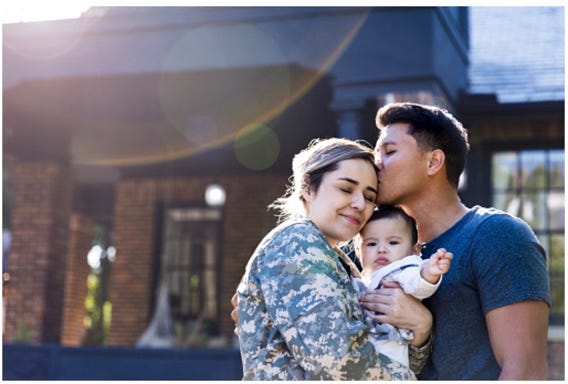
Moral values and the identities that sustain our relationships are the most important aspects of our lives; they constitute what is most sacred in us. Our sense that we are worth something and beloved by others lies at the core — the heart — of our relationships to them and the world. The violation of that worth — whether by our own actions or the actions of others — is an act of desecration. Healing hearts requires a holistic process of reconnection to self-worth and life-sustaining relationships.
Conscience is the indestructible core of our personal identity and our sense of agency in the world, and when it passes judgment against us, it generates inner conflict, i.e. moral injury. Its emotions are so powerful and destructive that facing them is akin to sitting in a consuming fire that threatens our very existence. Only when we can feel, acknowledge, and share our emotional pain with others by sitting in that fire, can we burn clean and rise from the ashes to find new meaning in life, like the fabled ancient Phoenix that emerges from its own ashes renewed. With moral injury, renewal means integrating our devastating experiences as sources of wisdom and guidance that enable us to maintain our relationships with ourselves, families, and communities — with the whole cosmos, really.
No one can rise from the ashes to build a new moral identity without relationships, without love. This means our society needs to invest more in supporting moral injury recovery in veterans by also supporting their families during and after deployments as they struggle to build family systems adequate to the challenges moral injury creates. After Mike and his father were finally able to share their feelings and connect, they were also able to share their conversation with their families, which was a major step in reknitting frayed relationships.
No one can rise from the ashes to build a new moral identity without relationships, without love.
Therein lies a paradox about veterans and families. Veterans may not share their moral injury experiences with their families out of concerns that they may contaminate them with their own terrible memories. They may fear they will be judged and rejected. They may also worry their anger will overtake them.
Their hesitations are not unwarranted. Stories of moral injury can be excruciating or disturbing to hear, and any sign of repulsion or judgment from those they love risks derailing the healing process. Many veterans will not even tell a therapist about their moral injury for fear of being diagnosed, evaluated, or condemned. Similarly, families may withhold their own feelings of moral injury out of concern of making things worse for the returning veteran.
Reconciling difficult truths, honoring pain, transforming ways of thinking and being, and restoring moral integrity require trustworthy people who can listen to moral suffering empathetically even when words may be lacking, and hearts are crushed. Trustworthy listeners enable the telling and retelling of moral injury experiences. And veterans are more likely to trust other veterans not to judge them and to understand their experiences and feelings. Peer specialist programs that train veterans to support other veterans can be especially effective as the first step toward healing, and such programs are growing. Military families could also use parallel peer specialist programs to help them negotiate their own suffering, which, as yet are far too few.
Reconciling difficult truths, honoring pain, transforming ways of thinking and being, and restoring moral integrity require trustworthy people who can listen to moral suffering empathetically even when words may be lacking, and hearts are crushed.
As moral injury is processed, it can be integrated into life stories that put moral injury into larger narratives of relationships. As the stories are told and evolve, sharing them becomes easier without traumatizing listeners. The sharing can then deepen bonds of love and open possibilities for a future worth living into together. This integrative relational process provides resources of resilience for everyone who has been burned by moral injury so they can move forward in life strengthened and renewed and better equipped for the challenges of life that are inevitable.
As society grapples with the legacy of war, a few things are certain:
- A morally injurious event or phenomenon may be experienced by one person, but moral injury affects everyone who loves that person, and recovery requires a response that does not place the burden of recovery on individuals.
- Moral injury must be addressed in our society, which has both a moral and fiduciary responsibility to keep our veterans and families as whole as possible.
- Moral injury is not a problem to be solved or a pathology to diagnose. It is a universal human struggle that is grounded in our conscience, calling out for renewed meaning and reconnection. Without healing, it will haunt us and all our relationships.
- As a country, we can do far more to lessen the impact of moral injury on everyone, and we might even discover ways to prevent it.
The attack on 9/11 that united much of the world and our nation inspired a generation of Americans to enlist in the military. Their love of country and our national unity have been squandered by controversial wars and entrenched political polarizations that have put our own democracy at risk, even as we failed to create it abroad. If we are to move forward, we must face not only the moral injury that our military families have endured, but also our national moral injury — the existential crisis of having used an attack upon our soil to launch interminable wars that have cost many lives, torn families apart, and left us with the growing internal threat of violence and insurrection from fellow citizens here in the U.S.
Just as we must support military veterans and families whose souls are frayed by the agony of moral injury, we also must reconstitute our nation’s conscience. That conscience may be arising out of the ashes of war in the response to the evacuation of Afghanistan, when over 70% of all Americans from all political parties and parts of the country supported admittance of the Afghan allies and their families to the U.S. Thousands of people have reached out to help them resettle. After 20 years of war, we may perhaps begin to turn a corner with our small but significant acts of recompense and humanity, of wanting to help…of learning what it means to love our neighbors as we struggle to save our democracy.
The Shay Moral Injury Center offers online opportunities several times a week for people struggling with moral distress and emotional exhaustion to spend an hour with others who care and want to connect. The groups are free and confidential, and there are groups for veterans facilitated by veterans who understand moral injury. Go to www.voa.org/ReST for information.
If you or a loved one is in crisis and in need urgent of help, reach out to these organizations:
Veterans Crisis Line: If you are having thoughts of suicide, call 1–800–273–8255, then press 1 or visit http://www.veteranscrisisline.net/. For emergency mental health care, you can also go directly to your local VA medical center 24/7 regardless of discharge status or enrollment in other VA care.
National Suicide Prevention Lifeline Call: 1–800–273–8255 Text Crisis Text Line: Text HELLO to 741741
Crisis counselors are available 24 hours a day, 7 days a week. If the situation is potentially life-threatening, call 911 or go to a hospital emergency room immediately.