
What Type Of Artificial Intelligence Enthusiast Are You?
Gauge where you rank on the AI enthusiast scale, based on common terminologies within the field of AI. How much of the listed terms do you know? Are you a Curious enthusiast or a Doer?
No one is a stranger to the terms of Artificial Intelligence or Machine Learning.
The general populous might associate AI and ML with Autonomous vehicles, robots, or drones.
Technical specialists relate the terms AI and ML to computer vision, natural language processing, object detection, and so on.
This article aims to provide some knowledge of conventional AI and ML terms used within the field. And at the same time, show what type of individuals will be aware of the terms listed.
Disclaimer: Do not use the content of this article to measure your expertise in the field of Artificial Intelligence. The outlined levels simply placed for engagement and entertainment purposes.
Here we go.
The Curious (Level 1)
The Curious has watched a few popular Sci-fi movies (IRobot, Ex-Machina) and can probably hold a decent conversation about common Artificial Intelligence.
The Curious has an opinion or two about the future of AI. They are prepared to have long discussions on the topic.
The Curious enthusiast is woke.
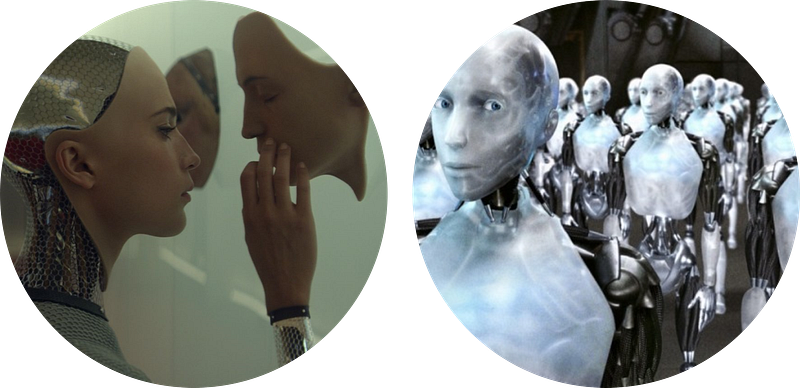
The Curious enthusiast knows the following terms below — how do you match up?
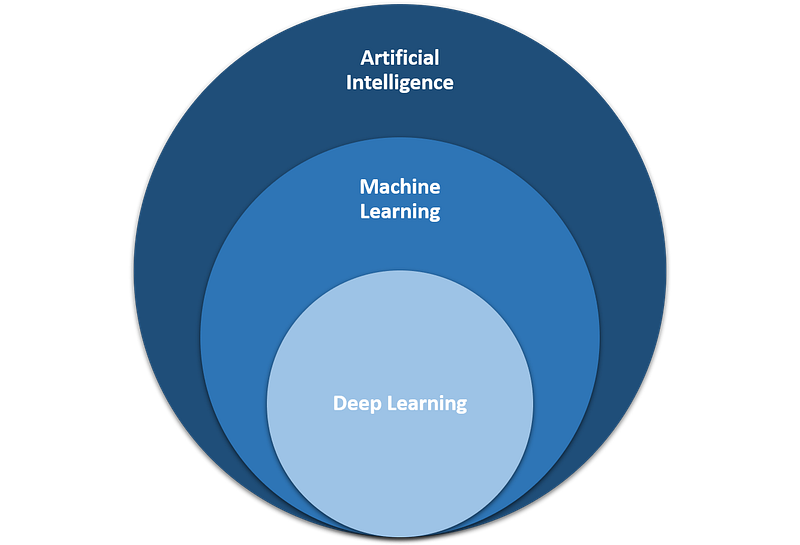
- Artificial Intelligence: This refers to human-like intelligence present in machines and programs. The term encapsulates the ability for machines to conduct and complete tasks reserved for human-level intelligence.
- Machine Learning: A subset of Artificial Intelligence. The process by which specialized programs derive knowledge from the patterns in training data presented. The knowledge the program gained is transferable to conducting inference on tasks related to the data the program trained on.
- Deep Learning: A subset of machine learning where algorithms leverage the utilization of several layers of neural networks to extract richer features from input data. Examples of Deep learning techniques are Convolution Neural Networks(CNN).
- Computer Vision: ‘How do computers see’. Computer vision involves working with digital images and videos to deduce some understanding of contents within these images and videos.
- Natural Language Processing: ‘How do computers understand us’. A specialized field focused on the implementation of language understanding paradigms and models within systems and programs to enable a concurrent machine to human interaction through language.
The Brave (Level 2)
The Brave don’t just read news articles and medium posts on Artificial Intelligence.
The Brave go deeper into the rabbit hole and explore the techniques that AI systems leverage to achieve specific tasks.
They’re considered brave because they are willing to dedicate an extended amount of time to the Artificial Intelligence field and its subfield. They are your academics, students and researchers.
The Brave enthuasist means business.
- Face Detection: A term given to the task of implementing systems that can automatically recognize and classify human faces in images and videos. Face detection is present in applications associated with facial recognition, photography, and motion capture.
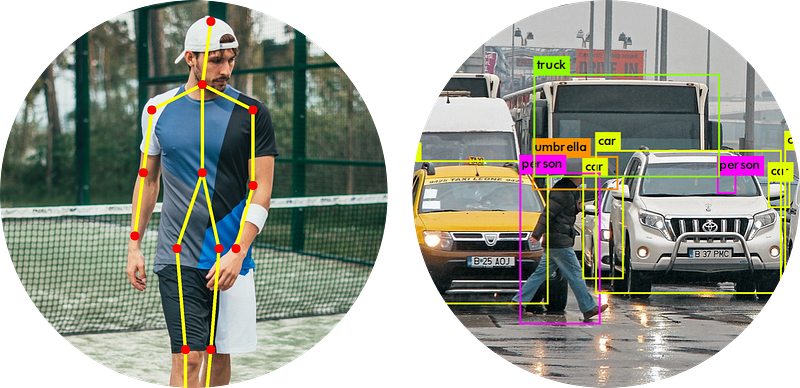
- Object Detection: Object detection as a computer vision task is defined as recognizing the presence of an object of interest from a specific class in images or sequential images (videos).
- Pose Estimation: The process of deducing the location of the main joints of a body from provided digital assets such as images, videos, or a sequence of images. Pose estimation is made possible through several computer vision techniques, forms of pose estimation are present in applications such as Action recognition, Human interactions, creation of assets for virtual reality and 3d graphics games, robotics and more
- Object Recognition: The process of identifying the class a target object is associated with. Object recognition and detection are techniques with similar results and implementation approaches, although the recognition process comes before the detection steps in various systems and algorithms.
- Motion Analysis: Motion analysis is the study of locomotion, movement, or trajectory of objects bodies.
- Motion Detection: Motion Detection is the process whereby an image containing a moving object is subject to image processing techniques that enable the tracking of motion through either differential methods or background segmentation. The moving part of the image(s) is extracted by discarding the motionless part of the image to obtain the moving part.
- Tracking: This is the method of identifying, detecting, and following an object of interest in a sequence of images or within a video over some time. Applications of tracking within systems are present in many surveillance cameras and traffic monitoring devices.
- Transfer Learning: Method of reusing knowledge gained from solving a problem and applying the knowledge gained to an associated but separate problem
The Doer (Level 3)
Not only does the doer know about embedded Machine learning techniques, but they also implement them.
The Doer is equipped with intermediate-level knowledge in at least two programming languages, adequate level mathematical skills, and some practical hardware knowledge.
The Doer has a job title such as Machine learning Engineer, Data Scientist, Data Engineers, Roboticists, and similar roles.
The Doer is practical.

- Scale Invariant Feature Transform (SIFT): A computer-vision algorithm that identifies and encapsulates the information on local points of interest(features) within an image to describe the objects within the image bases on the extracted features.
- Region Convolutional Neural Network (RCNN): A deep learning approach for solving object detection and segmentation. RCNN utilizes a selective search algorithm to propose region of interest in an image and, after that, uses a convolutional neural network to detect the presence of the object of interest within the proposed region.
- You Only Look Once (YOLO): A one-step process for object detection that adopts a neural network architecture. YOLO works by overlaying grids on an image, where each cell is responsible for calculating the probability of an object presence/class in the gird and also apply bounding boxes to identified objects.
- Optimization algorithm: An algorithm that executes a predefined number of times and is used to find optimal solutions to problems, in mathematical terms, these ‘problems’ are referred to as functions.
- Gradient Descent: This is an optimization algorithm recruited for finding values that reduce the cost function, through the calculation of a gradient value, which is utilized to select values at each step that finds the local minimum of a cost function. The negative of the gradient is used to find the local minimum.
- Cost function: This is a method that quantifies ‘how well’ a machine learning model performs. The quantification is an output(cost) based on a set of inputs that refers to parameter values. The parameter values are used to estimate a predicted value, and the ‘cost’ is the difference between the predicted values and the actual values.
- Global Minimum: This is the smallest parameter values that lie within the entire domain of a cost function. You might come across a local minimum, which refers to the lowest parameter values that lie within a set range of the cost function.
- Convergence: This describes the notion of movement towards optimal parameter values or global minimum when used in the context of machine learning
- Correlation: In machine learning, this refers to a statistical relationship between two variables or features. The relationship describes an underlying association between two variables. The correlation between two variables can either be negative or positive. A negative correlation indicates that when a variable increasing the other variable shows a decreasing pattern. Positive correlation refers to an increase in a variable when the associated variable increases. An example of a positive correlation would be the increase in house prices in an area due to the rise in the number of schools.
- Covariance: Refers to the extent to which two variables are linearly associated.
- Support Vector Machine: A type of supervised learning model commonly utilized in machine learning programs focused on classification. When presented with a training set, SVM can classify each data point within the training set to a distinct class. The SVM algorithm optimally separates each point within the training set to an associate class. Therefore an SVM model is capable of associating a new data point to an associated class based on the knowledge learned from the training data.
- True Positive: Refers to classification results from a trained model, where the classifications predicted are accurate.
- False Negative: Refers to classification results from a trained model, where the classifications predicted are Inaccurate when compared to the actual/expected result.
- False Positives (Type I Error): Refers to classification results from a trained model, where the classifications predicted positive results, but the actual/expected results were negative.
- False Negative (Type II Error): Refers to classification results from a trained model, where the classifications predicted negative results, but the actual/expected results were positive.
The Specialist (Level 4)
The Specialists are profoundly intelligent individuals that have devoted a massive portion of their lives to the study and advancement of AI and ML.
Their dedication has led them to high positions in academic establishments, top tech companies, and exciting business ventures.
The Specialists are Professors, Principal Machine Learning Engineers, Top Researchers, CEO to Advisors of AI companies, Authors, etc.
The Specialist

A Specialist is aware to some degree of every single term listed in this article.
A specialist probably didn’t have much time to read through the article as they are one of the busiest people within the field.
So The Specialist probably scrolled down here.
Down to the last level, cause A Specialist doesn’t need to be told if they are one, they already know.
Conclusion
I hope this article has been as engaging and entertaining as I hoped it would be.
And if not, at least it was educational.
You are more than welcome to write in the comment section what type of Machine Learning enthusiast you are.
I myself probably fall into the category of ‘The Doer’, but I hope within the next fifteen years or so, I can consider myself to be one of ‘The Specialists’.