
Self | Depression
What Two Men Who Survived Jumping Off The Golden Gate Bridge Learned
It’s never too late — until it is.

Ken Baldwin stood on the edge of the Golden Gate Bridge.
Several people had pulled over and urged him to come back. He ignored them and looked down.
The cold waters of the San Francisco Bay rippled below him.
It was a 220-foot fall. Your odds of death were 97% — but don’t mistake that for instantaneous death.
Ken was 26 and suffering from crushing depression. That morning, he’d told his wife he was going to be working late and not to expect him home until the evening.
Ken stood at the edge and ignored the shouts from the pedestrians. He counted down from 10 and then froze. He’d heard this fall was the best way to do it. He counted down from 10 again and froze. Finally, on his third countdown, he jumped.
He would be one of the lucky 3% who survived — but it wasn’t an easy recovery.
Just after jumping and while mid-air, Ken said, “I realized, at that moment, this is the stupidest thing I could have done.”
“I instantly realized that everything in my life that I’d thought was unfixable was totally fixable — except for having just jumped.”
Another man, Kevin Hines, had a remarkably similar experience. He’d been suffering from Bipolar Disorder and heard voices saying that he needed to die.
He’d gotten on a bus to the San Francisco Bridge and was set on jumping. Kevin’s father had known he was suffering from depression, but Kevin had convinced him he was OK.
He sat on the bus crying for 40 minutes. He’d vowed that if anyone spoke with him and asked if he was OK, he wouldn’t jump that day. He would confess all of his problems to that person and ask for help.
Someone did talk to him and he still didn’t seek help.
Moments later, he stood at the edge of the bridge. When he lept, Kevin said he felt, “Instant regret — powerful and overwhelming. All I wanted to do was reach back to the rail, but it was gone.”
The fall takes four long seconds. Kevin was falling head first, which meant certain death. He pivoted in the air to change his position — and smashed into the water as though he were seated.
His back was broken in several places. He suffered a concussion and, while underwater, couldn’t tell which way was up or down.
One thing doctors and rescue workers consistently say: jumping off a bridge isn’t always a quick way to go.
It is often a languishing and immensely painful fate. You are slowly drowning with a body full of broken bones.
In Kevin’s case, he was having trouble staying afloat. His lungs were weak and he kept slipping down under the water, going deeper with each iteration.
Only moments before, he thought he wanted to die. Now, he was desperately fighting for his life.
Fortunately, a coast guard boat is stationed right at the bridge (there are 30 suicides per year at the bridge) and the boat was nearby. It pulled up and workers carefully extracted him from the water.
The coast guard officer, Marcus Butler, had pulled 57 bodies from around the San Francisco Bay bridge — and only one survivor — this was that one.
Today, both Ken and Kevin live good lives. They have careers and families. They are friends and both work in advocacy for mental health and suicide prevention:
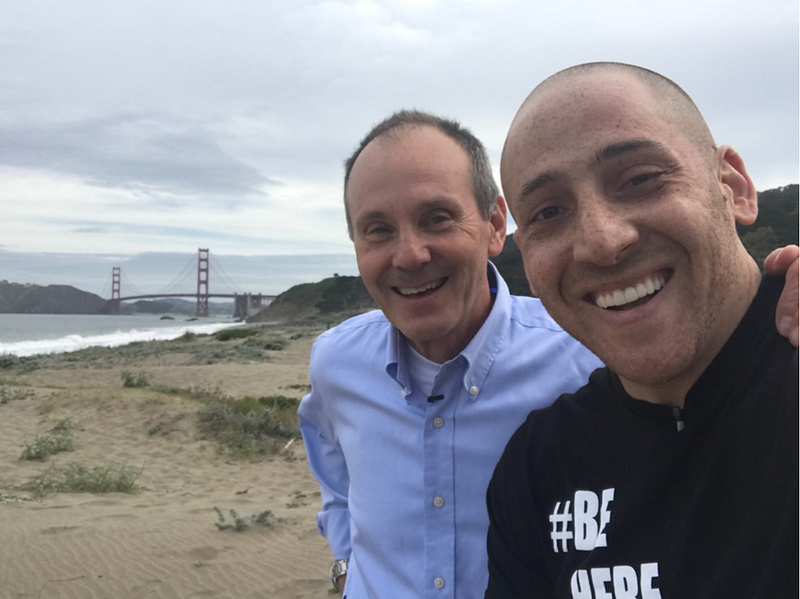
They both speak publicly about their experience and want people to know about “the moment” when they made that decision — and what they felt: abject terror and intense regret.
Their experience and feelings are eerily common among other survivors.
The hard truth we should confront: many people who didn’t survive that fall — suffered those same moments of terror and regret.
It is unfortunate — as life offers us so many chances and ample time to live and pursue our dreams. Most who get past bouts of severe depression, go on to have good lives.
There’s a hopelessness I see in those discussing their depression: people feel like it’s too late to succeed, to do the things they want to do. They think their problems can never be fixed. They feel isolated and lonely.
Ken and Kevin were lucky to survive and go on when many others did not. They continue to spread their message of love and support to those who don’t feel heard.
There’s this weird stigma in society about discussing suicide. It’s a dark subject and news agencies fear it might inspire copycat attempts.
Yet the total silence has also created another sharp edge to this mental health crisis: people now fear even discussing the subject with loved ones. The mere word suicide can feel like a four-letter word.
I lost a friend to suicide years ago and have regrets about it that I may never get over.
We — writers and journalists — should do more to discuss this contagion. Obviously, there needs to be nuance and thought in how we discuss suicide. A cold reporting of incidents does little to move the needle.
Prevention, education, and empathy should always be our foremost goals.
Doing so creates a benefit called The Papageno Effect — where suicide rates fall when writers present stories with alternative paths for those afflicted.
As a parting note
If someone you love is suffering from depression, experts advise that — if you set aside time to talk with them (promising confidentiality) — you should ask them directly, “Are you contemplating suicide?”
The recipients often report feeling relieved that the subject has been brought up and that the word has been spoken. It is a final and needed acknowledgment of their pain.
Either way, saying nothing and letting the status quo continue does little to fix any lingering problem.
And to Ken and Kevin — thank you for what you do.
If you or someone you know is suffering from depression, there are resources here, and you can always dial 988 from your cell phone for confidential help.


