
What Travelers to the Japanese Countryside Should Know
Japonica travel writing contest winner Joshua Bewig talks about his work in the rural travel industry
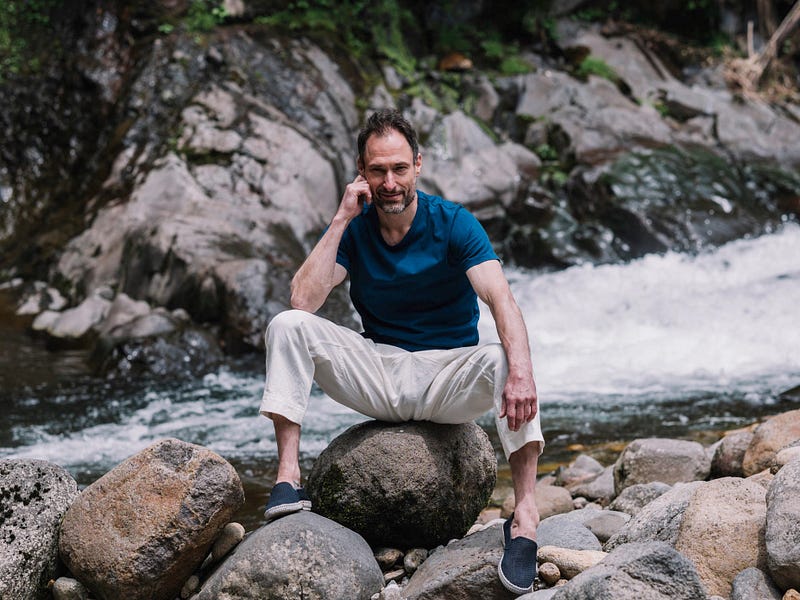
Japonica recently held its first-ever travel writing contest. The winner of the gold prize is Joshua Bewig, who mesmerized and enthralled us with his entry, Omizu Okuri: Festival of Fire and Water.
Joshua is originally from a small town in New England and moved to Japan in 2016.
Today, Japonica sat down with Joshua for a deep and thoughtful discussion of Japanese culture, rural tourism, and what foreign travelers should be aware of if they wish to venture off the beaten path.
Thank you, Joshua, for joining us.
What brought you to Japan?
I grew up in a homogenous little town in New England, but I was introduced to Japan at an early age through the photos and stories of a family friend. He had spent a year in Kyoto studying kendo and Zen, and everything about this exotic land seemed fascinating: houses made of paper, minimalist gardens of rocks and sand, castles and samurai and ninja.
The fascination stuck, and I traveled to Kyoto myself shortly after graduating from high school. I ended up living there for 3 years even though I had only planned on spending a trimester at a Japanese language school.
Fast forward 27 years and my Japanese wife (who I met while living in San Francisco) and I decided to sell up and move to Japan permanently. That was about 6 years ago. Although the move entailed a fairly major economic sacrifice, it was well worth it.
Perhaps what I appreciate most about life in Japan is the connection, tenuous yet ever-present, between the modern and the ancient. It is this connection that I tried to convey in my article.
You’re a travel advisor for the Obama Tourism Bureau and a tour guide. What have you learned you wouldn’t have known in a different field?
One thing I’ve learned working in this industry is the positive impact inbound tourism can have on the civic pride of rural communities. Beyond the obvious economic benefits, if done right, tourism can also help the local people appreciate things about their own culture and environment that they take for granted, or perhaps even resent.
Much has been written by western authors such as Alan Booth, Alex Kerr, and Donald Richie about all the amazing things that are disappearing in Japan due to a lack of interest among the Japanese in preserving them. It is in part thanks to the enthusiastic advice of Ulysses S. Grant, who was invited to a Noh performance while visiting Meiji-era Japan, that Noh was given government support at a time when it risked fading into obscurity.
I, too, hope that by introducing Japan’s wonders to the outside world, I can help raise awareness among the Japanese for their own precious resources.
How did the COVID-19 pandemic affect your work?
With all due respect for the many in the industry who have suffered, it has turned out to be somewhat of a blessing for me personally. When I finally realized that my tour-leading career was going to be put on hold indefinitely, I began studying digital marketing in earnest. I invested in online courses and volunteered to advise local businesses to gain experience.
I began getting paid gigs when I chanced upon this opportunity to work for the Obama Tourism Bureau. Now I’m the director of inbound development and promotion, so I get to create tourism content as well as strategize its branding and promotion.
Do you think the Japanese countryside is easy to navigate for a foreign traveler without any Japanese language skills?
No. Many of the inns and restaurants in rural Japan are owned by older folks who have yet to grasp the basics of Google Business Profile. Even if you know the language, it can be frustrating if you’re used to planning your itinerary on your smartphone.
It seems many travelers who are intrepid enough to venture into the countryside end up staying in business hotels and lunching in convenience stores, which is unfortunate considering all the beautiful little inns and amazing local cuisine. And when you do find a place to eat, good luck reading the menu.
In spite of years of schooling, the Japanese people’s English ability is next to zero. But that’s a subject for a whole other article. I would definitely recommend learning a few basic phrases. A good free translation app is DeepL.
Furthermore, rural Japan is very car-centric, with public transportation geared around the needs of school children and the elderly, who may only need to go shopping once or twice a week.
Do you have any tips for travelers to the less-traveled parts of Japan?
1. Do plenty of research.
There are some great travel bloggers and YouTubers who focus on off-the-beaten-path Japan. I would start there. These people devote a lot of time and money traveling around the country and can provide you with some great ideas of where to go.
Once you’ve picked out some destinations, try contacting their tourism information centers or local tourism associations. They will usually have English-speaking staff that can help you find accommodations, restaurants, and experiences to suit your tastes and budget.
2. Bring or rent a bicycle.
I’m a bit biased in this department as a cyclist, but I believe the best way to travel Japan is by bike. There are some very helpful Facebook groups like “Bicycle touring, hiking, and friends in Japan”, and “Cycling in Japan”, that you can join and get lots of advice.
Trains are great, but the stations are often few and far between and you’re stuck with the problem of how to get around once you’ve arrived. You can also take your bike on the train if you disassemble it and bag it, or if you have a folding bike.
3. Rent a car.
If cycling isn’t your thing, rental car travel is growing in popularity. Just beware, many country roads are extremely narrow, and are often flanked by open drainage ditches. And you’ll want to familiarize yourself with the traffic laws and signage.
4. Join a small group tour.
For first-time visitors to rural Japan, I would highly recommend joining a small group guided tour or at least signing up for a self-guided tour with a travel company that suits your niche.
A tour operator will have taken the time to explore all of the options and smooth out the bumps with innkeepers and staff. You’ll get to see and experience things that you would probably miss, and a good tour leader can interpret your strange and beautiful surroundings, lending depth and meaning to your journey.
5. When in Rome…
Finally, be sure to watch some YouTube videos on footwear and bathing etiquette. Please help keep Japan friendly to foreigners by not treading on the tatami mats in bathroom slippers or jumping into the communal tub without showering first.
If there is just one thing you want travelers to Japan to know, what would it be?
Patience.
I once came running down to the lobby at the sound of a guest shouting at the poor lady proprietor. “Sakee! Sakee! I want sakee! Why don’t you understand sakee!?” He didn’t realize “sake” is pronounced sa-keh, and that it generically refers to any alcoholic beverage.
The Japanese word for what we know as sake is actually “nihonshu” — Japanese sake. Which is why the Japanese are always asking you, “You like Japanese sakeh!?” The language and cultural differences are more profound than you will ever realize, so never assume that what works in your part of the world will work in Japan. However, a genuine smile and calm demeanor are universal.
Where’s your favorite place in Japan?
My bicycle saddle.
Finally, what’s your goal or mission as a writer?
I think most media these days try to oversimplify and synthesize the world into something easily understandable. Rather than explain things away, I want to ignite a sense of wonder that will inspire people to leave their comfort zones and experience something new for themselves. Perhaps that is what I love most about Japan: that it never ceases to be a mystery to me.
Thank you, Joshua, for the nuanced and thoughtful answers. We look forward to more articles from you.
If you haven’t read Joshua’s incredible entry for the Japonica Writing Contest, read it now, and don’t forget to follow Joshua Bewig!