
What To Think About When You Think About Spring
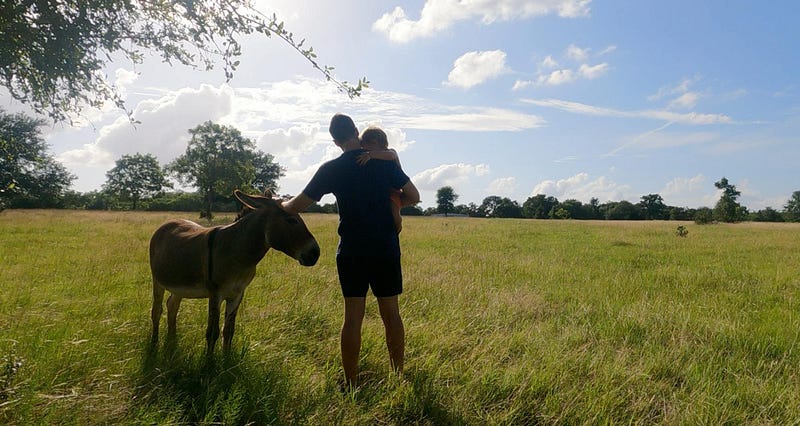
Spring is my favorite time of year in Texas.
After a dreary winter, the colors come back. The birds are out. The days last longer. The breeze is light. The air is cool.
The leaves come back on the trees around my ranch. Suddenly, the woods are full and dense. The grass comes in. The bluebonnets flood the fields. Soon enough, blackberries will be ripe for the picking.
But as beautiful as it all is, there lurks beneath a kind of darkness.
Phillip Larkin’s bittersweet poem captures this darkness well:
The trees are coming into leaf
Like something almost being said;
The recent buds relax and spread,
Their greenness is a kind of grief
The inherent grief is the passage of time. Each season brings new life, yes, but also marks the cessation of life. It’s a painful truth, the poem points out, written in the rings of the tree. Winter is dead and over…and all of us a little more so, too.
Think back to those cold winter afternoons where you didn’t want to go outside. Where you didn’t want to do anything at all. Where you said to yourself, I can’t wait for this to be over. You weren’t killing time…that was time killing you.
I promise you though, I’m not just looking at natural beauty and finding the morbidity in it. When I look out over my ranch in the spring, I also think of the last stanza of Larkin’s poem, which is actually quite hopeful.
Yet still the unresting castles thresh
In fullgrown thickness every May.
Last year is dead, they seem to say,
Begin afresh, afresh, afresh.
Seneca would’ve liked those last two lines. Not only did he also point out that death isn’t this thing that happens once in the future, but is happening always, with every second passing; he said that the one thing all fools have in common is that they’re always getting ready to start. They know that they should begin afresh…they just don’t.
It’s easy to look at the budding flowers, the sprouting plants, the longer days and warmer weather and take the change and growth for granted, to live vicariously through it. But we can’t stop there. We have to match their energy and change with them.
We can’t wish another season away or simply wait it out.
In fact, we shouldn’t let a single day go by that way. The Stoics would say that each morning is a new season. Every moment is an opportunity to start life anew, to choose a new way, to rededicate yourself to your philosophy.
“Begin at once to live,” Seneca said, “and count each day as a separate life.” “Think of yourself as dead,” Marcus Aurelius wrote. “Now take what’s left of your life and live it properly.”


