
What To Do With a Lot of Bell Peppers (And Jalapeños. And Banana Peppers.)
I mean — a whole lot.
My daughter, my brother, and I started a little shop called Sunday Market this summer. One of the things we’re doing is selling weekly produce boxes.
We call it the Little Box of Everything. You pay $15 and you get a box of produce — we have a veggie box and a fruit box.
This week everyone got cabbage, onion, garlic, banana peppers, yellow zucchini, potatoes, cucumbers, and little granny smith apples in the veggie box. And peaches, nectarines, apples, and blueberries in the fruit box.
If you’re familiar with a CSA program, where you pay for a share of a local farmer’s harvest and get a box of produce every week, it’s something like that. Only we source from farmers, rather than being farmers ourselves.
We do that by going to a local produce auction every Friday. We take pre-orders and source based on that. So what everyone gets is a surprise.
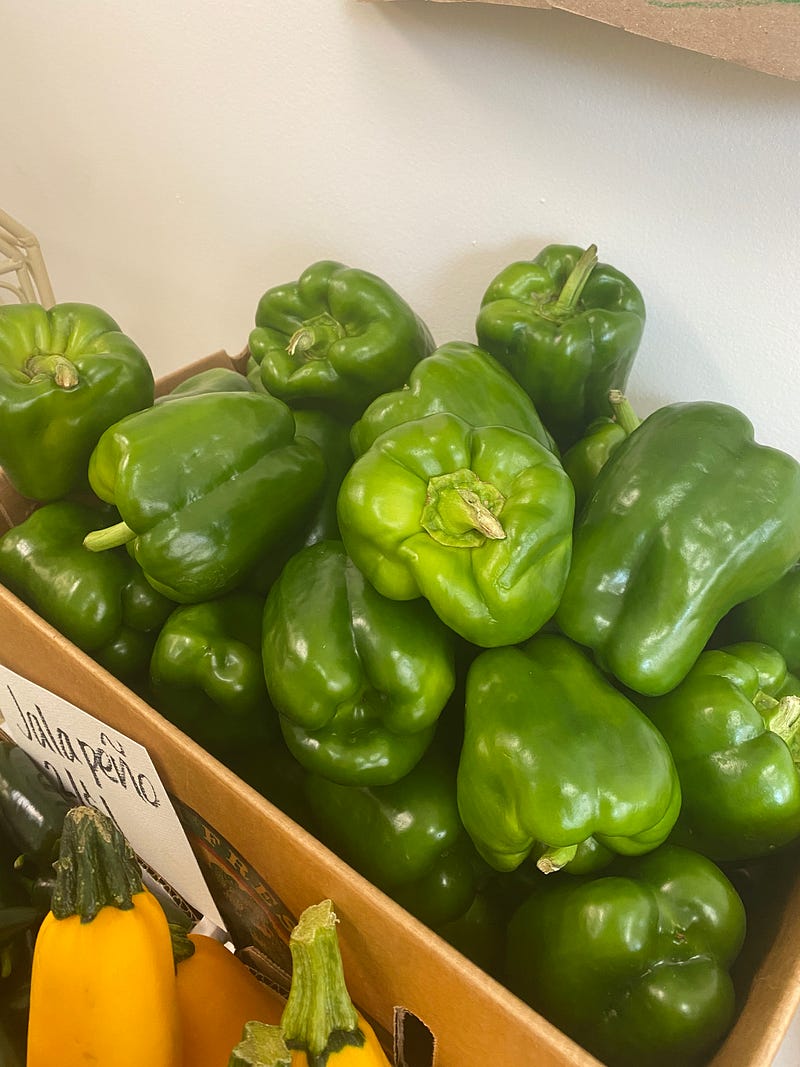
Two Fridays ago, I somehow managed to buy way, way more bell peppers than we needed for our boxes.
So, now I’ve got a big box full of 30 or 40 bell peppers to deal with.
I thought I’d share what I’m going to do with them. I’m doing this today and tomorrow, before the peppers go bad and I’m only left with the last option, which is composting.
As a side note, one thing I’ve noticed is that these veggies that we’re buying fresh off the farm last a really long time. Usually, they’re picked that morning or the day before. When you go to the grocery store and buy produce that’s been shipped, often 1000s of miles, they’re already a week old, so after another few days, they’re starting to turn.
These peppers are two weeks old and are as fresh looking as the ones I’d buy at my local grocery store. So that’s nice. But I don’t want to let this get away from me.
I’ve got a couple of other veggies left over from the last two weeks that I’m going to deal with in the next couple of days, too. I’ll tell you about those plans at the end.
Freezing
Bell peppers are nice, because they are one of the only veggies that don’t need to be blanched before you freeze them.
I’m going to slice a bunch up, put them on cookie sheets in my freezer for an hour or two, and then load them into freezer bags. They’ll last about a year that way.
These are good to add to things like soup or chili. They’re also good in fajitas or a stir fry. Freezing causes them to expand, which breaks down the membranes, so when they’re defrosted, they’re soft. They’re not as good raw, but any recipe where you’ll cook them, they work perfectly.
I like frozen veggies over canned veggies any day of the week.
Roasting
Roasted peppers are *chef’s kiss* so good. Red bell peppers are more traditional this way, but green taste just as good. I only have green, so that’s what I’m going for.
All I’ll do is fire up my grill, toss the peppers in oil, vinegar, and salt, and char them until their skin is nearly completely black. Then put them in a paper bag to steam until they’re cool enough to handle. About half an hour.
The worst part about making roasted peppers is the peeling and seeding. It’s kind of a pain. The more you char the skin, the easier they are to peel, so don’t be afraid to really let them get black.
I just tug on the stem and do my best to remove the core and most of the seeds in one go. There are seeds left. There will be seeds sticking to everything, including your hands and your counters.
You might be tempted to rinse the peppers to get rid of the seeds. Resist! You’ll rinse the juice, too, and that’s the best part. It’s better to have a few seeds left than to waste the juice.
Then, just load the peeled, seeded peppers into jars. Salt them, and then cover with olive oil and store in the fridge. They’ll last two or three weeks.
You could pressure can them as well. Or, pickle them and can in a water bath.
To pickle them heat equal parts white vinegar and water in a pan and bring to a boil. Stir in a couple of tablespoons of salt until dissolved. Then pour over the jarred peppers. Tap on the counter to get rid of bubbles.
You can also freeze roasted peppers. I think I’ll put a jar in the fridge and then freeze the rest.
Green Paprika
Paprika is just dried, ground red bell pepper. If the peppers are smoked, you have smoked paprika. If not, you have regular old paprika. If you use green peppers, the result isn’t quite as sweet. And of course, it’s green. But it’s still good.
I’m going to whip out my food dehydrator today and dry as many green pepper slices as will fit in it. Then just run the result through my food processor in a few days.
As long as the peppers are perfectly dry, the paprika is shelf stable.
I have some jalapenos left over, too, and I think I’m going to dry some of those to give my green paprika a kick.
Speaking of Jalapeños . . .
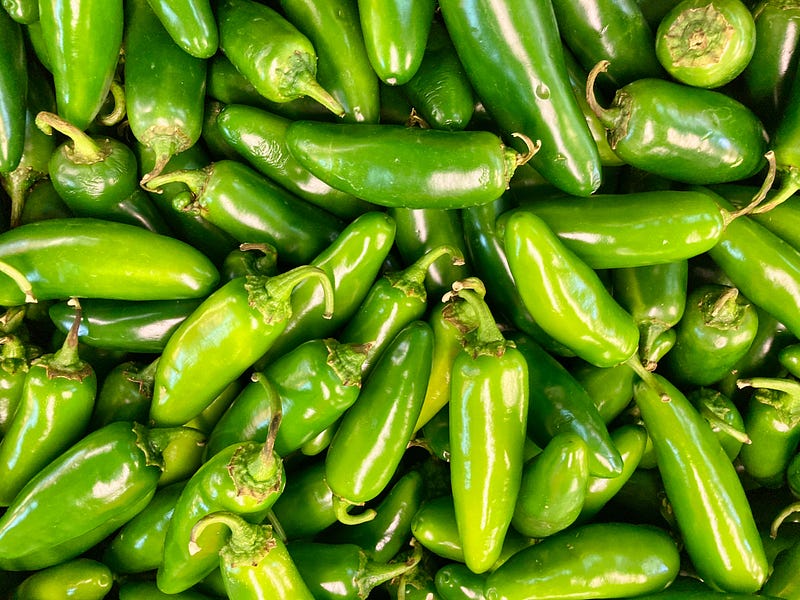
I’ve got a (much) smaller box of left over jalapeños, too. My plan for those is to make some cowboy candy — which is just candied jalapeños. Also, pickle some.
But I’m going to dry a bunch. Drying these little spicy peppers is fun. And pretty. Just string them up and hang them in a well-ventilated space.
To string them, use a big needle and thick string. I use embroidery thread. Pull the needle through the pepper at the base. I sometimes see people stringing through the stem itself, but I don’t think this is the best idea. The stem isn’t sturdy enough and it might detach from the pepper.
I go through the pepper, right under the stem. Make sure there’s enough air flow and that the peppers aren’t touching much and you don’t have to worry about bugs or mold at all. At least, that’s been my experience.
And then there are the banana peppers.
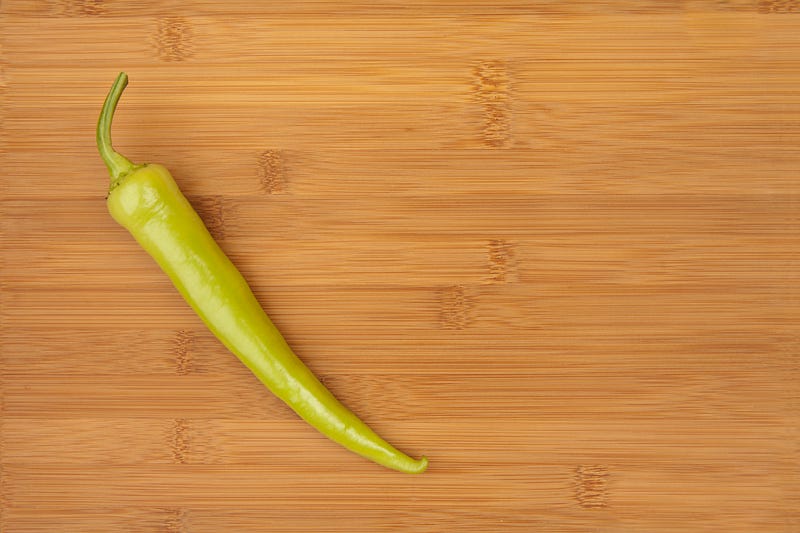
Okay. I might have gone overboard on the peppers two weeks ago. I’ve got about a dozen banana peppers left, too.
I’m pickling these. I love pickled banana peppers. They’re not as spicy as jalapenos, but spicier than bell peppers (which are purely sweet.) The pickled little rings are fantastic on sandwiches or just to snack on.
I might dry some of them as well to add to my paprika. Three pepper paprika? That sounds good, right?
Other Fruits and Veggies
It’s impossible for us to buy exactly what we need and nothing more. So I’ve got some extra fruits and veggies on my hands from the past couple of weeks. Here’s how I’m going to process those in the next day or two.
Blueberries
It’s blueberry season here. We’ve eaten a ton of them fresh, but I have a couple of quarts left. These are going in the freezer.
I’m not even bothering to freeze them first on a cookie sheet. I’ll just put them in quart-sized freezer bags. I don’t mind if they stick together.
I’ll put them in smoothies or make some jam or sauce out of them later. I’ll wait on the jam or sauce until blueberry season is over so I can just do it once.
The sauce is awesome on yogurt. I make my own — because I tried it once and it was super easy. And also? The yogurt isn’t even in the same ballpark as Yoplait. Or even the fancy expensive French yogurts you can buy at the store. It’s crazy good.
Let me know that you’re interested and I’ll post that recipe and process. You’ll never look back, I’m telling you.
Cabbage
I have two huge heads of cabbage left over. I’m going to make freezer meals with these. One is my favorite soup. I know, I know — cabbage soup can’t be anyone’s favorite, can it?
Oh, yes it can. It’s my favorite. I use the recipe in Crescent Dragonwagon’s Dairy Hollow Soup and Bread cookbook and it’s out of this world. I’ll put it in plastic containers and freeze it.
I might make a double batch and have soup for a bunch of the winter. Or I might make some other kind of freezer meal. Maybe some kind of stuffed cabbage casserole or something?
Yellow Zucchini
I ended up with a bunch of zucchini that were too big to sell. When this squash gets oversized, it gets huge seeds and it’s just not great. I’m composting a of it. There were four or five that were worth cutting up and freezing.
I sometimes dry zucchini, too, and add it to soups. But my dehydrator is full of peppers!
Cucumbers
I had eight or ten left-over cucumbers. I’ll just do a quick pickle on those. Cut them into slices and packed them in Mason jars with dill from my garden (look at me, all fancy!) and some onion.
Heat up two cups each vinegar and water, a couple tablespoons of salt, and a couple tablespoons of sugar if you like them a little sweet. Pour the liquid over the veggies. Put the cap on, and stick it in the fridge. It’ll keep two or three weeks.
These aren’t as pickle-y as fermented pickles. But they’re really good.
Onions and Garlic
These will actually keep a long time without doing anything at all to them. When the garlic season is over, I’ll roast a bunch and freeze that. Roasted garlic is the best.
If I have onions that I don’t think I’ll use fresh before they go bad, I’ll chop and freeze them. This isn’t usually a problem though.
Composting
The last way I’ll deal with veggies that we don’t sell, as well as the trimmings from processing, is with composting.
I bought a compost tumbler for $40 from Facebook Marketplace a month or so ago. It’s basically a barrel on a stand that you can flip over and over to mix the compost that’s cooking inside.
Those extra-large, inedible squash got chopped for composting. The outer leaves of cabbage. The green pepper cores. The ends of the cucumbers. You have to add some carbon-heavy things to the barrel, in addition to these greener, wetter things. Leaves, grass clippings, even newspaper works.
Then in a few weeks, I’ll have some nice compost for my garden.
I’ve got my eye open for a double-compartment composter. Or just another single-compartment one so I can have one batch cooking and another building up.
Summer is all about capturing that harvest and it’s a lot of work.
Sometimes it’s not the most fun to spend summer days in a hot kitchen, processing the harvest. But in the winter, when it’s been forever since you saw a fresh vegetable that wasn’t shipped around the world to get to you, it’s so worth the trouble.
One trick though is to remember to actually use what you preserve.
I keep a white board in my pantry where I have my preserved veggies listed. That way I know that I’ve got three quarts of zucchini or a gallon of shelled peas in the freezer, or four jars of pickled peppers in the cupboard. I look at it when I’m planning my menu for the week.
In the winter. Because in the summer — we eat that stuff fresh as often as possible.
Shaunta Grimes is a writer and teacher. She is an out-of-place Nevadan living in Northwestern PA with her husband, three superstar kids, Louie Baloo the dog, and Ollie Wilbur the cat. She’s on Instagram @ninjawritershop and is the author of Viral Nation, Rebel Nation, The Astonishing Maybe, and Center of Gravity. She is the original Ninja Writer.
Sign up for her Substack newsletter, Then See What Happens. Or follow her on TikTok.