
What to Do When You’re Struggling to Find Peace in Childlessness
There are many ways to experience motherhood.
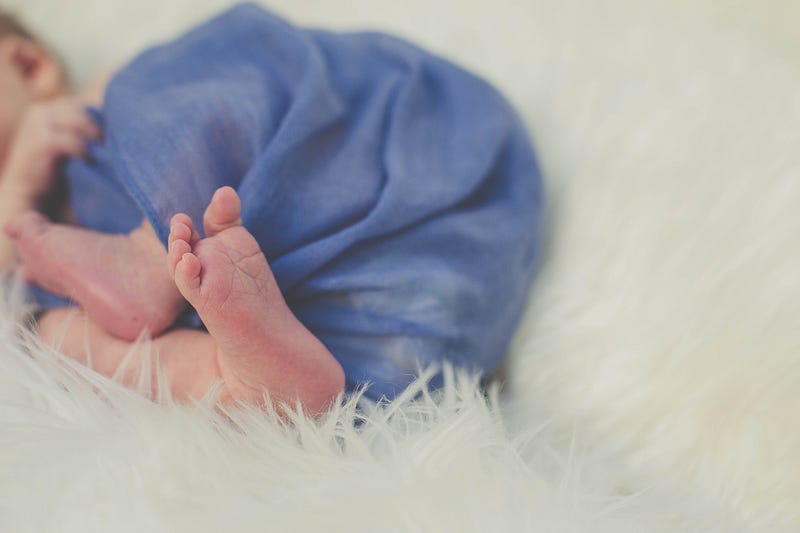
All too often, we find ourselves facing major life decisions in a maelstrom of over-thinking and distracting behaviors — especially in circumstances that deviate from what our society perceives as “normal.” Women who are childless-by-circumstance, for instance, might be struggling to deal with a wide range of emotional responses and even feelings of panic at the thought that time is running out.
As a childless woman in her forties, I have faced this situation time and time again. One moment, I’m grieving the fact that I don’t have children and making semi-frantic plans to pursue adoption. The next moment, I’m feeling ambivalent about parenthood and wondering if I want to make such a huge commitment by myself at this time in life. All around me is the hum of cultural expectation, the pressure of pronatalism, and other people’s usually well-meaning but unhelpful opinions.
However, as I’ve gotten older, I’ve come to realize that there is nothing more important than facing these circumstances with deliberate and open curiosity. This isn’t a time to panic, no matter how old we are. Now is the time to root ourselves and mindfully experience the life we already have.
Our culture’s expectations for women will likely remain consistent. Get married. Buy a house. Have babies.
We, as individuals, however, will grow and change throughout our lives. The landscape of our dreams and our own expectations will shift over time. Some of us who grieve the lost chance to have a child will come to middle age and feel less pulled to become mothers — even in the face of that grief, and even knowing that with enough money and determination we could potentially succeed in the endeavor to become a mother.
Despite that, some of us are feeling the gentle tug to accept our lives the way they are now.
I have felt this tug, as well, and have started asking myself three questions to help me filter out the noise of the outside world and focus on how my perspective of motherhood could potentially evolve as my life enters into uncharted waters.
How can I change my life to honor the value that I place on family and parenthood?
Many women facing childlessness alter their love lives, homes, or careers in order to more fully tap into their family-focused values and priorities, even when they decide to remain childless. For example, I have a friend who gave up her corporate job after making peace with her childless status and now focuses on family lifestyle portraiture because she understands the deep pull of parenthood and the love of children and wanted to help people record these magical moments with their families.
For me, one of the moments of parenthood that I fantasized about was reading to my children and helping them build a library that sparked their imagination. I’d always wanted to write a children’s book, and it’s no surprise to me that I finally met this goal at a time in my life when I was coming to terms with the idea of being childless for the rest of my life. My nieces and nephews and friends’ children have copies of this book and it makes me feel incredibly fulfilled to think of children reading it — even if they aren’t my children. I can still help nurture a child’s love of books from afar.
How can I nurture myself?
It’s so important, especially as we move into midlife, to learn how to deeply love and care for ourselves — something we are not taught to do in this culture. We often spend the first decades of our lives trying to please others and pursuing our goals with drive and determination. But what happens when life hands us the unexpected, as it so often does? How will we care for ourselves through these challenges — or even through the easy times?
As I get older, it’s becoming clearer and clearer to me that I should give myself the same love that I would’ve given the daughter I had always dreamed I would have. Looking back, I cringe to see the way I treated myself in my youth — the judgments, the grueling schedules, the perfectionism. Would I have ever treated my daughter that way or had such expectations of her? Of course not.
Now, I’m learning to adjust my default settings. I valued being a good mother so highly throughout my life and now I can mother myself.
Though it seems many women — even those who have children — find themselves at this place in middle age, I question that this is a natural progression. Sometimes I think it’s just a time of life when our society tends to see us as less valuable, and therefore, we feel less scrutinized and less burdened by outside judgment, freeing us up to take better care of ourselves.
But don’t we want the next generation of young women to come to this place faster? To know that they don’t have to sacrifice themselves, their health, their dreams, their well-being in order to try to meet all our societal expectations? To start practicing self-care long before adulthood?
This is another way we can practice motherhood — by modeling self-nurturing and self-care to the next generation.
How else can I be a mom?
When we limit our dream of motherhood to only one expression — that of having our own child — we forget the many ways in which we can express our maternal instincts that are no less satisfying. This might include adopting rescue pets, becoming a mentor, or taking on a more active role in the lives of our nieces and nephews.
I remember my early days of teaching and how much I loved it when my 1st and 2nd graders would high five me or throw their arms around my legs. Though I would’ve been very happy to have had a child of my own at that time, I also felt a great deal of satisfaction working with those darling children.
I love being an auntie, too. I have the best nieces and nephews in the entire world and it’s such a joy to me to knit them sweaters, write them “owl post” letters, and play games with them. Further, my relationship with my 9-month-old nephew Alex has made me feel everything I had someday hoped to feel as a mother and that has been extraordinarily fulfilling.
It’s true that our society doesn’t always value “alternative” expressions of motherhood. They might see your six rescue dogs as a symptom of loneliness rather than maternal instinct. They might see your professional work with children as a “sloppy second” to motherhood rather than a desire to nurture and positively influence young hearts and minds. And I know there are people who think being a super involved auntie is something akin to being a pathetic “cat lady.”
But so what? Stand proud in your maternal expressions. Take up space there. As our world changes in the face of global warming and evolving reproductive trends, our very limited definition of motherhood is eventually going to have to shift, too, making room for the “other mothers.”
Every act of maternal love is a gift to the world and we should all encourage one another in these expressions, whether the recipient is a child of our own or not.
I think it’s important that we start asking ourselves these questions. It doesn’t mean we have to abandon the idea of having children. I still find myself unable to decide what to do. In general, I’m happy with my life and I feel fairly confident in the decision that I don’t want to pursue motherhood on my own.
And yet, my relationship with Alex has made me second-guess that decision often. When I walk into a room and he holds his arms out to me, I just want to take him home with me, even knowing he’d probably keep me up most nights. There are few things in life that top the feeling of him resting his head on my shoulder or tracing my lips when he’s drinking his bottle or cooing and laughing when I nibble on his fingers. Some primal, female part of me wants more of that.
But…this is my life now. I am on my own and I’m deeply conflicted about motherhood. And I’m not going to push myself into making a decision one way or another.
For now, though, I can at least honor the mother I always thought I would be by asking myself these questions and exploring the answers that come to me.
© Yael Wolfe 2020


