
What To Do When You Are Playing With Soloists
Last I played three concert programs with my orchestra. We had a jubilee as we playing music together for 25 years. Three concerts with a soloist.
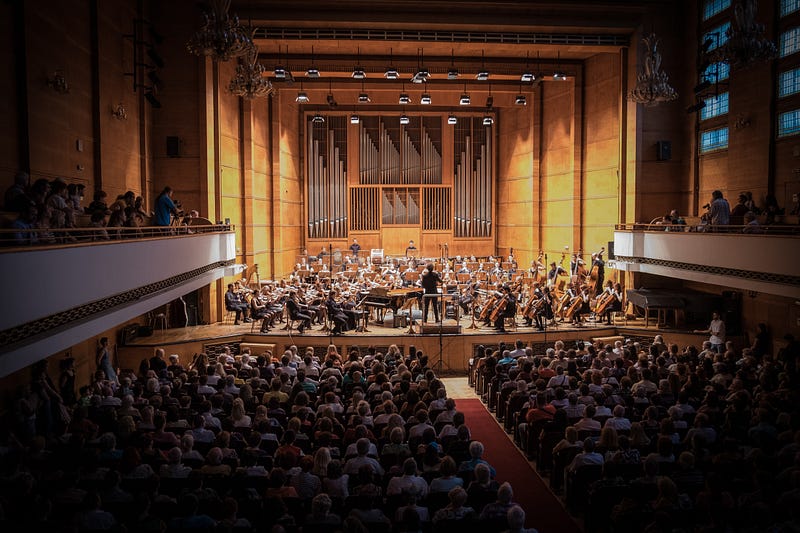
The first was with a pianist; the second with a violinist and the last one was with a cellist. All three soloist has a different kind of sound, interpretations of the music, but also the way they use their instrument compared to others in their instrumental category. Every soloist does it in her or his own way. Each instrument is very different, as well as the taste of how the music should be played, through their eyes.
For example, we take the Tchaikovsky violin concerto.
He wrote one violin concerto, but this is a popular violin concerto under the soloists. A lot of violinists are having this piece on their repertoire list. But the interpretations of this piece — thus by different soloists — varies a lot. Almost every violin soloist has this difficult piece on his or her program with another interpretation, and you hear when someone doesn’t like to play the music.
When I look back at the three concerts I had with my orchestra last year, we had such different music and also different soloists we played with. The music also makes it how you play your instrument. Does it have to be soft, hard, crescendo (from soft to hard)? Or whatever dynamics you have to play. But you have to show it as a musician — professional or amateur.
Sound of the instrument
A violin has a more soft sound. Of course, every violin sounds different, but compared to a piano; the violin has a more soft sound. A cello has a warm and deep sound, more connected to the soul as it touches your body above the breasts (where the heart is).
Also, different instruments have other sounds. A piano has a hard sound and has a different sound than other instruments. But within the same instrument category, you have different sounds. Like a Stradivarius violin compared with an Amati violin. You can’t say if an Amati has a better sound than a Stradivarius. Stradivarius crafted a lot of violins, like Amati. Amati was born earlier, but Stradivarius is better known under the musicians. But one Stradivarius violin is better than the other Stradivarius violin. This is the same compared with the Amati violins. And actually with all instrument makers.
And as a pianist, you can’t bring your instrument with you, but you have to play on an instrument on a loan for you by the orchestra. So then you have to learn the instrument as well. Piano’s have a different way to touch the hammers.
These are a few factors musicians use to practice their instruments. As an amateur violinist, I love to explore every inch of the instruments. I am not done yet. Professionals also discover lots of new things they can do with their instruments. How they can use their instrument playing while playing pieces they have to play.
But talking about playing with a soloist.
How does playing with a soloist look like?
Well, that is different comparing an amateur orchestra and a professional orchestra.
Before we — orchestra musicians (professional and amateurs) — play with an orchestra, we practice our parts first together to get everything as a whole.
I practice my violin part at home first before I practice with my orchestra. We practice together for a few weeks before the soloist play along with us. Then, most of the time, we have three or four weeks to practice with the soloist. Then the music comes together. You hear the thoughts of the composer through the music.
What you should do when you play with a soloist
The first rehearsal always is getting to know the style of the soloist, what do they like, where is the dealy of that ritardando (getting a bit slower), where the soloist take a breath. And so on. When that is said, you can make music together.
Know your part in the music
This should be obvious, but when amateur orchestras playing together most of the time people do not have that much time ((voluntary) work, hobbies, and others) to practice. So, still, practice however and whenever you can. Take time when you have the time to practice.
Listen to the soloist
When playing with a soloist you always have to listen to the soloist, your orchestra members and watching the conductor at once. That is a very difficult task. But musicians can do this.
Listen when the soloist makes an unexpected delay.
Know the part of the soloist
No, you don’t have to practice that part, but know what the soloist have to play. When the soloist needs to play and when he or she has some rests and how long. Also, when you are a string player, you should play the same bowing when you need to. That looks so much better.
After all: ENJOY EVERY MINUTE TO PLAY!
Agnes Laurens is a writer. She writes for the local newspaper, Medium.com. Agnes lives in Bunnik, The Netherlands, with her husband and three daughters. Writing is — aside from playing the violin — one of her passions since childhood. She is on Twitter and Instagram.
Writing is her passion since childhood. Never had she ever done anything with it until a few months back.
As soon as her Patreon page is ready to be launched, you’ll be the first one who will get notifications when you subscribe to her mailing list.


