
TRAVEL | SCAMS | TRAVEL TIPS
What To Do When a Stranger Asks To See Your Passport In a Foreign Country
And how to deal with other scams
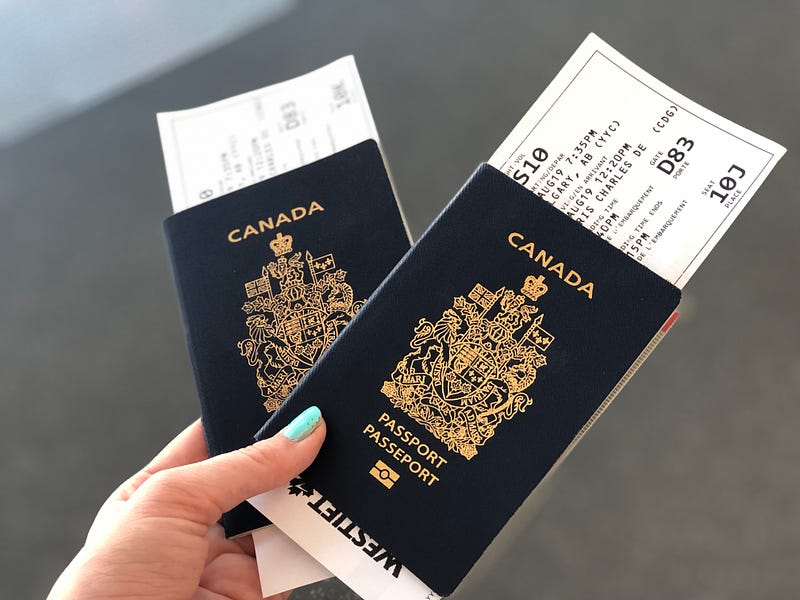
As foreigners, we sometimes stand out like sore thumbs in many parts of the world. This simple fact, sadly, makes us vulnerable to getting scammed, ripped off, and taken advantage of.
Many travelers will feel intimidated by situations where they get asked for their passports by authorities, or where policemen will try and intimidate them into paying fines for something that they didn’t do.
But it doesn’t have to be this way.
If you take the time to diffuse the situation, assess what is going on around you, and not act with impulse, you will quite often find yourself removed from the situation without having to do anything that has been asked of you.
Here are three scenarios that I have been involved in.
In 2021, we were walking down the street during the daytime in Khartoum, Sudan, and were approaching a traffic circle (roundabout for the Europeans). It was the sort of traffic circle that was big and had high vegetation growing on it, so it sort of felt like we were approaching a t-intersection.
In Sudan, the sidewalks are mostly non-existent, and if they are there, vendors from the storefronts use them as prime real estate to display their goods, so you can’t get past them anyways. This means that most people just walk down the sides of the street between the parked cars and the traffic, so it kind of feels like you are often times walking in the middle of the road.
We were about 50 meters away from this intersection when I noticed a man going past very slowly on a motorbike. It seemed odd to me that he was going slow, and even odder when he turned his head to look our way.
It was in the central part of the city, which was usually quite busy, but this particular time it seemed very quiet and he stood out to me. In recalling the incident later with Chris, he never noticed the guy at all.
It turns out that I’m glad my spidey senses were on full alert.
As we crossed the road to the traffic circle side, we made our way around to the right and the same direction that the man was driving towards, while following a narrow sort of sidewalk that went around its perimeter.
As we rounded the corner, we noticed a man pulled over to the side of the road that had stopped next to the sidewalk. I realized instantly that it was the same guy that I had seen earlier, so my defenses were up.
As we approached him he looked at Chris and simply said, “Police. Show me your passports.”
Now, this was a plain-clothed man and had no indication whatsoever that he was a policeman or worked with the government. Plus he was on a non-descript motorbike that to me looked beaten up.
We certainly weren’t convinced that this guy was a police officer.
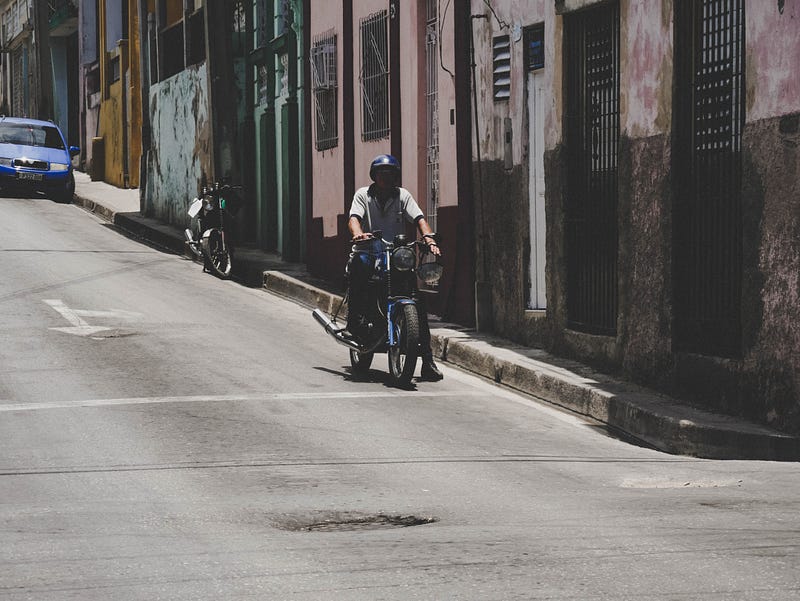
Of course, being a visitor in a foreign country can sometimes be intimidating, especially when some stranger stops you on the side of the road to tell you that he is a policeman, and demands things from you.
I think most people would probably do whatever they ask simply for fear of getting into trouble if they don’t. But I knew that we had done nothing wrong and there was no reason for him to be asking to see our passports.
“You show us your police ID,” I told him.
There was no way in hell I was going to trust that this man was a policeman because he sure didn’t look like one.
He pulled his wallet out of his back pocket and flashed something quickly at us. To us, it just looked like a driver's license.
“That only looks like a driver's license,” Chris said.
I should mention here that Chris also knows basic Arabic, and knows what the word police looks like in the Arabic script. He was adamant that this man's ID had no indication of being that of a policeman.
“No, I am the police. Let me see your passports.”
I quickly assessed the situation. The guy was still sitting on his bike, and could easily pull away if he wanted to. I was not going to simply hand our passports over to this guy unless we knew for sure he was the police.
And for what reason did he even want our passports? We were simply walking down the road.
Years of traveling and quick thinking took over that day as I said,
“We will only show you our passports if you take us to the police station.”
He looked at me a little bit lost, and looked around trying to decide what to do, “No, we don’t go to the police station.” He finally said.
“Then we are not showing you our passports because we don’t understand why you need to see them.” We stood our ground.
After a few moments, he unceremoniously gave up and waved us on our way.
“Well, wasn’t that just weird?” I said to Chris.
“Yeah, what the hell was that about?” He said back.
The truth of the matter is that we still don’t know.
Of course, we think of police in Canada having big fancy badges and when you ask to see one they are obvious. It’s possible that Sudan doesn’t have these flashy indicators to show their status, and it’s also possible that this man was off duty and didn’t have his official ID with him.
But it’s also highly possible that he was scamming us, and had we handed over our passports, we might never have seen them again.
We will never know the answers to this.
But one thing is for sure if he was a policeman, and the reason for wanting to see our passports was serious enough, he would have taken us to the police station.
I had a similar situation happen while my boyfriend was driving our van in Mexico back in 2001. This time we were pulled over by a uniformed policeman for a bogus traffic violation. He said that we ran a red light, and we know for sure that we didn’t.
We did remember driving through the intersection, and him blowing his whistle at us, but because he was just a standing traffic cop, we kept going. We knew that we hadn’t done anything wrong and we knew that Mexican cops were (are) notorious for being corrupt.
But what we didn’t know was that the road we were on was going to come to a dead end, and we would have to double back to where he was, to get back to where we were trying to go.
We drove for another 500m or so and at the end of the road, we realized that we were lost, and needed directions. We saw a group of boys standing on the corner and pulled over to ask them; first, if one knew any English as neither of us knew any Spanish, and second if they could give us directions.
One young man put his hand up and eagerly came over to practice his English with us. We asked him for directions to where we were trying to go, and he tried to explain it, but his words were getting lost.
“Will you take us there if we give you money to come back here with a taxi?” My boyfriend asked.
“Si, let’s go.” He jumped in the back of our van and we were off.
We had come down a one-way street and to get back to where we needed to go, we had to return down another road that went the other way. So needless to say we were quite surprised when our police friend was waiting for us to drive up to him about 3 blocks parallel from the other street we had seen him on.
I should note that we were driving a smurf blue van with a Canada flag license plate on the front of it. We stood out like sore thumbs. At the tender age of 23, I guess we thought that was a good idea, these days I know better.
Of course, he waved us over.
The young man that was sitting in the windowless back of the van was wondering what was going on. I tried to tell him quickly that he had blown his whistle at us earlier, but that we hadn’t done anything wrong.
Naively, I hadn’t yet considered that it was strange for two Canadians to have a Mexican boy in the back of our van. But here we were.
Of course, the policeman wanted to see inside the van and we happily obliged. But when he opened the door, he was not expecting to see what he did.
They quickly launched into a discussion in Spanish of which we had no idea what they were saying. We were trying to get the boy to translate for us, but the situation was too heated. He did manage to tell us that the policeman was saying that we ran a red light earlier, and as I said, we knew that we hadn’t.
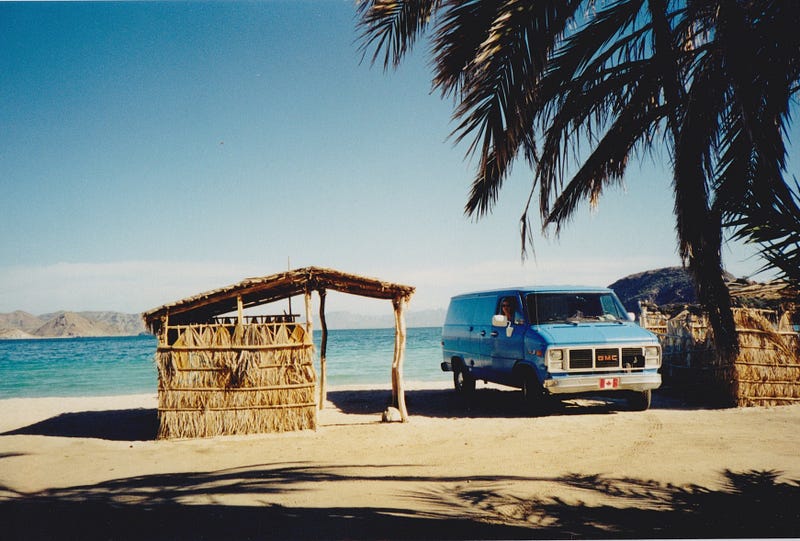
After a few minutes of back and forth, the policeman told the boy to get out of the van, then he got in.
“This is really strange.” The boy told us as he stood at my passenger window. I could see that he was torn with what to do and it seemed like he was going to say more, but then the policeman spoke to him in a stern tone and he reluctantly turned around and walked away.
So now, here we were sitting on the side of the road with a Mexican policeman inside our van.
The boy had told him that we were lost and trying to find our way somewhere, so he at least knew that scenario. But then, of course, he didn’t want to let us go on our way until we paid him for our supposed violation.
My boyfriend stood his ground. “No.” It means the same in English as it does in Spanish.
We then tried to tell him that we didn’t do anything wrong and that if he wanted to fine us then we needed to go to the police station.
He agreed that we could do that, so we started driving with him in the back while directing us where to go. But after only a few blocks, he told us to stop and pull over. Without saying much, he reluctantly slid the back door of the van open, then got out and walked away.
That was that and we never did pay him any money.
I will say that looking back I can see how different this scenario could have turned out given the circumstances. It’s not every day that a police officer pulls over two foreigners in Mexico and they have a Mexican kid in the back of their vehicle.
I think it’s possible that we simply caught him off guard that day and the situation was just too messed up.
I have also been present in another traffic cop scam in Morocco where the police were trying to tell my friend that she was speeding in the rental car that we had. She definitely wasn’t because we were trying to find a turn off so she was going even slower than usual.
Thankfully she is a crown prosecutor in Canada, and our other friend that was with us is ex-military. They both knew their rights and demanded to see proof that they were speeding.
The policeman showed them a picture on his cellphone of a similar vehicle and a posted speed over the picture. Our friend noted right away that it wasn’t even our vehicle in the photo and told him so.
He then decided that he should go back to speak with his comrade that was standing off the side road. I didn’t know it then but our ex-military friend had flashed his military ID at the guy, making sure that he saw it.
A couple of minutes later, he came back and told us to be on our way.
All three of these scenarios could have ended much differently, had we not known our rights. The truth of the matter is that as foreigners in a country, we quite often have more rights than the very residents that live in the countries that we are visiting.
And I don’t mean to say that you should flaunt the law and do whatever you want, but if you have done nothing wrong, and they have no proof that you did, you don’t need to oblige to what they are demanding.
Moroccans joke that police officers are the richest people in the country because they scam everyone for bogus traffic violations. Sadly the locals don’t get away with it unless they pay the fine because the officer now has their name and address. But as foreigners, it is certainly trickier for them to chase us down.
So the next time you are in a foreign country, and in a situation where a person that claims to be in a position of authority wants to fine you or take advantage of you in some way, simply demand, in a non-aggressive way, that they take you to the police station where you can discuss the details with witnesses and possibly their higher-ups.
You aren’t legally obligated to give them anything until you are in a safe position to do so.
And more than likely, they will decide not to bother with you, after all.

If you like my writing and want to read more, subscribe to Medium through my referral link (I will earn a small commission) to get full access! Plus sign up here to get my articles by email!
We have been nomadic since 2017! Join our journey by hitting the links below!
Website | Instagram | Facebook | LinkedIn| Patreon| YouTube | Medium


