
Be Safe. Be Well. Be Kind. Be Loving. Be Grateful.
What To Do During COVID-19
An incomplete guide that has helped me keep living
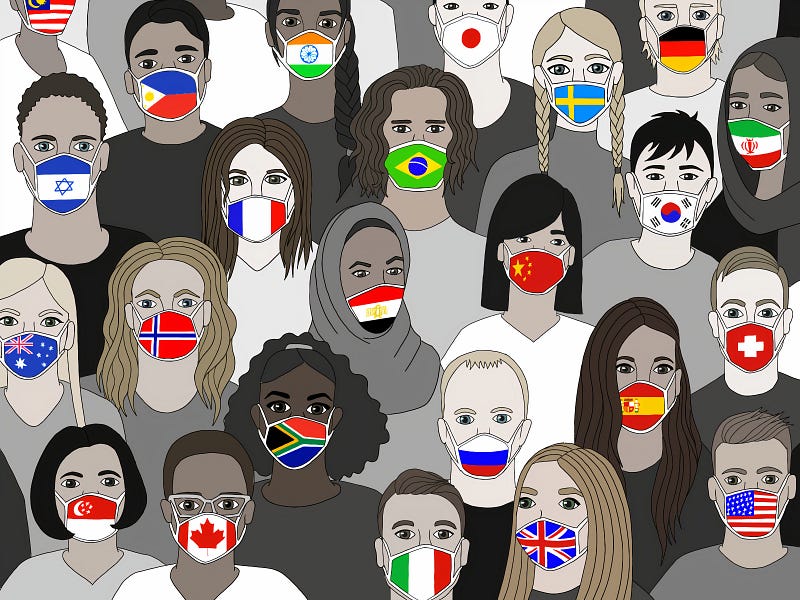
COVID-19 has the world in crisis, and that’s an understatement indeed. It’s reasonable to be overwhelmed and panicked about the future. Indeed the future is uncertain even after all these many months. The one sure thing is this. If you are not doing all you can to control those things you have control over, then even more uncertainty will prevail. No one has all of the answers, and even the experts differ on the best course of action. I hope the following suggestions help alleviate some of the panic and uncertainty.
Listen to medical experts regarding hand washing, masks, and social distancing. It is simple enough advice, and these are the medically trained experts. People who have not heeded this advice are the ones who are putting themselves and those around them at risk. Stay or get as healthy as you can by getting enough sleep, eating well, and exercise. Do your best not to do anything that may adversely affect your health as that could put you at greater risk.
The beauty of the soul shines out when a man bears with composure one heavy mischance after another, not because he does not feel them, but because he is a man of high and heroic temper.
— Aristotle
What is your financial situation?
If you have never written a budget, do so now. No excuses about time as if you are out of work; you have the time to do it, and without it, you have no idea what your cash flow situation is. Even if you are still employed, prepare for future employment changes as more are coming.
Write down all of your expenses, and if you’re not sure what they are, look at your bank and credit card statements for the last three months. Look at this as your COVID-19 budget because unless you have a job, eliminate all unnecessary spending on fast food, Starbucks, Amazon, or anything besides the basics: shelter, food, utilities, and transportation.
Those four areas are your primary concern, so start with shelter first.
What does your housing/apartment cost?
What is your food bill?
How much are your utilities each month?
What are your transportation costs?
You may need to go out to buy food unless you are having it delivered. Eliminate or suspend any non-essential subscriptions: gym membership, streaming services, music, or other monthly recurring service expenses. A simple spreadsheet is all you need to see the total and work it to the smallest number possible.
Next is your income. If you still have some from a past employer, great. Suppose you’re unemployed, file for Unemployment Insurance as soon as you can if that’s an option.
Take a look at your total cash situation. What do you have in your checking and savings accounts? For now, do not consider tapping into your 401k or IRA accounts as if at all possible, leave those alone. Even though there has been a loss in value it will return. While you will lose value, you will not lose money unless you take money out. Plus, in most situations, there will be tax penalties on withdrawing from any retirement account.
Now you have a complete picture of your total monthly expenses and your overall cash on hand. Suppose you had no other money coming in. How long until your money runs out? Is it a day, a week, a month, or a year? Know this number so it won’t be a surprise and you can be proactive.
It is your reaction to adversity, not the adversity itself, that determines how your life’s story will develop.
— Dieter F. Uchtdorf
While it may not be as long as you would like, this is your reality. Make any changes to your monthly expenses to see what you can eliminate to extend the time before all of your cash runs out. Any promised government assistance or your state unemployment checks may not be arriving as soon as you need or may be possibly eliminated. Cut that budget to strictly essentials if need be.
Talk to any companies you owe money to and see if you can skip a month or so without penalties. Think of other ways you can reduce your expenses. One often-overlooked way is to spend more on groceries and less or none on fast food or take out. While cooking for yourself is a chore, it is always going to be cheaper and usually healthier.
No one is saying this is easy and quite possibly will be even harder as time goes on. A plan will help you see your reality and be better prepared to deal with it. I speak from experience as I was always stressed over my financial situation. I always felt I never had enough. The reality was I did not. However, once I created a budget that allowed me to see my exact financial situation, it still was not what I wanted it to be, but it did create a position in which I knew what to expect and how to deal with it.
Final Consideration
Humans have had to deal with a variety of devastation in many forms. Somehow, the majority of us manage to survive and continue living. Yes, there is a significant toll on those of us who remain, but we all must do our best to carry on. I’m not a pie in the sky kind of person, so this pandemic really sucks. I hate it and wish it wouldn’t be our present reality, but it is. We need to deal with it as best we can. By remaining healthy, heeding medical experts’ advice, and being fully aware of our financial situation, it provides the greatest chance for the most optimal outcome. Let us look at this time of extreme challenge as an unexpected way toward personal growth.
Be Safe. Be Well. Be Kind. Be Loving. Be Grateful.
Please share if you enjoyed it so others may as well.
Me: I grew up one of 12 kids in a family business my immigrant grandfather started in 1925. There I quickly learned the value of work having started in that same business at 8 years old. Several siblings operate that business today. In 1994, I started Dynamic Image Marketing. Building systems to optimize my business and life is enjoyment for me. I love to help friends and clients do the same. Life is all about learning ways of doing things more optimally and I’m willing to share the same with others.
The Optimal Life, It’s Not Perfect, Just Better!
Follow me on LinkedIn Some of my articles may contain affiliate partner links.


