
What Time Is It Anyway?
What cost are you paying for lost time?
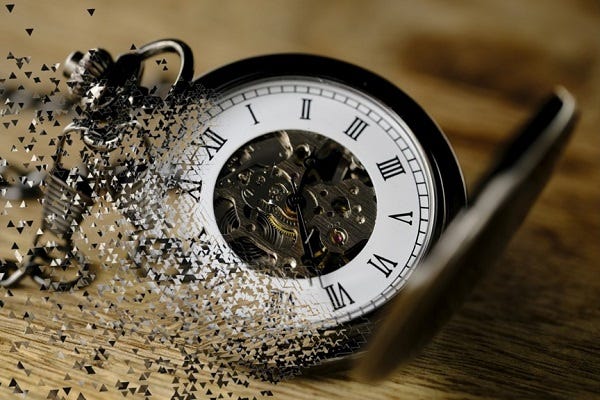
Time, your most precious resource, is also your most limited. Sure, it may seem like you have many years ahead of you, and I hope you do — yet what if you don’t? Before you know it, tomorrow is here. I’ve already lived more than two-thirds of my life, provided I make it to 100! Time certainly does fly, and it seems to go faster the older you get.
In reality, no one is promised tomorrow, but one can hope. Want to make the most of your time? It is beneficial to routinely stop and reflect on this most precious resource and the life you have.
Ask yourself this question: “What am I doing with my time?” (Hint: This is synonymous with “What am I doing with my life?”)
So, what are you doing with your time and life? Literally, how are you spending it?
With a seeming abundance of time, especially when we’re young, most of us give time little or no thought. Yet what we do with our time now determines much of what happens in our future. What we do with our time sets us up for success or failure, significance or insignificance. By simply seeing time as valuable, our perspective shifts from that of its obscurity to that of its relevance. How often are you aware of time? It’s a good question to ponder.
There’s a funny thing about our discussion of time. It might seem like a waste to slow down, to stop and consider time. I get the irony, but it is in this slowing down and thinking that we actually enhance our use of time. When we are always rushing through life, how much of what we do can be genuinely thoughtful and deliberate?
We literally must pause and slow down in order to speed up the process of getting results. To go slow and see what is happening will move you to what you want more quickly. I highly recommend Kevin Cashman’s book The Pause Principle, as it details how to slow down, step back, and take time to make great leaps forward.
“What sleep is to the mind and body, pause is to leadership and innovation.”
— Kevin Cashman
There is a cost, a price to pay, for not valuing our time. Like anything in life, what we value most will be where we place our attention and effort. If we have not really considered what we value, and what is important to us, we won’t be able to see these things clearly. Without clear vision, we will stumble around, and we’re likely to wind up with little more than regret.
How much is your time worth to you? Is it worth strengthening your discipline of valuing it? Remember what Jim Rohn once said, “We must all suffer from one of two pains: the pain of discipline or the pain of regret. The difference is discipline weighs ounces while regret weighs tons.”
When you realize how valuable your time is, you will begin to act accordingly. Please don’t live a life of regret!
Make the right choice — value your time!
©2020 BillAbbate.com
Adapted from Uncommon Sense @ www.billabbate.com


