
What This Japanese Temple Can Teach Us About Sustainability
True sustainability begins with the Japanese craftsmen’s 400 year mentality
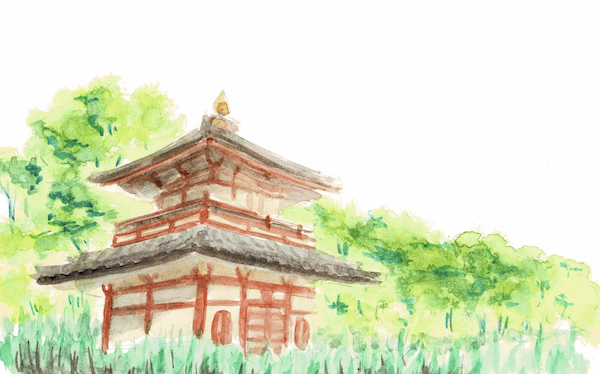
I was visiting a temple in Kyoto, a place called Kiyomizu-dera, when I overheard one of the tour guides share with his group, “This building is over 400 years old, but the structure doesn’t use a single nail! Instead it relies on locking wooden joints carefully designed by Japanese architects and craftsmen.”
Over 400 years.
I thought about this experience when I read the news of 432 Park, the newly opened super tower luxury building in NYC that is already coming up against a mélange of architectural problems ranging from leaking, creaking, and swaying, not to mention a frequently broken elevator. The tenants are currently filing a lawsuit against the developers for $125 million in damages.
For how is it that something that was built over 400 years ago without the technology and tools we have today, in wood nonetheless, is standing in strong and sturdy shape, while a building that was built with the best technology and designers that money can buy, is now falling apart at the seams? I doubt that it will actually physically fall, but I wouldn’t be surprised if it became a ghost building filled with empty rooms of used-to be homeowners a few years down the road. Regardless, I don’t see it lasting the next 400 years.
This incident has made me think about the lifespan of the things I interact with. Do we ever build or buy with that 400 year mentality anymore?
I appreciate the new movement towards products using recycled materials, eco-conscious manufacturing, or low energy lighting and efficient climate control architecture. But I think we are still a long way from addressing the root of sustainability, which is the idea that we should be designing and creating things with three things in mind:
Useful
Only if something is useful, will it be used. And only if something is used, will we let it last.
Lasting
But there is no point in useful design if it breaks easily. Something sturdy and easily repairable in parts.
Beautiful
Finally, we are human, and even in sustainability there is still the need for beauty. If something is useful, lasting, but ugly or out of fashion, we will look to replace it. And replaceable objects are not sustainable.

The Japanese craftsmen’s 400 year mentality
I am no sustainability architect, but there is little point in designing a building that is LEED certified when it can’t meet the requirements for human usability and has to be rebuilt only several years later.
This goes for our clothes, furniture, and personal items as well — what use is recyclable materials if we are going to be buying new clothes next season? Or if we will be throwing out and replacing furniture just mere years later the next time we move?
My friends make fun of me for this old watch I’ve been wearing nearly every day since 12 years ago, and I still use a Nalgene water bottle that I’ve had for almost 10. My hiking boots are about 8 years old, my backpack about 6, and my favorite sneakers are 4. My objects are getting older, but with every passing year, I find these objects more and more valuable as they become proof of meeting the 400 year mentality.
Not every purchase we make will or can meet these requirements, but in instances as so, borrow where you can, thrift if you’d like, and just keep in mind the lifespan of the things you decide to introduce into your life. Only from this mindset will we see a truer form of sustainability, and an Earth which can last 400 more years.
Learn to be healthier, inspired by life in Japan:
I teach about health inspired by simple Japanese philosophies and lifestyle practices, so you can learn to find peace, fulfillment, strength, and health in your own body. Stay in the loop and get access to free resources: Sign up here!
