
The Nuance
What 30 Years of Supplement Research Has Taught Us
Cancer risks, Covid-19 disappointments, and hidden health lessons
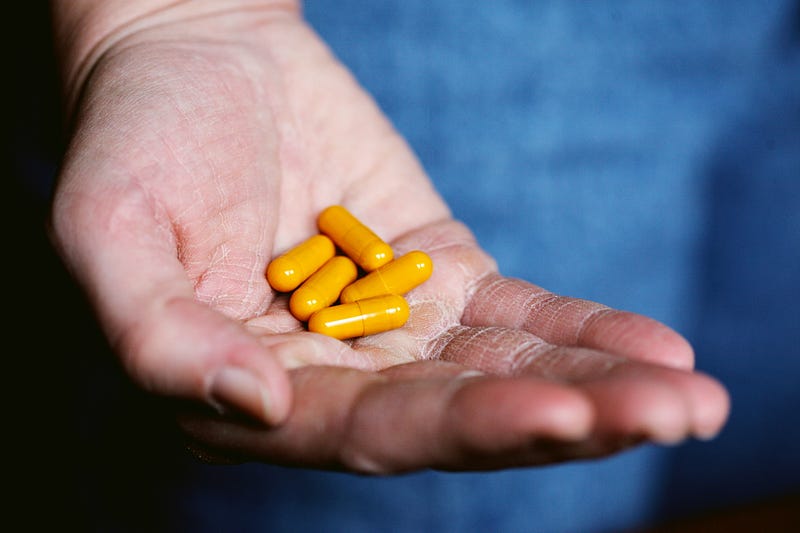
In 2001, a team of American cancer researchers launched one of the largest clinical trials ever conducted.
Known as the SELECT trial, the study was led by some of the country’s foremost cancer experts, including doctors at the National Cancer Institute, the Cleveland Clinic, and the Fred Hutchinson Cancer Research Center. They recruited more than 35,000 men who were at elevated risk for prostate cancer. Some of the men took a daily supplement containing 400 IU of alpha-tocopherol — an essential form of vitamin E that strong preliminary work had linked to anti-cancer benefits. Others took a placebo.
The trial was intended to last 12 years, but it had to be cut short. Rather than lowering the men’s risk for cancer, the vitamin E supplement seemed to have just the opposite effect. After years of follow-up monitoring, the study team determined that prostate cancer leaped by 17% among men taking vitamin E compared to those taking a placebo.
“The observed 17% increase in prostate cancer incidence demonstrates the potential for seemingly innocuous yet biologically active substances such as vitamins to cause harm,” the study’s authors wrote in a 2011 JAMA paper that summarized their findings.
The allure of health supplements is straightforward: by swallowing a concentrated dose of something that your body can use, you can improve your health or functioning. But over and over again, this formula has failed to spit out the expected result. In some cases, such as the SELECT trial, researchers have uncovered serious and unexpected dangers.
“You look at the research on vitamin E, beta-carotene, selenium, vitamin D — this highway is littered with roadkill,” says Mark Moyad, MD, a supplement researcher and the Jenkins/Pokempner Director of Preventive and Alternative Medicine at the University of Michigan.
“With few exceptions,” Moyad says, “nothing we’ve found suggests that the human body is designed to take in massive amounts of these compounds and derive a benefit from it.”
The SELECT trial is not the only large-scale study that has linked a common supplement to increased cancer risks.
A decade earlier, researchers from many of the same universities and cancer institutes found that lung cancer incidence jumped by 12% among at-risk people who took a mixture of beta-carotene and vitamin A, compared to those who took a placebo.
There again, preliminary research had pointed to cancer-blocking benefits that didn’t hold up. There again, a multimillion dollar trial had to be terminated early because people were getting sick and dying.
While such alarming trials stand out, a more common finding is that supplements don’t seem to do much at all — good or bad.
For a 2019 study in the New England Journal of Medicine, researchers looked into the benefits of a high-dose vitamin D3 supplement for the prevention of invasive cancer or cardiovascular events. They found no benefits among the general population.
It’s noteworthy that these are all studies of common and generally beneficial nutrient compounds — studies where the quality of the supplement ingredients is carefully controlled. When you look at the research on more exotic supplements — such as the cocktails of compounds packaged and promoted for weight loss, sports performance, or cognitive benefits — the picture grows murkier. Even if these products can actually deliver on their promises, no one is assessing their long-term safety profiles.
But despite all the risks and unknowns, we can’t seem to get enough of supplements. That’s especially true at times when our health is under threat.
“What people have to understand is that healthy nutrients don’t travel by themselves — they travel in herds.”
Even before the pandemic, health supplements were a booming $40 billion industry. Three out of four Americans took at least one of them on a regular basis, according to 2019 FDA figures. Year-over-year growth in the supplement marketplace was robust. But the emergence of the novel coronavirus pushed our collective use into another gear.
During the first weeks of the outbreak, supplement spending among U.S. consumers leaped by 44%. Similar sales booms occurred in France, New Zealand, China, and other countries. Not surprisingly, most of this growth was fueled by supplements with “immune-boosting” claims, many containing vitamin C, zinc, or vitamin D.
“The good news was that, at the same time supplement sales were surging, we started spending a lot more money on high-quality clinical trials to see if these things actually work,” says Moyad.
He says that hundreds of trials — large and small — have begun since the start of the pandemic. Unfortunately, the early returns have been a disappointment. “Nothing so far is making anyone jump up and down,” he says. “Nothing has been a jackpot.”
To illustrate his point, he mentions the “COVID A to Z” trial — a study from researchers at the Cleveland Clinic. The study examined the benefits of taking vitamin C, zinc, or a combination of the two among people with a confirmed coronavirus infection. Its findings, published earlier this year, were that the supplements didn’t make any difference.
“In Brazil they did a big trial on vitamin D, and that didn’t work out either,” Moyad says. “These first glimpses don’t mean that nothing is going to work, but we haven’t had any big hits yet.”
Not all supplements are ineffective. In special cases and with certain compounds, supplements are beneficial.
For example, older adults who have early forms of macular degeneration can slow the progression of that disease by taking a well-studied cluster of nutrients known as AREDS 2. Researchers have also found that a form of vitamin B3 called nicotinamide can prevent the development of new nonmelanoma skin cancers in people who have had these cancers in the past. And just this week, experts turned up evidence of an association between vitamin D supplementation and a reduced risk for autoimmune disease.
Meanwhile, for people who have a diagnosed nutritional deficiency caused by genetic factors, illness, or a specialized diet, there’s evidence that targeted supplementation can be beneficial. Pregnant women may also benefit from nutritional supplementation (although the evidence backing this widespread practice is not as strong as you might assume).
“Every time we try to reduce or extract these beneficial things from natural sources like food, we find they don’t work as well.”
But apart from these special cases, most research suggests that supplements don’t do us much good. The big question is: Why? We know our bodies need this stuff. Why doesn’t taking it in pill form do us more good?
“What people have to understand is that healthy nutrients don’t travel by themselves — they travel in herds,” Moyad says.
He says that the human body is made to engage with vitamins and minerals in the form of complex and precisely balanced nutrient packages that are designed for optimal absorption and biological usefulness. We usually call these packages “food.”
“The problem with supplements isn’t so much what’s in them as what’s not in them, which are all these other food compounds that work together synergistically to give us what we need,” he says. (It’s worth mentioning that Moyad doesn’t take supplements himself.)
He reiterates that if an illness or some other factor prevents a person from getting the nutrients they need from food, then supplements may, in some cases, be a helpful (though usually inferior) substitute.
But arguably the most important lesson we’ve learned from the research on supplements — a lesson that may also be applicable to other spheres of human health — is that most of us would be better off spending our time and energy seeking out natural sources as opposed to engineered substitutes.
“Every time we try to reduce or extract these beneficial things from natural sources like food, we find they don’t work as well,” Moyad says. “The human body wasn’t built to work that way.”