
What the Heck Is Kid’s Food Anyways?
Where it came from and why we’re doing it wrong
I was about nine years old, when my Japanese grandmother came to visit our family in the United States for Thanksgiving. She had been to the United States before but it had been a while, and even then she had only been to very select parts of big cities like New York or San Francisco.
Wanting to show her a bit more of what our suburban life looked like, our family decided to take her out to a classic, Italian-American, neighborhood restaurant on her first night with us — a nice but casual place where the lighting was low but the music was loud, and the waiters were more friendly than professional, but that was the way everyone liked it.
After we were seated and the menus were handed out, she pointedly spent some time flipping through the pages but eventually just looked over to my mom, asking her what she should order. But when she saw that my mom was being too indecisive herself, she turned to us grandkids and asked us what we were going to eat.
“Well we’re ordering from the kid’s menu, and I don’t think you’d want kid’s food.”
She laughed, what the heck is that?
Food is food, is it not?
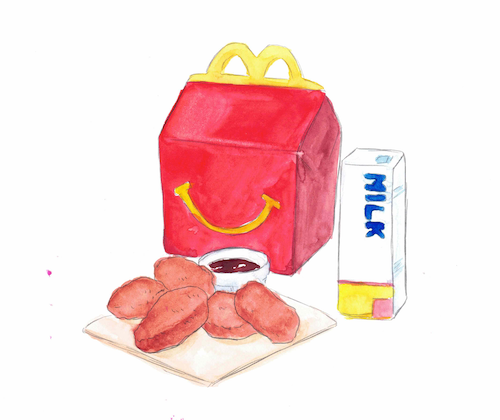
I grew up with children’s menus, and so it always seemed very normal to me that up until 12 I should be eating food that was offered to me on the last pages of the menu in the happier font and recognizable names. Chicken fingers, cheeseburgers, cheese pizza, spaghetti and meatballs, or a mac and cheese. This was kid’s food — simple in flavor and agreeable to everyone.
It’s what was offered to me in restaurants and in school cafeterias, and what was promoted to me in supermarkets and on television. It’s what my friends ate, and what I was served when I visited someone’s home. It had always been obvious to me that kids should be eating differently than adults.
I asked my grandmother if they didn’t have kid’s food in Japan, what did they eat?
Food is food, she’d shrug. Anything an adult would eat, a child ate the same thing — maybe smaller portions — but it never crossed her mind that kids would have to be prepared something else entirely.
History of kid’s food and where this idea came from
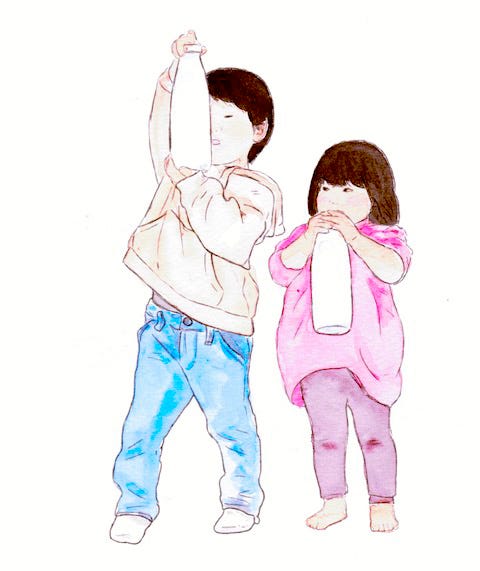
The modern idea of kid’s food first came about during 1920’s Prohibition in the United States, with The Waldorf-Astoria in New York believed to be the first establishment to create a children’s menu. Prior to, children rarely ate out with their parents, but to supplement lost liquor sales, restaurants were having to accommodate by welcoming children in their doors.
But it was really several decades later and the rise of Big Food in post-war America which lended itself to the development of the simplified and often unhealthy “kid-friendly” food innovations we see today. In 1973, the fast food chain Burger Chef created the concept of a kid’s meal, where burgers and fries were served with toys and crayons in bright-colored, mascot-covered packaging. It was only a matter of time before tv dinners and packaged snacks began to capitalize on this new niche as well, leading to inventions like Lunchables, Kid Cuisine, kid’s cereal, kid’s yogurt, and kid’s juice. If there was food that existed, there was a kid’s version to be made as well — often more sugar-laden, oil-heavy, and one-dimensional in flavor.
Suddenly what was first designed for them to eat on occasion outside the home, is now also informing their choices inside the home — hurting their health, making them picky, and making them increasingly overweight.
What we know is true about food and what kids needs
Yet we are beginning to realize that this is not what kids actually need. Generations older have grown up without these inventions, and the children today certainly have no reason to be limiting themselves to the mostly deep-fried options offered on a children’s menu.
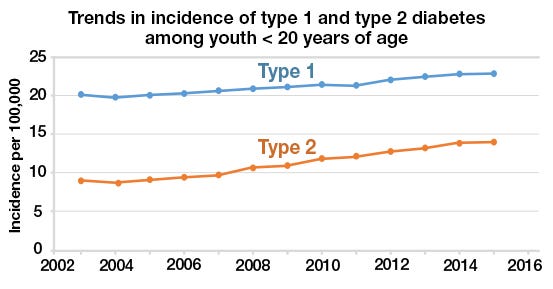
The United States suffers an obesity rate of over 20% among children ages 6 to 12. The rate of diabetes among youth under 20 has been steadily increasing in recent years. Thousands of parenting articles on how to convince their children to eat more fruits and vegetables are published every week, with entire consulting services revolving around helping children be less picky.
Yet as much as I like the idea that Michelle Obama’s new television show or creative smiley-face vegetables are going to help raise a generation of healthy children, I don’t think we actually need more “kid-friendly” ways to convince kids to eat healthfully. In fact, the more effective solution might be in something much simpler — graduating from the idea that children shouldn’t eat or can’t enjoy the same food as adults.
Children are not born picky eaters, but are currently shaped in a culture where we subconsciously teach them that they should be eating foods differently — that their taste buds aren’t developed enough to enjoy vegetables or appreciate unique and natural flavors. That to eat what their parents eat is to be pretentious, or to eat healthfully is a rare maturity. If we teach these narratives at a young age, it is more than enough to convince a child that they are true.
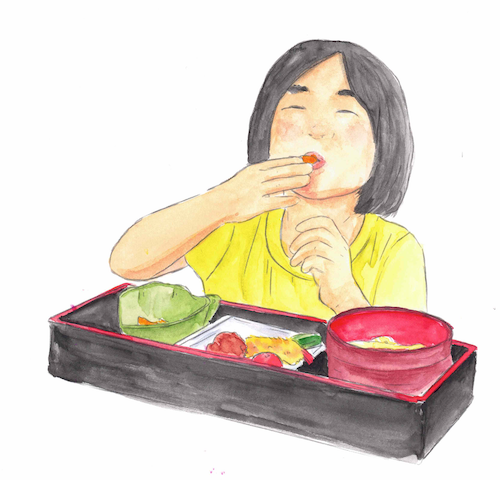
There is a bit of consideration to be made when thinking about what kids should eat — kids eat less than adults and we should account for that — but that doesn’t mean children should be pushed a diet of chicken fingers and pasta with butter. Let them enjoy complex flavors, interesting vegetable dishes, and cuisines from around the world! Show them that healthy food is delicious food, and that they can appreciate a wide flavor profile from even a young age. For sometimes the most innovative thing we can do for the health of the next generation is undo what modern narratives we have built.
Learn to be healthier, inspired by life in Japan:
I teach about health inspired by simple Japanese philosophies and lifestyle practices, so you can learn to find peace, fulfillment, strength, and health in your own body. Stay in the loop and get access to free resources: Sign up here!
