
Freewrite // Day 11
What Texture Should Noodles Be?
A reflection on how culture and norms shape that assumption
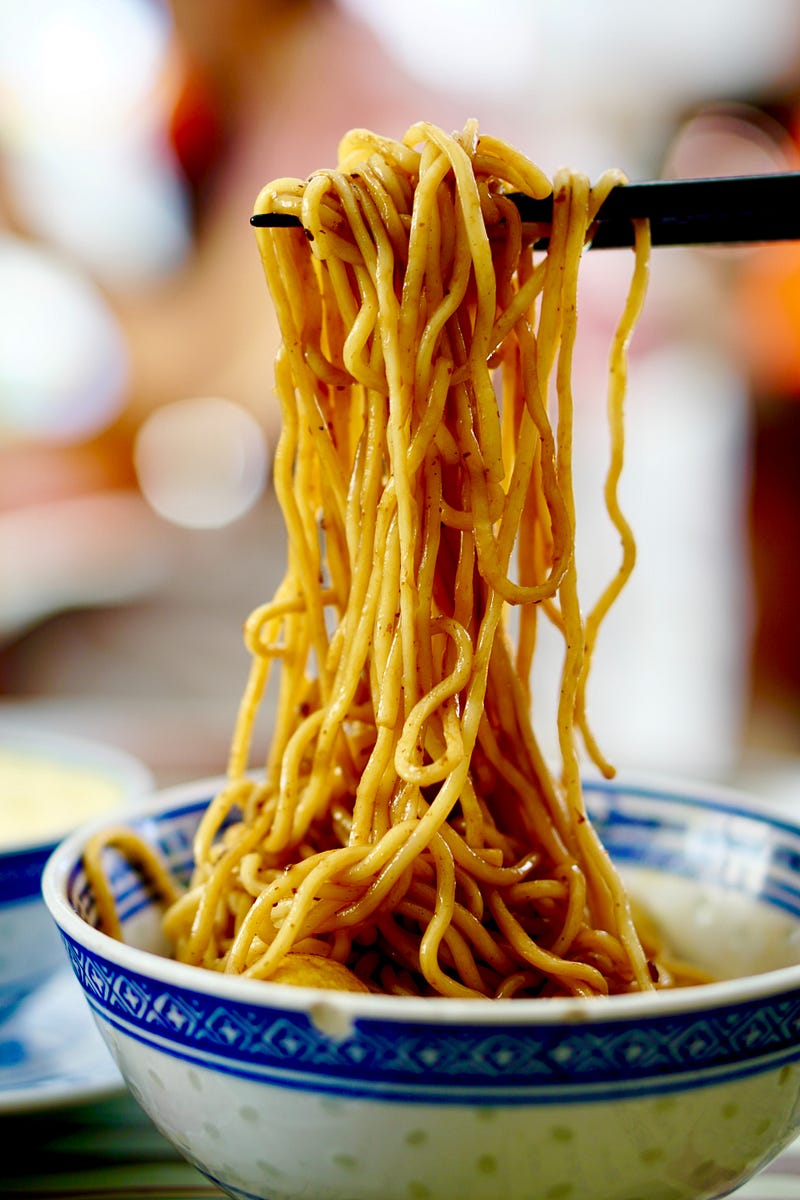
Al dente — those are the first words that come to mind when I asked this question. Culinarily, al dente is great, describing a consistency of retaining a firm bite despite being boiled. Pasta is such an easy go-to meal and has such a range from “easy, homecooked mode” to “pricey, fancy mode”. To many, al dente is also the just-right texture.
But to me, al dente has always been the “right” answer to share with people in small talk. Instead, if we were two people with a rising friendship, snacking on Korean Fried Chicken with beer at 3am, you may get the following answers instead.
Noodles should be bouncy?
Even saying the phrase “noodles should be bouncy” sounds really weird in English. When said in Cantonese, it’s such a common phrase that I wouldn’t bat an eyelash at it. How common words and concepts are said together shape our expectations and subsequently emotions towards phrases like this.
Did you raise an eyebrow?
I didn’t.
To me, bouncy noodles are the hallmark of a classic bowl of Hong Kong-style wonton noodles. What we get here in North America is a whole different ballpark, with soggy wontons and noodles sometimes paired with crispy fried wontons. These are completely different stories and histories.
When it comes to bouncy noodles, the bounciest of them all isn’t created by machinery, the way that most noodles are produced now. It’s created by bouncing on bamboo shafts to knead the dough with the goal of creating gluten — the culprit behind the bounciness of these noodles. It’s also a dying art.
It’s also truly amazing how often gluten shows up in Cantonese cuisine, particularly in the midst of popular gluten-free trends. From relying on gluten to be the basis of desired bouncy textures in noodles to adding gluten balls — yes, balls of fried pure gluten — to our hot pots, so much of my food traditions involved adding, not removing, gluten from our diets.
Finally, I find humour in the name of these noodles, called jook sing meen. This literally translates to bamboo noodles. Incidentally, Chinese folks living overseas are often rudely labelled as jook sing (bamboo).
The stem of the bamboo plant is hollow and compartmentalized; thus water poured in one end does not flow out of the other end. The metaphor is that jook-sings are not part of either culture; water within the jook-sing does not flow and connect to either end. The term may or may not be derogatory. Use of the term predates World War II. (Wikipedia)
Warning: it’s not a kind phrase, so don’t use it. But to me, there is a roundabout irony that a pejorative term about being an overseas Chinese person trying to connect with her heritage via the dying food preparation methods relating to bamboo that’s funny to me. In other words, it’s ironic for a jook sing like me (self-labelled now, a kind of personal acceptance for this term) to reconnect and undo their jook sing status with more jook sing related food. (Take that, auntie who made fun of me!)
But nothing beats my grandmother’s soggy noodles
If we dig even deeper into the night, I might share that what truly warms my heart are warm soggy noodles that my grandmother used to make.
Returning to the concept of pasta and how Western influences seeped into Hong Kong dishes is the emergence of Hong Kong Cafés (cha chan tengs), which serve a variety of fusion foods, such as milk tea.
The classic breakfast dish (tong sum fun) I’m referring to is made of macaroni-shaped pasta in chicken broth. In my mind, I think it’s supposed to mimic the broth-based noodles we have in Chinese cooking, substituting pasta for noodles, topped with a fried egg and sliced ham.
Here’s the catch. I like this dish with the pasta cooked as soggy as possible. No, theoretically, this isn’t culinarily good, but the nostalgia it brings from my childhood is a powerful magical force. She would make this classic dish, complete with the fried egg and ham, but she’d cook the pasta noodles until it reached maximum size. She did this to make the most economical use of all the ingredients and make sure that it was the most filling given what she had to work with.
This kind of frugality and stretching the dollar on ingredients that many don’t eat (e.g., pork bone soup, using corn “whiskers” to sweeten soups, etc.) wouldn’t make it into fancy Chinese cookbooks but is an important part of contributing to the recognizable taste of home.
This is true, even if culinarily, it’s not “good” and can be mushy.
That mushiness was love in the way that my parents and grandparents knew how to provide to us, in ensuring that our bellies were full and we were warm in a time when they may not have had the same in their childhoods.
It reminds me of a home I cannot return to, and a taste I cannot replace.
When you ask the question of what “good food” can be, you might get different answers. You might get the foodie answer, getting into the details of what extracts the most flavour in the best combinations. Or you might get an answer that evokes nostalgia and history that differs from the dominant narrative of how food “should” be cooked.
Which one do you hear more often? Why do you think you get certain answers over others?
I invite you to think about the questions you ask, the space you create and the norms you enforce when you ask about topics that are seemingly unrelated to culture or race. There’s often much hidden underneath “neutral” topics that pull for certain answers like “hahaha al dente pasta is the ‘right’ answer” and “wow, I’ve never shared this but I miss my grandmother’s soggy noodles sometimes”.
Hi I’m Lucy Dan 蛋小姐 (she/her/她) and I’ve been thinking about all of this since reading Li Charmaine Anne’s piece on cheese, eggs and racism: