
What “Sex Education” Season Four Got Right and Wrong about Disability Representation
How the show missed the mark with its disabled characters
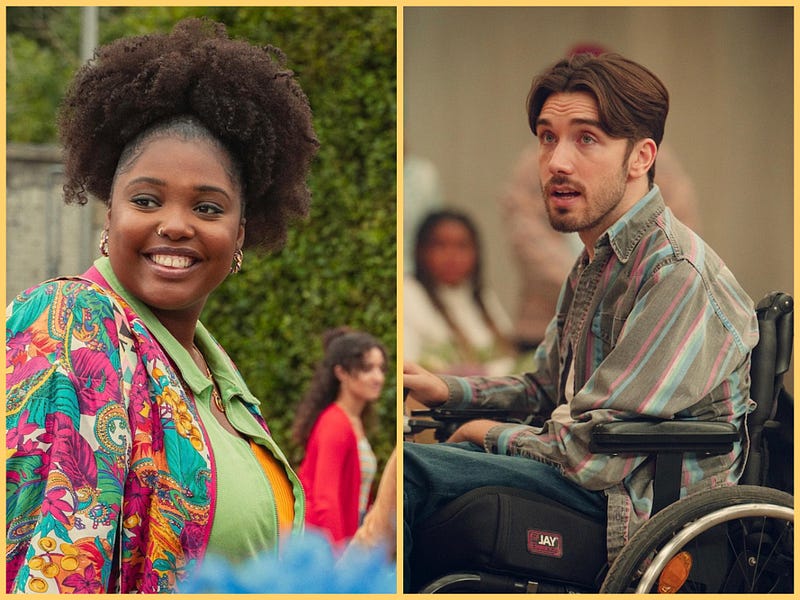
The fourth and final season of Sex Education was released on Netflix on September 21, featuring the return of Isaac and other fresh disabled faces. Was this the representation we called for, or did it fall short? Here are my thoughts as a Deaf and neurodivergent person.
I anticipate many criticisms of season four being disjointed from previous seasons. Admittedly unfamiliar with the British education system, the “college” thing confounds me still. Comparably modern and cult-like in its friendly student population, Cavendish is as unfamiliar in aesthetics as it is in characters. We are introduced to a slew of new, diverse characters, with no time to stop and care about them before another box-ticking one shows up.
Previous seasons of Sex Education were authentic in its representation. Only a few new characters were brought on each season, with each given fleshed out personalities and storylines. However, this season, each character, whether new or old, are given equal amounts of screen time. Be it Jackson and his potential testicular cancer, Jean battling postpartum depression, or Adam teaching kids how to ride horses, meaningful stories are not done justice. Eric’s journey of deciding to become a pastor outshone the rest, but got little more than a few minutes per episode.
One such underdeveloped character is Aisha, a Deaf woman who is part of Eric’s new queer friend group. We don’t know much about her beyond the fact that she is ethnically non-monogamous with her partner and likes astrology. The neglect to flesh her out beyond these basic character traits is disappointing as a Deaf viewer.
Regarding the Deaf representation, Aisha speaks and lipreads. One teacher is shown as using an FM system connected to her hearing aids, an obsolete technology which doesn’t fit in with the futuristic Cavendish. We learn later on that Aisha doesn’t know much British Sign Language, so perhaps a CART system with live captions would be more realistic, considering every student already has iPads provided by the school.
Following the episode where Aisha expresses her frustration at being left behind when the fire alarm is pulled, Abbi and Roman learn several signs in BSL. In response, Aisha does the dreaded sim-com. Any time I see this on a show, I assume it was done for the convenience of the hearing crew, at the expense of genuine representation. Simultaneous communication, or signing and speaking at the time time, is too laborious to do, even in casual conversations with friends. It would have been better if the hearing audience were made to read subtitles in those moments for a more immersive experience. Additionally, signing two-word phrases isn’t going to be much help. Aisha has lip-read thus far, so from both an accessibility and principle standpoint, it’s too little too late.
Another familiar disabled character returning this season is Isaac. The former villain of season two embarks on a budding relationship with Aimee, because we cannot have two disabled characters dating. I understand the reluctancy to play into the stereotype that disabled people only date other disabled characters, but imagine if Isaac dated a neurodivergent person, for example? There is more potential to explore the disabled identity, rather than explain it to another non-disabled love interest. By having Isaac as the villain in season two, Sex Education subverted one trope, but the snarky comebacks to Aimee’s dimwitted ableism in season four fell flat in comparison.
Notably, the ‘sex’ part of Sex Education was largely missing for the disabled characters. While Aisha and Cal do have one bathroom hookup scene together, we don’t see anything beyond kissing with either Aisha or Isaac. Otis has his flaccid penis revealed to the entire school, but the disabled characters getting any PG-13 action is pushing the limits. The beauty of Sex Education is the shameless conversations about the act, identity, and so forth. To skirt around the topic of sex and disability renders the representation a shallow one that departs from the show’s original premise.
As for other disabled characters, they randomly pop up in one episode to protest against the broken lift. With the exception of a girl with a facial difference who appears in the background of some shots, none of these characters are seen prior to the sit-in. What is supposed to be an inspiring moment of togetherness feels like an afterthought.
Cavendish College has a collectivist student culture that prioritizes community. Injustices such as Otis’s immature smear campaign of O are swiftly called out, but ableism remains unaccounted for. If this place is really a queer utopia where people are free to be themselves, why are disabled people literally and figuratively left behind? Save for this singular episode, disability issues (and more importantly, disability pride) are never given the same idealistic limelight.
All in all, Sex Education has shown us what coming-of-age shows could be. Through its excellent portrayal of topics considered taboo, such as vaginismus, abortion, and sexual trauma, Sex Education has built up viewers’ expectations, only to come crashing down in the final season. While the show does have redeeming moments, the attempts at any meaningful disability representation were lackluster at best. As we mourn the loss of what is otherwise an incredible show, it’s up to other shows in the future to go where Sex Education hasn’t gone with its disabled characters.
If you liked this article, please give it a clap, comment your thoughts below, and follow me for more stories. Thank you so much for reading and supporting my work!