
What Rafael Nadal 21th Grand Slam Success Can Teach to the Business World
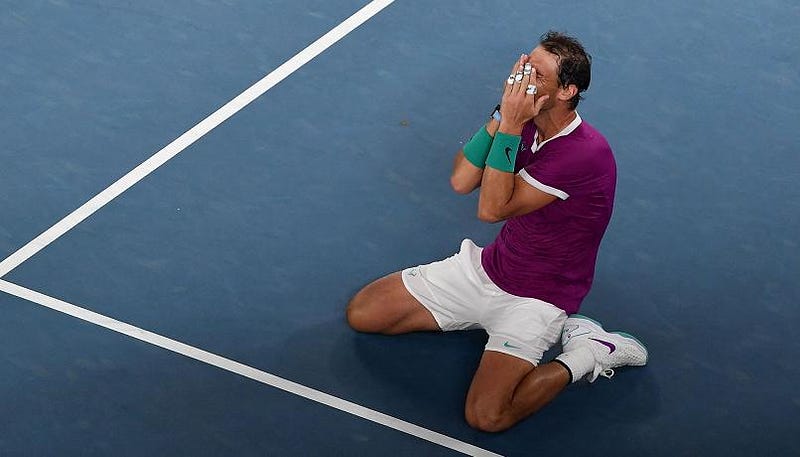
On Sunday, Spanish tennis player Rafael Nada won his twenty-first slam tournament, becoming the most successful player in tennis history.
Aside from the historical result from a sporting standpoint, the evolution of the match and the constant twists and turns may teach a lot even outside of the strict tennis field.
Indeed, approximately halfway through the second set, the score was 2–6 6–7 2–3 0–40 in favor of the Russian challenger Daniil Medvedev, who is ten years younger than the Iberian tennis star.
For those who know tennis, it is evident that the score position is nearly desperate, but to better grasp, the situation, consider the victory percentages that were being estimated by A.I. systems and bookies all around the world. Nadal’s chances of winning were projected to be 3 to 5%. I’ll leave the story of how reality has defied statistical predictions to sports journalists.
This story, I believe, has a lot to teach everyone, including business professionals.
With the growth of technology, the business world has become increasingly reliant on numbers and data analysis. Forecasts and statistics can help the economic world and businesses, but at the heart of everything, there are always people. In sport, as in life and in business, not everything can be predicted.
We live in a world that seeks methods and rules to govern all procedures in a rigorous and error-free manner. However, it is worth recalling that as long as men remain the protagonists of the corporate world, errors will occur, as unexpected accomplishments will appear to defy statistical principles.
Thus, continue to analyze in detail every aspect of your business, check all income and expenses to optimize profits, do in-depth reports and market analysis for future choices and take advantage of all the tools that today’s world offers to increase the chance to be successful, but do not forget that numbers are always numbers and that maybe every now and then it is worthwhile to go against what seems easier or more probable, and follow your passions, innovation or simply invest in what you love or feels right, even if it has only 3% chance of success.


