
What Putin Gets Wrong About Dostoevsky, Tolstoy, and the Russian Soul
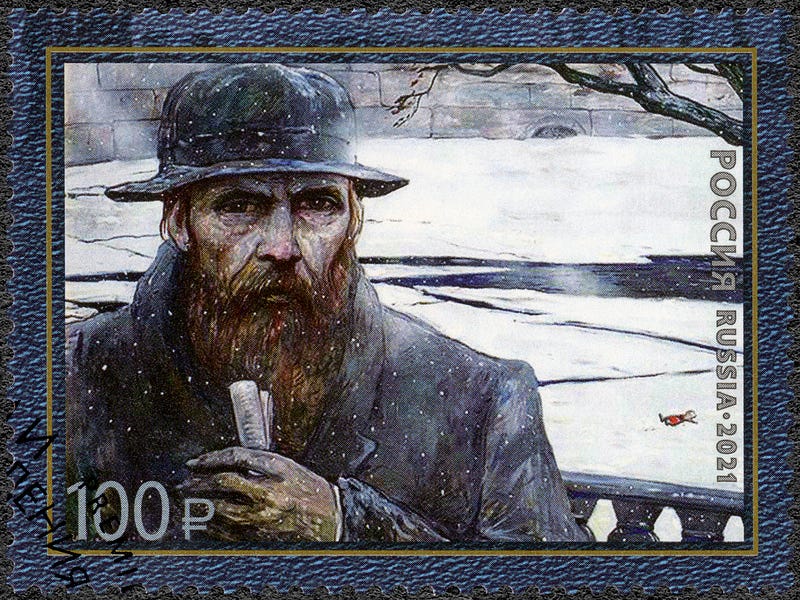
To understand how Vladimir Putin could so dramatically miscalculate the reaction to his invasion of Ukraine, one must turn to a well-known character of Russian literature: Rodion Raskolnikov. He isolates himself. He gets lost in thoughts of himself as a Napoleon figure, a superman, who isn’t required to follow the rules that govern the rest of the population. He misjudges people; he misinterprets signals and situations.
When you see Putin through the eyes of Fyodor Dostoevsky’s protagonist in Crime and Punishment, it suddenly seems clear how the Russian president, widely thought a strategic genius, could not only misjudge the United States and Europe but underestimate the resolve and character of Ukrainians, the people he says have always been Russian.
Most strikingly, it explains how Putin could be so out of sync with Russian citizens. More than once he declared that the role of government is to take care of the “rights of the individual and care for society as a whole.” He must believe then that Russians aren’t bothered that the ruble has collapsed, that they are now cut off from the rest of the world. He must believe that Russians won’t be devastated when they learn of the displacement and deaths of their family, friends, and colleagues.
Like Raskolnikov, Putin’s extreme isolation has allowed grandiose visions to cloud his judgment and moral sensibility.
But Putin’s alienation from the Russian spirit goes even deeper — to his unfamiliarity with Russian literature.
All literature provides a glimpse into the soul of the nation from which it originates, but for Russia, this is particularly true. In The Superstitious Muse: Thinking Russian Literature Mythopoetically, David Bethea affirms that few societies are more dependent on their literature for overall meaning. It is their principal source of national identity and cultural mythology.
Russia’s literacy rates are among the highest in the world, with Russian classics introduced already in the fifth grade. War and Peace is required reading, and even so, its popularity is comparable to popular fiction bestsellers in the West.
The reasons for the importance of literature for Russians are many, says Bethea, but foremost is dukhovnost, the pervasive spirituality of Russians. Prior to Aleksandr Pushkin in the 19th Century, literature was primarily focused on saints, chronicles, and epics, and after prose was introduced in 1831 with Pushkin’s Tales of Belkin, literature retained its sacred status. Bethea asserts that writers have long operated under the belief that “they are writing, not one more book, but versions, each in its way sacred, of The Book.”
Prime examples of this are Dostoevsky’s The Idiot and The Brothers Karamazov, where a Christlike figure is depicted in the character of Prince Myshkin and later, in fuller, more realized form, in the youngest Karamazov, Alyosha.
This relationship between society and its authors is further strengthened by a state that has undermined individual freedom and human rights as far back as Tsarist times.
It is no wonder, then, that Russian authors are both the key representatives and purveyors of Russia’s social conscience.
Vladimir Nabokov wrote roughly a hundred essays analyzing Russian literature, and in his review of Leo Tolstoy, he reveals another reason Russian literature is so important to ordinary Russians. Referring to the dual nature of Tolstoy (artist vs. moralist), Nabokov says:
“Whether painting or preaching, Tolstoy was striving, in spite of all obstacles, to get at the truth.”
The truth that occupies the Russian soul, he says, is not simply pravda (truth) but istina, which he describes as the inner light of truth. Most Russian writers, he says, are interested in truth’s exact whereabouts and essential properties. In evocative Nabokov style, he describes Tolstoy’s approach:
He “marched straight at it, head bent and fists clenched, and found the place where the cross had once stood, or found the image of his own self.”
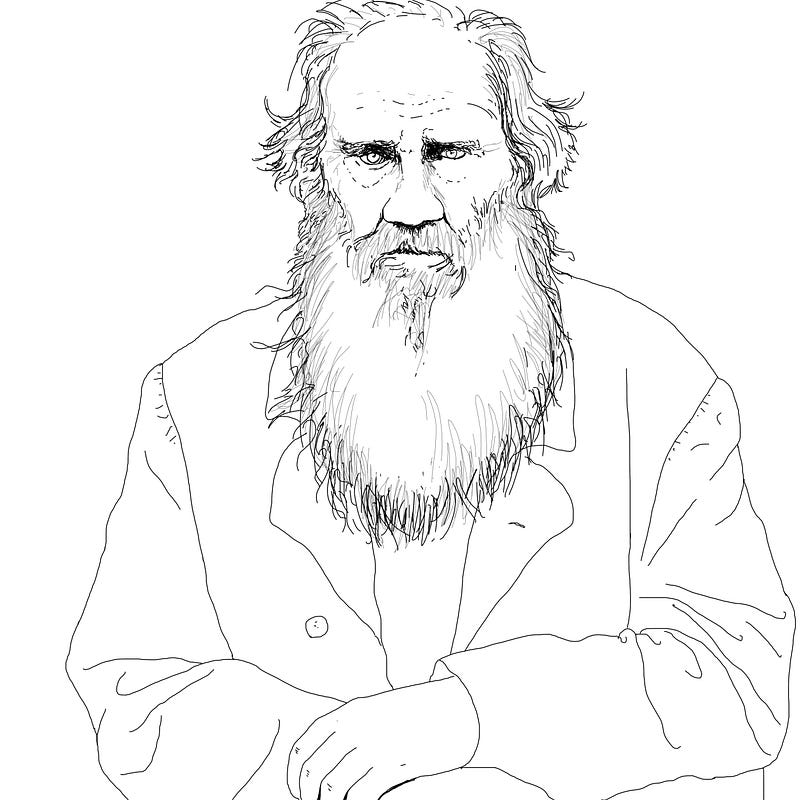
One of Tolstoy’s recurring themes is war. He had significant experience as he served in both the Caucasian and Crimean Wars. His novel The Cossacks and his short story collection Sevastapol Sketches describe in haunting detail the atrocities and suffering he witnessed, and pacificism would become a central theme of his life.
He would write:
“Understand … that to want to impose an imaginary state of government on others by violence is not only a vulgar superstition, but even a criminal work.”
In 1908 Mohandas Gandhi read a letter that Tolstoy penned at the request of the editor of Free Hindustan.
“What are wanted for the Indian as for the Englishman, the Frenchman, the German, and the Russian, are not Constitutions and Revolutions, nor all sorts of Conferences and Congresses, nor the many ingenious devices for submarine navigation and aerial navigation, nor powerful explosives … but one thing only… the law of love, which brings the highest happiness to every individual as well as to all mankind.”
After reading the letter, Gandhi wrote directly to Tolstoy, and the two continued to correspond until Tolstoy’s death in 1910.
Gandhi characterized Tolstoy’s influence as being central to his principle of nonviolence:
“Of all the utterances of modern ethical doctrine, it was [Tolstoy’s] writings which most strongly confirmed me in my ideas of the positive power of non-resistance, and of the renunciation of all types of violence.”
This message would later inspire Martin Luther King Jr., who read The Kingdom of God is Within You, Gandhi’s favorite, and in an interview named War and Peace as one of his most-loved novels.
But King and Gandhi are not alone in their admiration of Tolstoy.
Putin quoted Tolstoy after a meeting with President Joe Biden last June. “There’s no happiness in life, only a mirage of it on the horizon.” He advised that if anyone wanted to understand Russia, they needed to read Tolstoy. He further named War and Peace the book that influenced him most.
Putin, however, cannot have read War and Peace, particularly not Tolstoy’s account of the 1812 Battle of Borodino when Napoleon Bonaparte’s Grand Army fought Russian forces. Nor can Putin have read any of Tolstoy’s other works because, in every one of them, the principles of unconditional love and nonviolence are inescapable. As Nabokov says, one cannot separate the artist of Tolstoy from the teacher. “The thing cannot be done: Tolstoy is homogeneous, is one…”
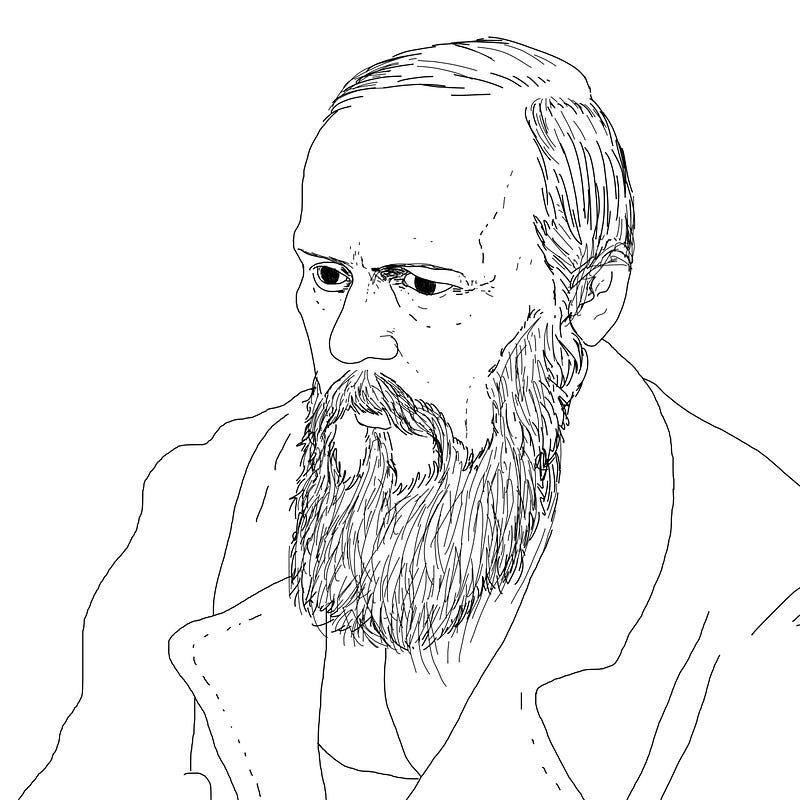
But Putin still has another favorite to turn to: Dostoevsky.
If Putin had read Crime and Punishment, he would have learned that it is Raskolnikov’s absence of values that enables him to kill a greedy old pawnbroker and her innocent sister. Putin would have learned that his humanity relied on connecting with other human beings, that a life without love and friendship was no life at all.
If Putin had read Crime and Punishment or indeed any Russian novel, he would have found something of what Dostoevsky found when closely studying the people around him: a people “capable of encompassing the idea of universal unity, a sense of brotherly love, and a sensible reception of things.”
As it is, Putin has not understood the language of Russian literature, the soul of the country, and Russians are starting to realize this.
Even with Russian state propaganda, more than 17,000 artists and cultural workers signed an open letter to Putin criticizing the invasion of Ukraine, as did 150 Russian officials, 7000 Russian scientists, 150 members of the Russian intelligentsia, and 100 Russian film directors. More than 15,000 Russians have been detained because of anti-war protests and the numbers keep rising.
Putin perhaps said it best: “If you aspire to be a leader of your … country, you must speak [the] language, for God’s sake.”


