
What NYU Film School And Early Production Experience Taught Me
Or: How to Reconcile Your Love of Cinema With a Toxic Industry
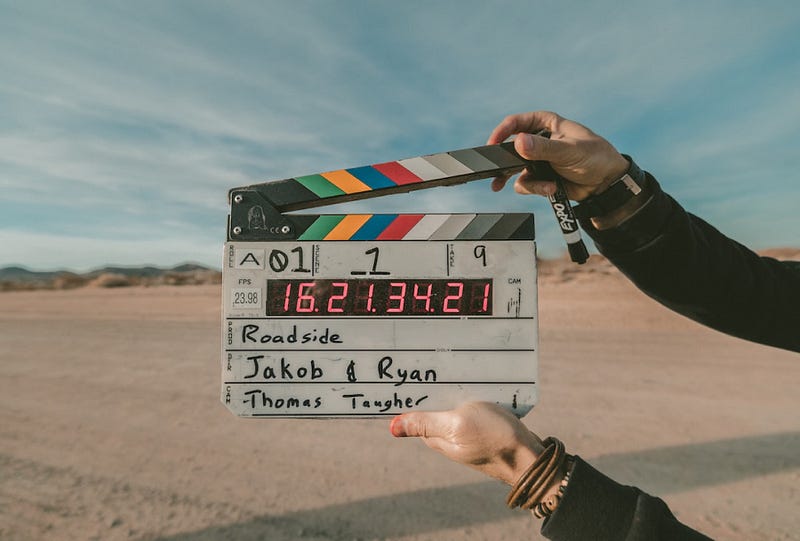
As a newly accepted student at NYU’s prestigious Film & Television program, I knew that there were certain expectations around me: expectations coming from the faculty, expectations coming from my family — which was very dearly paying for the privilege of me attending the school (and taking out bank loans in addition to paying out of their own pockets). There was also the pressuring knowledge that everyone around me was exceptional. This was one of the most selective universities in the US and the same film school that living legends such as Martin Scorsese, Woody Allen, Oliver Stone, and Joel Coen had attended. My immediate assumption was that everybody around me had to be incredibly talented and that if I was to keep up with them — the notion of “standing out” wasn’t even remotely in my head — I would have to push myself to my very limits and to give it all I had.
No matter the price.
I never once stopped to think of “self-care.” That word was non-existent in my vocabulary. My needs were way too trivial to worry about. This was my career we were talking about, my future, the dream of a lifetime that I was finally given an opportunity to achieve. Producing anything short of excellence was out of the question. I was here to work hard, to prove myself, and to excel.
Oh, and failure was not an option. Naturally.
Nothing would stop me from achieving my goal or, at least, attempting to do so with all I had, which is exactly what I did. Until, one day, during my second year of college, something did stop me…
You see, even though my mind was inflexible about my rigid work routine and diligent study, my body was very much beginning to object to all of this. As was my mind (beyond what was my undeterred consciousness).
I finally suffered a massive mental breakdown that had me hospitalized for about a week. When I got to the psychiatric ward of the hospital, my nurse was appalled at how low my blood pressure was.
That was the first time in over a year that my mind and my body had been given a chance to stop and simply recover. But even by that point, the damage was already irreversible, and the damage to come would be even more so.
What didn’t help was the fact that, a few months later, I was diagnosed with Borderline Personality Disorder, a condition that I knew absolutely nothing of, and which definitely didn’t deter my very determined mind from keeping on pursuing my goals with all that my body and neurodivergent mind could muster.
Some people say a man is made outta mud,
A poor man’s made out of muscle and blood,
Muscle and blood and skin and bone,
A mind that’s weak and a back that’s strong.
I worked myself to the bone. But far from being the mistake of a naive, overambitious young cinephile, I would later come to realize that this same scenario of back-breaking, nerve-wracking routine is exactly what entry into the filmmaking industry is like for most wannabe filmmakers who have the misfortune of not being born “into the business” or of not being “connected.”
It began with a fortuitous encounter with a fellow industry worker, another genuine film lover and proverbial “industry no-one” who had graduated in Film & TV and set out to work in the film industry by starting at the very bottom of the production ladder: production assistant (PA). Just like I had.
This person explained to me that, while still at the beginning of their career in entertainment, they had had to take a hiatus from the film industry. A hiatus that lasted for almost three years. They then, rather reluctantly, recounted some instances of mental, sexual, and verbal abuse, as well as bullying, unprofessional conduct, and a general toxic workplace environment that had utter disregard for its lowest-paid employees.
I was shocked at how much their experience resembled mine.
Apart from the sexual abuse, which I was lucky enough not to encounter*, all their experiences were eerily similar to mine.
I have worked on sets where the director, along with the other people in charge of the production, showed absolute disregard for the physical safety of their cast and crew.
I have worked on sets where the only form of “catering” offered was cold pizza, or other questionable fast food items, on productions running for 12 hours — and, more often than not, overtime.
And if I had ever been paid for the unpaid overtime that I spent on film sets, where an exhausted and poorly-fed crew was being forced to work way past 12 am, perhaps I would be able to afford decent housing…
A few months after my hospitalization and additional on-set work, mostly in the faculty of production assistant, I had to promise myself that I was never going to take that same job ever again. Even if it meant giving away a lot of valuable experience and a lot of valuable credits on my IMDB profile that could possibly boost job opportunities for the future. My mental and physical health was at stake, and I understood all too well that I simply couldn’t go on.
I can’t tell you how long I’ve ruminated over that decision and how much I have blamed myself for being “too weak” or “not hard-working enough” before eventually coming to the realization that the problem wasn’t me but rather the workplace itself.
It was easier to be hard on myself and to ponder whether or not I actually had “what it took” to work in the industry. It never occurred to me that I could question how the workplace culture operated. After all, these people were in the business: shouldn’t they know better than me?
I only came to understand the full picture in the past few days after two major events took place.
The first was the SAG-AFTRA strike, which followed the WGA strike, uniting performers and writers alike against the AMPTP.
The second one was the reading of Maureen Ryan’s exposé book Burn It Down: Power, Complicity, and a Call for Change in Hollywood.
I realized, to my shock, how many young individuals like myself have entered the film industry at low-paying jobs, just like myself, and worked their bodies and minds to extreme levels of exhaustion, just like myself, all while being fed the hope that this was “the way to make it” by our much higher-paid, much more “connected” superiors.
Even more shocking than that, I learned that industry “veterans” who had more than respectable careers were now being treated with the same disrespect and disregard as the many “no-ones” in the industry that I myself was part of.
The ugly truth was staring me straight in the eyes, and I couldn’t avoid its look: this industry was toxic and thrived on exploitation.
There is no easy way to explain how this notion can impact somebody whose life was defined by their undying love and devotion for filmmaking and storytelling. While I did not enter the filmmaking industry thinking that “talent” would be the driving force that propelled me or anyone else to success, I could have never imagined just how naive my expectations still were. I could have never imagined how much abuse and toxicity permeated the entire industry.
Ryan’s book tells many-a-horrifying stories, including those of young professionals who had to abandon the industry after the scarring experiences they had to endure and even that of a former assistant who ended up committing suicide after spending less than ten years at their workplace.
In the years following my graduation from NYU, I found myself unable to apply for any on-set film job. In some cases, even after I pushed myself to look up some entry-level jobs or internships, a few glances at the general work conditions or compensations offered were enough to make me shiver with horror and disbelief.
It took me very long to recognize that I was suffering from some form of trauma that made me physically unable to push myself to work in an environment like the ones I had seen before. I was scared. I didn’t feel safe. I knew that if I was to “keep rolling” with this, I would be in for more long, physically exhausting, underpaid 12-hour daily shoots with poor food, unprofessional conduct by my superiors, and a lot more mental health damage. And in most cases, these convictions were corroborated by the job descriptions themselves, one of which asked for employees to “bring their own vehicles for transportation and shelter” (and if I told you which high-rank, official organization made this posting, you would never believe me…).
The career that I had been pursuing my entire life offered me a choice: that career — or rather the “promise” of it — or my mental and physical health. I put myself to the test. I willingly put my mental and physical health at stake. It was only after I had to literally be escorted to a hospital that it became clear to me: this was not feasible, not for me, and not for anyone else. And it took me even longer to realize that, other than non-feasible, it was unacceptable.
I haven’t abandoned the film industry, but I have consciously taken a step back to pursue what I really want to pursue without endangering my physical and mental health as I do so. But still, it was a very difficult and painful choice because, as the “industry no-one” that I was, I had been convinced that the only way to be granted access into the Olympus of visual storytellers was to sacrifice all that I had in order to “prove my worth”.
But, as the recent WGA and SAG-AFTRA strikes prove, revolution is in the air. The first shockwave to hit the industry was Harvey Weinstein’s arrest and the rise of the #metoo movement, which first shed light on the pervasive issue of sexual harassment in the industry. But that was just the tip of the iceberg. That was just a facet of the many injustices and forms of abuse that dominate the industry. And even though a lot of things changed after that, there’s still a long way to go.
The film industry is overdue for change.
*By the time I started working on film sets, the #metoo movement had already taken over the industry and changed a lot of things in regard to sexual harassment in the workplace.
Follow The Hub Publication for practical tips and inspiring stories.


