What My Rescue Dog Taught Me About Anxiety
How to recognize this commonplace but often hidden emotion in canines and humans
Most of you know anxiety when you see it. Whether in film or real life, you readily notice the shakiness, the sweaty palms, the stammering cadence during a speech.
But sometimes, it remains hidden. Some folks have a talent for hiding their fears and “white knuckling” it through stressful situations. You don’t see their butterflies or racing heartbeat. You are never privy to the panic and despair and terror they hold inside.
Like most of you, I know the lived experience of anxiety, worry, and dread. And as a clinical psychologist, I have worked with countless clients whose lives have been disrupted by this universal emotion. I am well aware that anxiety can be masked or that it can manifest in less obvious signs — exhaustion, irritability, aggression, withdrawal, and avoidance maneuvers.
And yet, despite my experience, I could not see the anxiety in my dog.
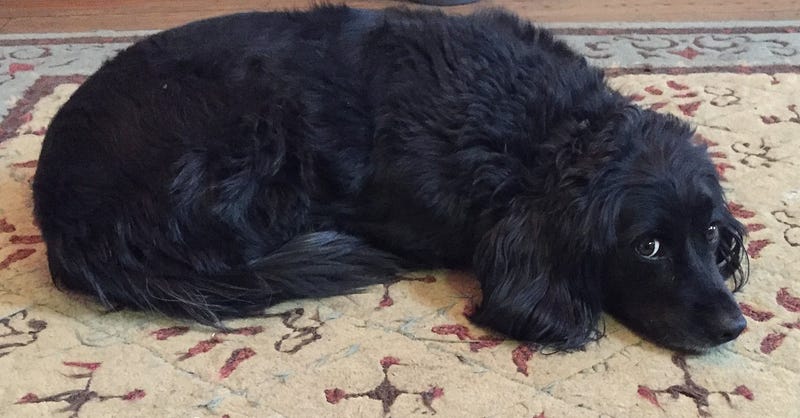
Josie, my friendly, energetic (some might say hyper) rescue dog is affectionate and cooperative… until she’s not. Encounters on leash near any dog devolve into vicious barking. Tall men, workmen, the proverbial mailcarrier, and one time, even two elderly women on a walk near their nursing home –- all are subject to her aggressive demeanor. Even at home, approaching her food bowl or a toy sometimes elicits growling and occasional lunging with bared teeth. Her aggression and reactivity are always startling and very unpleasant.
I work with people — not animals — so I doubted that my clinical training would apply. What do I know? I’m not an expert on animal behavior!
I sought guidance from dog trainers who recommended approaches that ultimately backfired. A gradual feeding program to overcome food guarding or showing “dominance” only heightened Josie’s aggression. Even though I assumed she had been traumatized before we adopted her, I never connected this past history with her current behavior. She never displayed the typical signs of anxiety, like cowering during thunderstorms or hiding from strangers. I only saw her aggression.
But like with people, aggression in animals can be triggered by fear.
“The vast majority of aggression in pet dogs stems from anxiety,” says Laurie Bergman, VMD, a veterinary behaviorist in the Philadelphia area. “It’s a self-defense measure even if they look offensive.”
The universal emotion
My dog’s underlying anxiety, displayed as aggression, is not that different from what happens among us humans. Aggression often masks the vulnerability inside.
Anxiety is a universal emotion that was designed to protect us. Fear signals put us on alert when a saber-toothed tiger or warfaring tribe loomed nearby. Nowadays, our fears include situations that pose no mortal threat: driving through tunnels, public speaking, socializing at happy hour. We obsess and worry and predict dire outcomes. We assume others are judging us or that catastrophe lurks around every corner. Anxiety can become entrenched when there is exposure to childhood trauma, adverse childhood events, or adult traumatic experiences. As I have written before, the impact of intergenerational trauma also can plague offspring for several generations to come.
Of course, everyone experiences stress, which is an emotional response to a difficult situation — financial setbacks, screaming kids at home, excessive work demands. Anxiety arises when our coping strategies lapse, when the stress becomes overwhelming, and when negative thoughts and assumptions fuel worries. Not all stress leads to anxiety; however, it can set the stage for anxiety or for unhealthy behaviors used to quash this uncomfortable emotion.
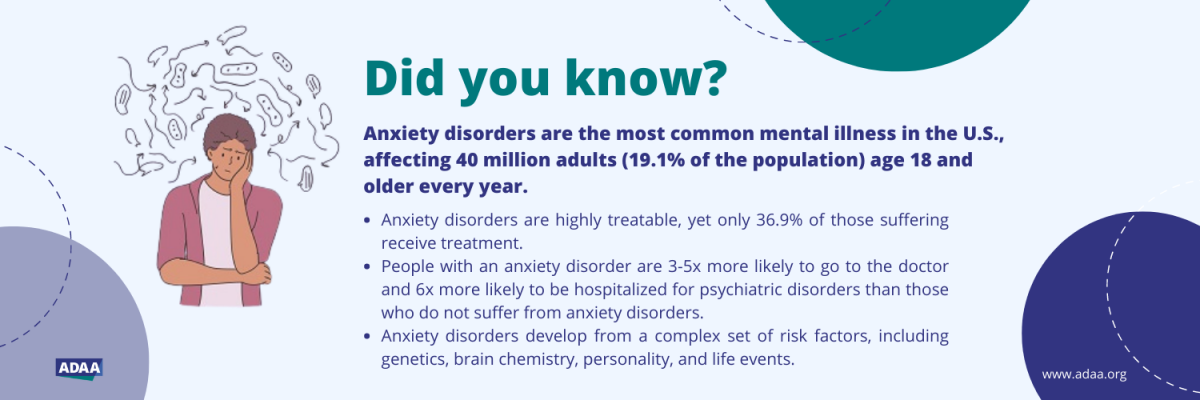
“Anxiety disorders are the most common mental illness in the U.S. affecting 40 million adults,” states the Anxiety and Depression Association of America (ADAA). That’s almost one-fifth of the population. Even more troubling, 31.9% of adolescents ages 13–18 have experienced symptoms of anxiety, according to statistics from the National Institute of Mental Health.
Anxiety can manifest as panic attacks, phobias, social anxiety, obsessive worrying, a generalized, free-floating feeling of anxiety, post-traumatic stress disorder (PTSD), or obsessive-compulsive disorder (OCD). It can coexist with other psychological disorders, such as depression, disrupts sleep, and impacts physical health and well-being. It contributes to unhealthy compensatory behaviors used to quell distress, ranging from substance abuse to skin picking to video game “addiction” to eating disorders.
And aggression can become a defensive fall-back mechanism used to protect us from further harm — even though it pushes others away when we need them most.
Most people focus on another person’s behavior alone, which can blind them to the underlying triggers and lead to misunderstanding. A coworker might seem bored or distracted, but their internal world is awash in worries and obsessive thoughts. A family member might become defensive during arguments because they fear judgment. Young children retaliate with aggression toward even their closest friends; unable to calm themselves or voice their fears, they lash out physically.
Adolescent boys and young men, in particular, learn to adopt the “boy code,” in which they hide emotions and strive to appear fearless. Children raised in neighborhoods where violence is commonplace must adopt a tough demeanor from the start; any sign of weakness or vulnerability places a target on their backs. And adults are quite aware that certain jobs leave no room for vulnerability; think medicine, law enforcement, finance, construction, and of course, the military.
What works for Josie…
Josie is somewhat less reactive and aggressive, thanks to the help of calming techniques, a very gradual introduction to anxiety-producing situations, and a substantial dose of psychotropic medication. What works for people, though, may be more complex.
Like Josie, people need support, coping skills, and sometimes, treatment to manage stress and anxiety. The list of strategies is exhaustive (and will be explored in a future article). Some of the basics, though, include adequate self-care (such as good nutrition, sleep, exercise, calming practices, time for “play”), along with learning to identify and challenge negative thinking, and using mindfulness techniques to focus on the present moment rather than ruminating over the past or worrying about the future.
It falls on us as parents, teachers, friends, family members, and employers to recognize that sometimes, defensive, aggressive, and even bullying behaviors can stem from a deep well of anxiety. We don’t have to tolerate hostile behavior. However, recognizing the connection between anxiety and aggression can allow us to regroup, put aside our own defensive reactivity, and perhaps, feel some spark of compassion for another person’s troubling underlying emotions.
For more information about anxiety, you can start with these organizations:
And for your anxious pet, you might start here: American Veterinary Society of Animal Behavior