
What My First Car Taught Me About Judgement
Free yourself from dwelling on a false narrative
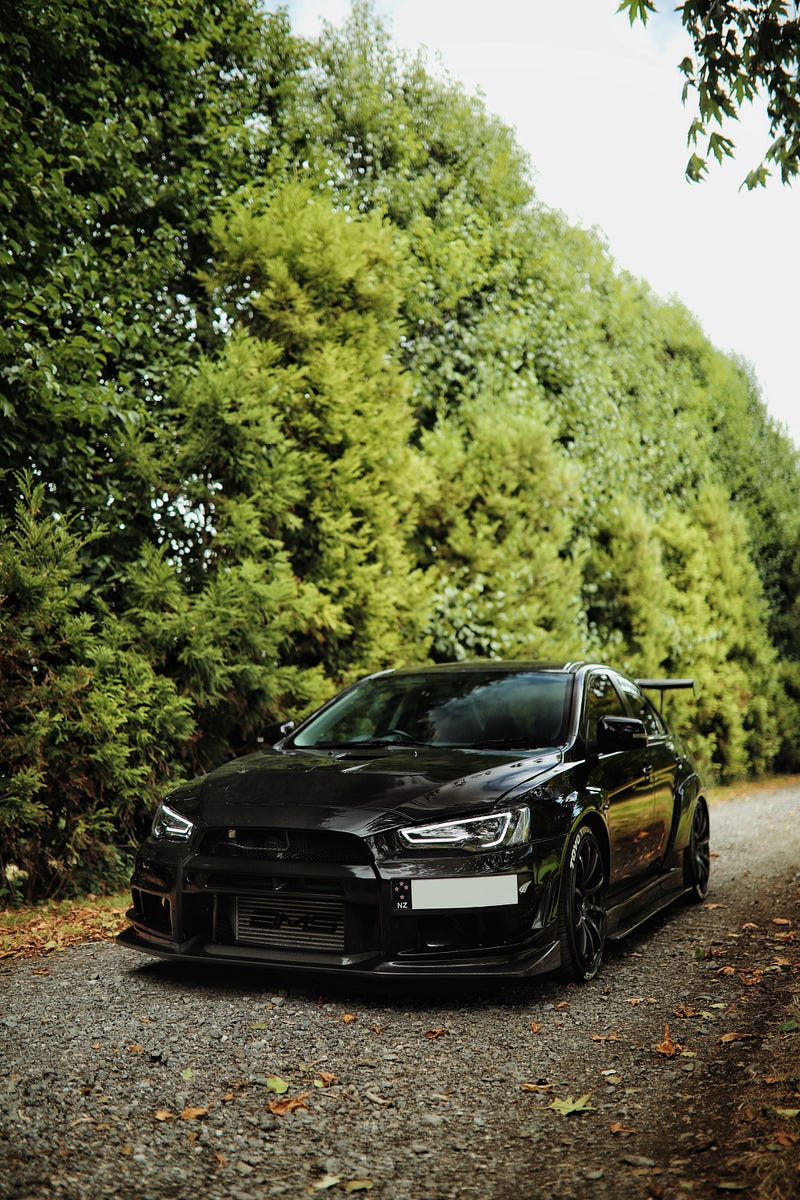
Graduating, landing a job, and purchasing my first car was the trifecta. Not having to ride-share with my parents was another level of freedom.
Now came the difficult task of choosing something affordable yet trendy. My friend eventually coaxed me into stopping by the dealership she worked at.
Showrooms are the grown-up version of Wonka’s chocolate factory. After gawking at car after car, the showstopper called out to me from center stage. It was a newly designed fully loaded 2007 Mitsubishi Lancer.
With my friend’s backstage pass, forget MSRP, I’d be getting this wholesale. She’d make a bit a commission and I’d be off showboating in no time.
As negotiations began, you’d have thought I was buying a Bentley. I was getting dizzy from the suicides my friend was running from me back to her manager. After a while, we gave her a break and I dealt with her boss directly.
Stone-faced, surly, and seated in a way normally reserved for resort vacations, this guy had no intention of relenting and was determined to extract every penny he could from me.
Locked in an eternal stalemate he cried for his daddy’s rescue.
The owner(his daddy) was more reasonable but not by much. Exasperated I took a deal that got it down from a Bentley to a Benz.
Before I drove off the lot, my friend’s manager strutted over with a piece of paper in hand. He gave me a 20 dollar prepaid gas voucher to bury the hatchet.
If I wasn’t so steamed at this man trying to nickel and dime me, I would’ve taken a closer look at the voucher. “Take it easy chief!” was the last thing I heard before I got the hell out of there.
Along with vital brain cells, I let the intoxicating new car smell kill the negativity inside me.
I handed the gas attendant my voucher and got a look of confusion in response. After closer examination, the ”peace treaty” turned out to be chicken scratch scrawled on the dealership’s letterhead.
The long drive home was filled with a combination of vengeance and the car salesman’s maniacal laughter echoing in my head.
Why We Judge
We feel threatened. We think our beliefs make up who we are. Therefore our identity is linked to our egos.
We remember the painful breakups. They take a long time to get over. Left unchecked, we build emotional walls and subsequent relationships suffer. By puffing up like a blow fish to defend our vulnerability, we never give a potential partner a fair shake.
Dumping baggage on an unsuspecting person forces them to prove their worth. After the dust settles, the only satisfaction we’re left with is the fulfilment of our own prophecy.
We love commiserating. There’s comfort in being included.
Feeding off of each other’s rotten feelings toward your manager or company gives everyone a temporary collective rush. While it relieves tension in the short run, dragging yourself to the office only becomes more stressful as time goes on.
Once you start trying to convince yourself to be grateful, the phonier it feels. Once you’ve emotionally checked out, there are no refunds.
You decide to turn over a new leaf. Reading those self-improvement books opens your eyes to the gap that needs bridging. You’re determined to climb the mountain of improvement that awaits you.
Along your journey, you come across other climbers, some more advanced and others struggling with each step.
You look back to see hikers you’ve passed with a swollen sense of pride. Then you look ahead to the advanced hikers and scoff assuming they just got lucky.
As Carl Jung once said, “Everything that irritates us about others can lead us to an understanding of ourselves.”
When we wish our lives were different, it’s easy to judge others.
Why Judging Others Is a Losing Battle
“Never wrestle with a pig, you get dirty, and besides, the pig likes it.” — George Bernard Shaw
Who’s worse off today? The car salesman who enjoyed a laugh then forgot about me or the person who hasn’t stepped foot in a dealership in 8 years?
By judging his character I judged an entire industry of professionals. The animosity only ate me up.
Consequently, I felt worse about myself. I cemented beliefs and stereotypes about all car salesmen. Over time my personal reality became my personality.
The more you judge others, the more you encourage judgement on yourself.
I used to announce that I am my own worst critic. What I was really saying was that I’m scared and insecure. Scared of being judged and un-confident about my abilities. Thus I dwelled in the comfort of mediocrity and never got to test the limits of my potential.
Solutions
Stop shortchanging yourself. If you’re not where you want to be, ask yourself where that’s coming from.
I often compare myself to people my age who are much more successful. All that does is deflate me and I end up wasting a lot of time on something that doesn’t concern me.
Chances are when you look back, there’s a long trail of progress you’ve made. We’re all on our own journey and timeline. If we can accept that and continue pressing forward, we’ll feel a whole lot better about ourselves.
Focus on yourself. You’ve figured out the gap you want to close, now go after it. Avoiding your problems makes it easier to nitpick other’s imperfections.
Have you ever blindsided someone with your bad mood? A lot of times when we’re not happy with our circumstances, we reach for things to control. Unfortunately, it’s usually at the expense of someone close to us.
Many of us refuse to take responsibility for our problems because we believe that to be responsible also means to be at fault. You have a choice of how you see and react to things.
Remember how it feels. Getting the wind knocked out of you sucks. Especially when the one causing it is a close friend. A lot of us have been back stabbed. Some of us might even have held the knife.
Either way, you end up feeling an enormous amount of resentment or regret. And even if you reconcile, things never go back exactly to the way they were.
What we see and feel in hindsight is that our judgement only leads to our suffering. That car salesman all of those years back was free of me and my thoughts the second I left the lot.
Conclusion
When we put someone on blast, we’re basing things on our limited bank of knowledge. We look at the evidence, make a snap judgement, and don’t even consider the possibility of being wrong.
Save your energy. Observe and learn or move on. And if something really bothers you, it could be a sign to look inward.
Winners focus on winning. Haters focus on winners. Then, as I would find out later on, they disappear like the dealership I bought my first car from.
Do what you can and let life take care of itself.