
What My Failed Relationships Have Taught Me About Love
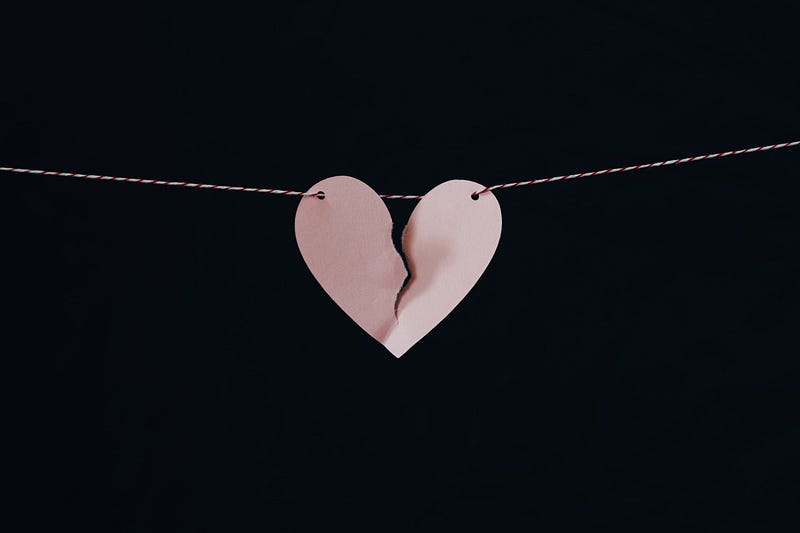
All three of my long-term relationships ended in March. A coincidence, though March has never been a great month for me. Still, reflecting on past relationships — why they went wrong and how they changed me — helps in moving forward.
My first real relationship began when I was 19. It was your typical late 90s love story: good girl meets bad boy, they begin dating, he tries to be a better person but makes a thousand mistakes, and in the end, they’re just too different to make it work.
The day we broke up was unseasonably warm. I had slept in his bed the night before, waiting for him to come home, but he’d stayed out all night. As I walked down the street to my car that morning, his number popped up on my phone. When he told me he no longer wanted to be with me, I wasn’t angry or confused — only relieved. We’d had a tumultuous relationship for two years, and though we’d broken up twice before, somehow I knew this would be the last time.
My first love was as charming as he was manipulative and vulnerable as he was tough. He taught me a simple but valuable lesson: people aren’t always what they seem; second impressions are often more telling than firsts. I still think of him whenever I hear Wu-Tang or Pink Floyd.
My second long-term relationship began when I was 23 and didn’t end until I was 30. I thought, without a doubt, that I had found “the one.” And he may have been the love of my life. Only I wasn’t the love of his. One day in March, our house phone rang repeatedly, flashing a number I had never seen before. When I finally answered, my world crumbled. I felt like I had been standing in a huge garden full of fake flowers — only they looked and smelled so real. When I reached out to pick one, I stepped into a sinkhole. I fell fast and deep, dirt collapsing from all sides, leaving me in total darkness.
It took me years to dig out of that sinkhole, but when I broke through the surface, I became more independent than ever before, finally began my career, developed stronger friendships, and, most importantly, built my confidence. I had created a life around my partner, and I relied on him for so much for so long, I never grew myself. I can see our relationship so clearly now: while real gardens have weeds, fake flowers don’t require any care. If the flowers always look lush, you should wonder why you’ve never had to water them.
I don’t remember what started the argument with my son’s father last March — only how it ended. I never wanted my son to live in a house like the one where I grew up, with walls full of tension, so I left. Unlike my other exes, my son’s father didn’t necessarily do anything wrong; he just didn’t seem to do anything right. He never saw me — figuratively and often literally — and I never felt less like myself than when I was with him.
I’d spent years reshaping my life, but when I had my son, my identity shifted: the independence I fought so hard for, the friendships I had cultivated, and the career I established blurred into the background as my family came into focus. I never knew how much of myself I would have to give up to be a mother; more importantly, I didn’t know how much less my partner would be willing to give to be a father.
If my first love taught me to look beneath the surface, my second showed me how to rise above it. Understanding your partner is important — but not as important as understanding yourself. Before I met my son’s father, I worked really hard to become the best possible version of myself. I ended our relationship because it brought out the worst in me.
For me, fulfillment comes from setting and reaching my own goals, not from being with someone else. I don’t want or expect a partner to complete me — only to complement and inspire me. If love is a garden, you must secure your roots. Only then can the flowers bloom effusively and vibrantly.
Self-discovery is a lifelong process, and relationships have been only a part of my journey. I’ve spent about half of my adult life in long-term relationships; still, I’ve found the most clarity while being single.


