
What Must You Do if You Can’t Write?
Famous writers who suffered from writers’ block did something about it

If you are feeling down or upset or just not right in yourself it can be hard to push yourself to write. The thought of sitting at the computer can be daunting at times. It takes a lot out of a writer to just sit there and start typing.
I have that feeling often. I feel I cannot muster a page of writing and when I push myself I feel doomed just before I sit down to write, but then afterward, I feel great that I did it. Do you feel that way?
I was like this for a long time so I pushed myself and made myself sit down to write. I made that point of fitting in at least an hour every day to write. I had to or I would never make it as a writer. I had a second book to write and I knew people were waiting for it to be released.
Famous writers who suffered from writers' block
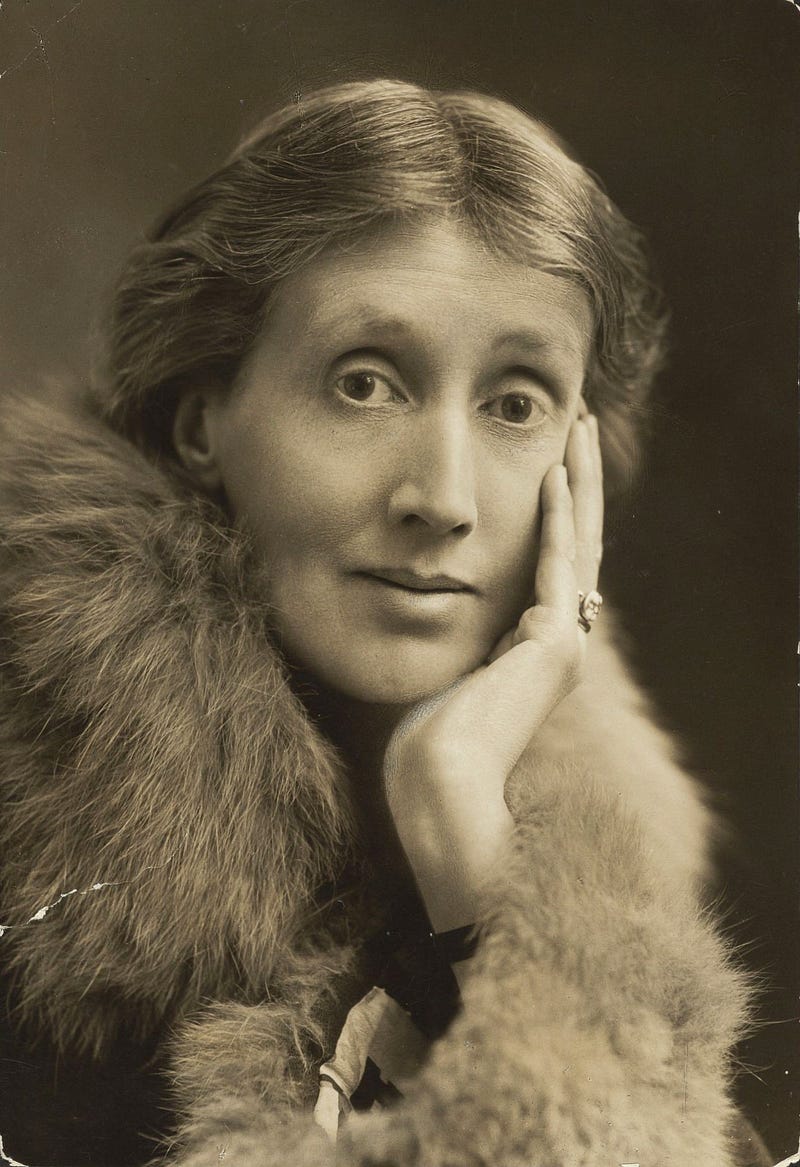
There are many writers who have come across writers’ block. For instance, Virginia Woolf, who was an early 20th-century British writer and best known for her novels Mrs. Dalloway and Orlando, suffered terribly with writers’ block due to episodes of depression. She was suffering from mental illness according to the Psychiatrist George Savage. She suffered so much that she eventually took a walk one day and never came back. She left a suicide letter to explain what she was going to do. Of course, when she was stuck with her writing she would do creative exercises to get her creative juices working again. One such exercise is writing nothing in particular on a blank page and just letting your creative juices flow out. She also kept a regular diary which can help a writer to stay creative. A notebook or a diary is a good idea for every writer. Perhaps just reading some of Virginia Woolf’s books can be an inspiration to us all. Read her book The Waves for a creative uplift.
Leo Tolstoy, who was a 19th-century Russian author who was best known for War and Peace, and Anna Karenina, suffered terribly with writers’ block and couldn’t write at all for months and years at a time. He wrote a book about it called My Confession. He writes about his two-year period of despair in the book. He wrote at the age of 50 about how his life had become “flat, more than flat: dead.” You can read passages from his book here.
So, most writers can suffer at any time.
So what do we do about it?
The best thing is to have a set routine every day. Start the day by writing a thousand words first of all. If you can’t write that much then write 500 words or less. The point is to write something the first time and increase what you write the next day and so on. The more you write the more it will stick.
When you get into the routine of writing, you will be used to it and it will end up being your job. I started to write in the mornings but if I didn’t write in the morning that day, I would make myself sit down and write in the evening for an hour or two, depending on how I felt.
Creative exercises
It’s not easy setting yourself a routine each day to write. I have had to push myself to open a screen on my laptop to write or open the page to my book and continue a chapter. You have to be motivated and sometimes we are not.
One way to get your creative juices flowing is to wake up and write in a notebook immediately before you do anything like have breakfast or coffee. This means you will write fluidly on waking up because your brain is still in sleep mode. Most creative ideas come from doing this method. I learned this during a creative writing course that I took up. We had to do this for a month and I can tell you I wrote down some brilliant ideas during this exercise.
Is it easy?
If you have a publisher or an editor or agent who is pushing you to write then it is better because you have a reason to write. Indie authors are in the same boat because of their readers who want to read another one of their books. They must get that next book out or their readers will lose interest in them. Indie writers have to motivate themselves too which isn’t easy sometimes.

Failing
I had that feeling where I was losing my readers all the time, so it made me feel awful. I felt I was failing them and I do not like to fail!
Failing isn’t something a writer can deal with at most times. We don’t want to fail. So, we must motivate ourselves by doing something else in our life that will help our thinking process. We can expand our thinking by either going for a walk, running or doing some kind of sport or even taking part in a hobby that you love. Then when you get home your brain will be motivated to write. Just open a screen on your computer and write anything that comes to your mind. That’s what I have learned to do lately.
Should you plan your writing?
Now, I don’t think or plan what I will write because it will ruin the process of actually sitting down to write. I hope you get what I am trying to say.
My point is, don’t overthink what you have to write, just do it. It’s not necessary to plan but just to sit and write so we can get the process of our writing out onto paper. You can plan later. I started this article by just writing. I didn’t plan this article it just came out when I started writing. After it was written, I edited it to the way I wanted it to read. So, all you have to do is write and forget about everything else!
What about writing a novel? Do you need to plan it?
If you want to write a novel, then have the idea and genre of the story you want to write about already planned. Also, know who your two main characters will be and the rest you just sit and write without a plan. I never plan a chapter but in my head, I always have an idea of where the story will go. Sometimes as I am writing, new ideas will pop into my head. I’m sure all writers have this feeling too. Sometimes before I write, I close my eyes and think of nothing for about two to five minutes and then I start typing. It truly works.
So, don’t overthink the writing just open up your page and write anything that comes to mind and you will see that it can work.
Want to become a writer for Medium become a member and earn from your writing. Join here:


