
What Microsoft Missed When Launching Their First Tablet
The case of Microsoft’s first Tablet and Apple’s Ipad.

I think everyone has been told to keep up with the market, follow up with trends and so much more. But there are times where we all need to hold our horses and think again, just because Microsoft is ahead of the games, doesn’t mean that they are winning.
Who doesn’t know Microsoft now? The biggest tech company in the world, changed people’s lives by creating computers and softwares, one of the most innovative companies in the world, etc.
Did you know that Microsoft actually created the first tablet before it unexpectedly paved a way for Ipad? The Ipad was a huge success in 2010, but back in 2002, these tablet devices weren’t as hot it is 8 years later.
So what went wrong? What is it that Microsoft missed that it indirectly helped Ipad become a huge success?
Here are discussions that I found after reading a book called The Innovation Secrets of Steve Jobs and discussed a few things with my lecturer.
1) Too Fast
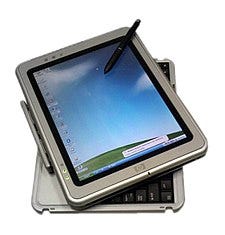
The picture beside here is the very first tablet that Microsoft released about 18 years ago, Bill Gates called it the Tablet PC.
As you can see here, unlike the Ipad, this one comes with a stylus and it’s solely a detachable computer, much like the Microsoft surface today.
However, back in 2002, we weren’t exactly familiar with the concept of a touchscreen yet. I think it’s fair to say that back then we were trying to familiarize ourselves with personal computers and some of the portable laptops invented in those days.
Additionally, the internet wasn’t too hot as well. I remember having a Compaq computer and would only use it to play games when I was a child. My dad works as an accountant so if I remember correctly, he was using it to input data. The Internet was rarely used because we had to shut down all the telephone usages and that was a hassle.
That’s why when the first tablet was out, it wasn’t popular as it is today. Plus, it was about $2000, the ones who mostly purchased this are military, consumers….not so much.
So, sometimes, we just need to hold our horses and think back carefully.
When Ipad was released in 2010, it was the age of the iPhone, iPod, and touchscreens. That’s when everyone is more familiar with the concept of using your fingers to tap to certain apps instead of using a mouse or a stylus.
Plus, the internet was becoming a thing everywhere. Steve Job is a genius for knowing our silent needs.
2) Quantity over Quality
In the book, it turns out, when Microsoft was creating the Tablet project, no one was on the same page. The head of the project was mostly focusing on money whereas the project planners were trying to paint the big picture of the tablet.
Long story short, no one came into agreement that it hurt the sales of the tablet and the project was quickly abandoned.
Don’t just think about the sales, think about the quality of the product. Some products may work in this, but if you are talking about innovations, quality needs to be in check.
But Steve Jobs, everyone who knows him always says that he is a visionary leader. He knows how to get the best engineers and designers and get them all on the same page. Steve likes to use the phrase, “let’s change the world”, and that is already a huge motivation for his team.
3) Wrong Marketing
When these two companies announce new products, there will always be a press conference. That is their first marketing that will determine whether the product will sell or not.
I’ve dug up some old videos of Steve Jobs and Bill Gates when they present their products. As someone who analyzes characters, there is a huge difference between them both.
Before I dive deeper into their charisma, please note that people are good at different things. Maybe their childhood life affects how they behave today, we won’t know. But please understand that people present differently for certain reasons.
Now here goes.
Bill Gates
Here is a Youtube link to when Bill Gates presented the first tablet. From the video, he stood behind a podium. Now, there is nothing wrong with this, however, we mostly see people behind podiums when they are being serious. We see this a lot with presidential speaking, graduation speakers, pastors in catholic churches. The point is that the podium is a sign of someone powerful behind it.
In this case, Bill didn’t move out of the podium until he was going to present the products. This is actually a dangerous charisma because you are not showing your whole to the public.
Then, every minute or so, his eyes would drift down, as if looking at his lines. In the public’s eyes, that means he is scripting his speaking, making sure that he says what the public wants to hear. Now, scripts are mostly used for actors, and actors….they act. They become the character that they are assigned to. Thus, in a way…lying.
Another is his way of speaking. There were no adjustments to his tone and his facial expression isn’t exactly showing that consumers need this product.
Lastly is his presentation. We were taught in school that when we make a PowerPoint presentation, don’t make it too much. Otherwise, the audience will fall asleep. For the case of Bill, back then, he had too many points in a slide and there weren’t transitions on going one by one. It’s already too much for the audience.
That was why the marketing of this failed back then. It didn’t engage the consumers rather it attracted the military.
If you want to learn more about this charisma breakdown of Bill Gates, here is a Charisma breakdown of him on Youtube.
Steve Jobs
Steve Jobs was an expert in engaging with the public. Here is the link when he introduced the iPad. He was up and ready to go upstage with casual clothes, no script in hand, and a story.
If you notice in most of his presentation, he always started off with a story. In this case, he engaged the audience in the history of the products and apps they launched. He went to talk about the Ipad eight minutes after giving the story about Apple. For Bill, he was too fast that he went straight to the point.
If you want to engage the audience, tell them a story about history. People will be more engaged this way, it’s why movies are a huge thing because it’s telling a story visually.
Speaking of telling a story visually, since Steve funded the animation studio Pixar, this affected the way he presents as well. Not only did he present in words, but he uses images for his presentation. A lot of images. Plus, there were many transitions. It was very simple for the public to grasp.
This way, not only did he engaged the audience effectively, but it was huge evidence for the audience so that they know that it’s not just talking but proof as well. There is trust.
That is why marketing worked here. It worked so well that the first day it launched, Apple sold 300,000 iPads in the US. It doesn’t sound huge today, but back then, it was. I remember that they released them to different countries according to dates, so it slowly emerged to countries.
The take…
I’m sure by this time, Microsoft learned their lessons. Today, they are able to sell tablet PCs again, making them a par competitor with Apple.
What we can learn from the first Tablet PC is that:
- Too Fast too Launch
- Quantity over Quality
- Wrong Marketing
I hope you learn something here.
Let’s learn more from stories like this! Subscribe to my newsletter and let’s keep in touch!!