avatarErik Reich, DC

Free AI web copilot to create summaries, insights and extended knowledge, download it at here

2660

Abstract

en, carbon dioxide, future research will have to be done to determine exactly what molecule makes up the bubble.</p><p id="5892">Turns out, mantis shrimp-like the one pictured in this article use cavitation from their front appendages to stun and dismember their pray. Those are some strong bubbles.</p><p id="8caa">Also, scientists do not agree on whether the formation of the bubble is what creates the noise, or if the characteristic “crack” is released when the bubble collapses. It is believed that the reason you can not adjust the same joint more than once rapidly is that the synovial fluid needs time to resorb the gas back into the fluid, this is usually accomplished in 15–20 minutes.</p><h2 id="9f05">Does cracking my knuckles cause arthritis?</h2><p id="bebc">This belief has been pretty well put to rest. There have been several studies on the subject and current evidence suggests that although the cracking noise might be annoying to your spouse or loved ones, the admonition to “stop it or you’ll give yourself arthritis” is debunked. Science is always moving forward though so who knows, in a year or ten a new review or meta-analysis may be published showing the permanent damage chronic knuckle cracking does to your hands, and parents everywhere will have their vindication.</p><p id="d3a7"><i>Works Consulted:</i></p><div id="cbf6" class="link-block"> <a href="https://journals.plos.org/plosone/article?id=10.1371/journal.pone.0119470"> <div> <div> <h2>Real-Time Visualization of Joint Cavitation</h2> <div><h3>Cracking sounds emitted from human synovial joints have been attributed historically to the sudden collapse of a…</h3></div> <div><p>journals.plos.org</p></div> </div> <div> <div style="background-image: url(https://miro.readmedium.com/v2/resize:fit:320/0*3FlSHZYmB4DvU1aD)"></div> </div> </div> </a> </div><div id="7530" class="link-block"> <a href="https://www.ncbi.nlm.nih.gov/pmc/articles/PMC1005793/?page=1"> <div> <div> <h2>'Cracking joints'. A bioengineering study of cavitation in the metacarpophalangeal joint.</h2> <div><h3>PMC free article] [PubMed] Google Scholar]</h3></div> <div><p>www.ncbi.nlm.nih.gov</p></div> </div> <div> <div style="background-image: url(https://miro.readmedium.com/v2/resize:fit:320/0*5yYYmeYwfIMD4VTs)"></div> </div> </div> </a> </div><p id="544c

Options

"><b><i>If you like this type of article you may also enjoy:</i></b></p><div id="80d6" class="link-block"> <a href="https://readmedium.com/not-all-lower-back-pain-treatments-are-equal-adc7c0f9fb35"> <div> <div> <h2>Not All Lower Back Pain Treatments Are Equal</h2> <div><h3>Recent evidence muddies instead of clarifies the best course to take if you are suffering from lower back pain.</h3></div> <div><p>medium.com</p></div> </div> <div> <div style="background-image: url(https://miro.readmedium.com/v2/resize:fit:320/0*Bywg_SvtmXr07kT2)"></div> </div> </div> </a> </div><div id="6804" class="link-block"> <a href="https://readmedium.com/fruit-is-not-making-you-fat-a1338b614307"> <div> <div> <h2>Fruit Is Not Making You Fat</h2> <div><h3>If you go to a health professional and they tell you fruit is bad, turn and run in the other direction.</h3></div> <div><p>medium.com</p></div> </div> <div> <div style="background-image: url(https://miro.readmedium.com/v2/resize:fit:320/0*gEG0HbMpYRAbqnsr)"></div> </div> </div> </a> </div><div id="7229" class="link-block"> <a href="https://readmedium.com/should-your-chiropractor-adjust-your-neck-4860bc7cfa0d"> <div> <div> <h2>Should Your Chiropractor Adjust Your Neck?</h2> <div><h3>Cervical spine manipulation is controversial, should it be abandoned?</h3></div> <div><p>medium.com</p></div> </div> <div> <div style="background-image: url(https://miro.readmedium.com/v2/resize:fit:320/0*rRhTp2v0hxzVPeDS)"></div> </div> </div> </a> </div><div id="6e75" class="link-block"> <a href="https://medium.com/@ErikReich/membership"> <div> <div> <h2>Join Medium with my referral link - Erik Reich, DC</h2> <div><h3>As a Medium member, a portion of your membership fee goes to writers you read, and you get full access to every story…</h3></div> <div><p>medium.com</p></div> </div> <div> <div style="background-image: url(https://miro.readmedium.com/v2/resize:fit:320/0*Vg_FuZ-wETSZCDxR)"></div> </div> </div> </a> </div></article></body>

What Makes The Sound When You Crack Your Knuckles?

Turns out, it’s complicated.

Over the years many hypotheses have been put forward as to what causes the cracking noise in a joint.
Join Medium.

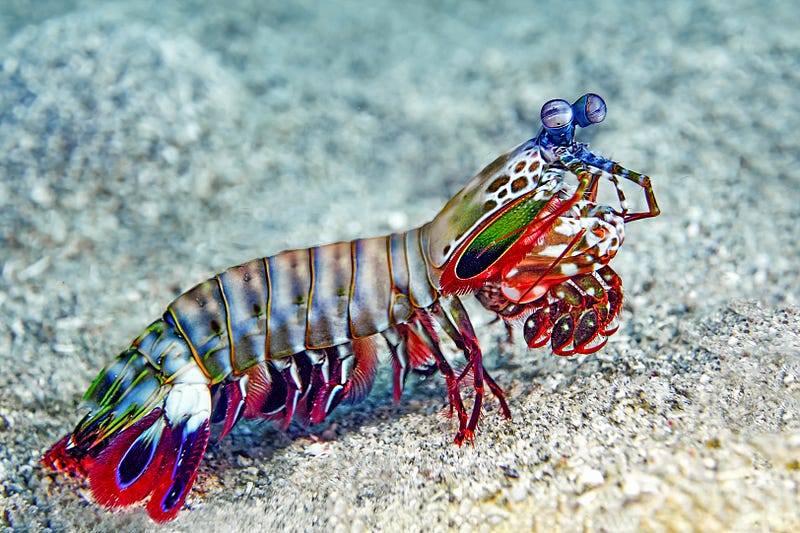
Mantis shrimp: master of cavitation. Photo by Dorothea OLDANI on Unsplash

Historically it was believed that the sound was coming from ligaments being stretched, scar tissue like adhesions being broken up, or even chemicals being released from tissue in or near the joint when they are stretched rapidly.

What type of joint “cracks”?

Not all joints make noise when stretched. Typically, the larger the joint the less likely it is to make a noise when manipulated. The small joints in your hands and fingers are generally easier to “pop” than the large hip joints, but everyone is different.

Synovial joints which contain fluid, and are not fibrous joints like the joints of your sternum or skull, are able to be separated quickly and generate a sound. Try as you might, no chiropractor, osteopath, PT, or other professional is going to move a non-synovial joint and produce a sound.

Cavitation…what?

Joint cracking has been less studied than you would think given how popular it is as a treatment for back pain, neck pain, headaches, and other musculoskeletal complaints.

At rest, two joint surfaces remain close together with a layer of fluid separating them. With some light force, the surfaces begin to separate and the fluid between them creates tension. Imagine you are washing dishes and two dinner plates get stuck together with the thin film of soapy water in between them, this fluid tension build and makes it difficult to separate the two plates, but then when that tension is overcome, they will come apart rapidly.

Cavitation is a word that describes bubble formation in a liquid when the pressure changes and static pressure is reduced enough that a cavity or void is created in the liquid. In the case of synovial fluid, it is believed these voids are filled with gas that escapes out of the fluid. Scientists do not agree on what gas. It could be nitrogen, carbon dioxide, future research will have to be done to determine exactly what molecule makes up the bubble.

Turns out, mantis shrimp-like the one pictured in this article use cavitation from their front appendages to stun and dismember their pray. Those are some strong bubbles.

Also, scientists do not agree on whether the formation of the bubble is what creates the noise, or if the characteristic “crack” is released when the bubble collapses. It is believed that the reason you can not adjust the same joint more than once rapidly is that the synovial fluid needs time to resorb the gas back into the fluid, this is usually accomplished in 15–20 minutes.

Does cracking my knuckles cause arthritis?

This belief has been pretty well put to rest. There have been several studies on the subject and current evidence suggests that although the cracking noise might be annoying to your spouse or loved ones, the admonition to “stop it or you’ll give yourself arthritis” is debunked. Science is always moving forward though so who knows, in a year or ten a new review or meta-analysis may be published showing the permanent damage chronic knuckle cracking does to your hands, and parents everywhere will have their vindication.

Works Consulted:

If you like this type of article you may also enjoy:

Chiropractic
Chiropractor
Joint Pain
Health
Wellness
Recommended from ReadMedium