
What makes People SUCCESSFUL — Pure Luck versus Unfair Advantages?
Learning the principles behind “The Unfair Advantages” by Ash Ali and Hasan Kubba
The popular definition of success is often heavily tied to hard work and toil. But what if, we question that explanation through the lens of unfair advantages. Perhaps, people succeed not solely based on countless years of overworking, but because they have a set of unfair advantages over their competition. This is the main message of the book “The Unfair Advantages: How You Already Have What It Takes to Succeed.”
Disclaimer: Much of the materials I’ve used in this post are based on the video posted by Ali Abdaal as a summary of this book.
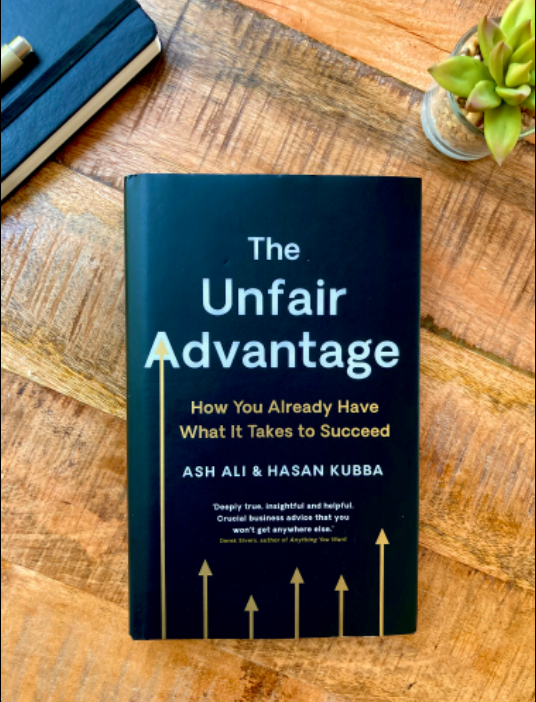
SUCCESS = Fair Play x Unfair Advantages
The book is based upon the thesis that life is unfair and many people are successful for many reasons other than just hard work. These factors can be luck, privileges, circumstance, etc. The author divided these factors into two categories:
- Fair Play: is the common-sense definition of success, or the #Hustle in today’s twitterverse. It includes anything from hard work, determination, perseverance and grit. It’s what enables a person to be keep going in the face of adversaries and failures.
- Unfair Advantages: encompass an individual’s strengths, circumstances, and other factors that make that individual unique and imitable. The authors develop the MILES framework to help the audience pinpoint their own unfair advantages.
MILES framework (Money, Intelligence & Insight, Location & Luck, Education & Expertise, Status)
Money:
This is the privilege we often associate with rich kids. For instance, the book mentions Evan Spiegel, the CEO and co-founder of SnapChat. He grew up with rich and powerful lawyer parents, attended private school and later Stanford University. He had to put in lots of hard work to actualize SnapChat and the success that the company is today, he had a great start due to his upbringing. He started out with more money than most people.
Intelligence and Insight:
This is often a unique trait from the individual. An example is the Collison brothers, who co-founded Stripe, the payment processing platform. Patrick Collison, the older brother, learned how to code, and wrote his own programming language at 16. John Collison, the younger brother, achieved the highest score in his Irish Leaving Certificate. Both attended prestigious schools, MIT and Harvard respectively. In this case, their intelligence and combined insight led them to found Stripe, which is now the main payment processor for most e-commerce and mobile application.
Location and Luck:
Location is crucial, to quote Ray Kroc, the founder of McDonald:
“The two most important requirements for major success are: first, being in the right place at the right time, and second, doing something about it.”
This quote can explain why Silicon Valley produces so many unicorn companies since the 1950s, where it was just the home of Stanford University and its project with the U.S Department of Defense. With the explosion of innovations from Hewlett-Packard, Intel, Fairchild, and Xerox, Silicon Valley grew to be the hub of opportunities and connections for tech entrepreneurs and start-ups. The tech industry blossomed and has dominated the S&P 500 in the last decade with the advent of social media and artificial intelligence.
As for luck, there are several types. The first type, as one might say, can be just sheer, dumb luck. In contrast, the second type, as the authors suggest, is manufactured by exposing ourselves to as many elements as possible. Ali Abdaal illustrates these ideas in the thought bubble below.
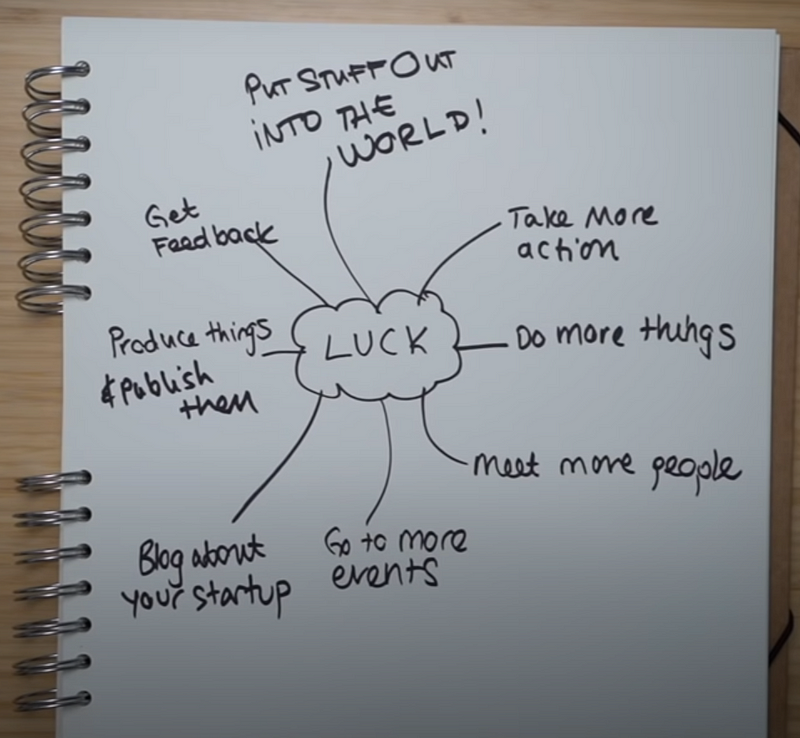
It’s a virtuous cycle of continuous exposure to get more serendipity for opportunities, which can lead to more luck to be taken advantage of.
Education and Expertise:
One might have a fancy degree from a fancy university and thus can use that education as an unfair advantage. The three benefits of a good education are summed up as: Knowledge, Network and Signaling. However, knowledge can be easily accessed at a portion of the price through books and the Internet (Wikipedia, Udemy, Skillshare). Signaling is becoming less and less important as it is more important to show your skills and portfolio in the start-up world.
Expertise can be defined as what have you built on the side, what skills you bring to the table. Thus, it can be learned in your own time through discipline, consistency and reiteration.
Status:
There are two types of status: outward and inner status. Elon Musk has so much recognition as a successful billionaire that he can literally start any company and it would be an overnight success (aka The Boring Company). However, we as normal people can foster confidence and self-esteem as part of our inner status.
Now we can determine our set of unfair advantages, how can we apply this to our lives even if our goal is not to be get as rich and successful as Elon.
Path of Least Resistance and Growth Mindset:
As interviewed by Ali Abdaal, Hasan Kubar gave tips on applying the unfair advantages to everyday life:
- Double down on your strengths: Focus on your strengths in your professional career. In contrast, bring up your weakness in your personal life to constantly discover your unfair advantages.
- The path of least resistance is the path where you can use your unfair advantages, or turn a disadvantage into an advantage. Example of this can be having little money and outward status. We tend to be more resourceful, resilient and fired up to achieve success when we have little money.
Another important point the book makes is the balance outlook between growth and fixed mindset. Growth mindset allows us to believe in our abilities to infinitely grow through learning. Fixed mindset grounds us in our human limitations, unique talents and opportunities.
In other words, we should strive to have a balance between self-belief and self-awareness. Believe that you come from the same cloth as another human and whatever somebody else achieve, we too can achieve. However, do not kill yourself to achieve as much as Gates or Jobs. You are not born with the same opportunities and talents, and thus you should not feel depressed that you don’t achieve what Gates or Jobs had.
To conclude, I want to share with you what I felt after learning about unfair advantages. I feel optimistic and positive about my own progress, and less fixated on my own circumstances. I become more appreciative of my current stage in life, and grateful to my past and present that gives me my own competitive edge. Thank you for reading my post and learning to look at success in a fresh and positive light. Here is a direct quote from the book to remind us what success can be:
“It’s not about focusing on the negatives, it’s about knowing the realities and leveraging the UNFAIR ADVANTAGES we do have to help us live our best lives.”


