
What Makes Me Enjoy Podcasting?
I love hearing stories
I’m an interviewer for a social science non-profit.
For twenty years, I’ve been asking people questions on the phone and listening to the answers. My favorite part is when they explain what their experience was like and why it mattered to them. I can’t share the stories with anyone because they are confidential. I take that seriously.
So when my friend Debbie Walker talked about starting a podcast, I told her I’d do it. I had mastered the people skills, and I knew I could learn the rest.
The technology is much more affordable and accessible than when I did voice narration in professional studios thirty years ago, but the principles are the same.
How will you know you want this?
When you prefer editing the podcast even more than your own stories.
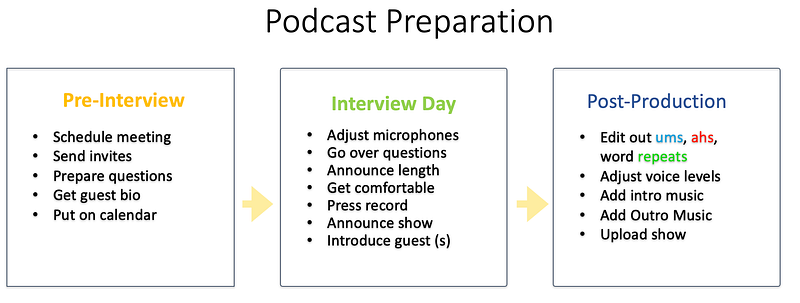
Yup. I prefer editing word repeats and lip smacks to editing my own fiction. The detailed work soothes me. If I’m really lucky, the guest will say something that encapsulates the interview’s theme.
I did a presentation a year ago about how much time it takes to create an audio podcast. Since then, I found a hybrid-editing program called Descript that helps me tremendously. They have a transcription track with the audio.
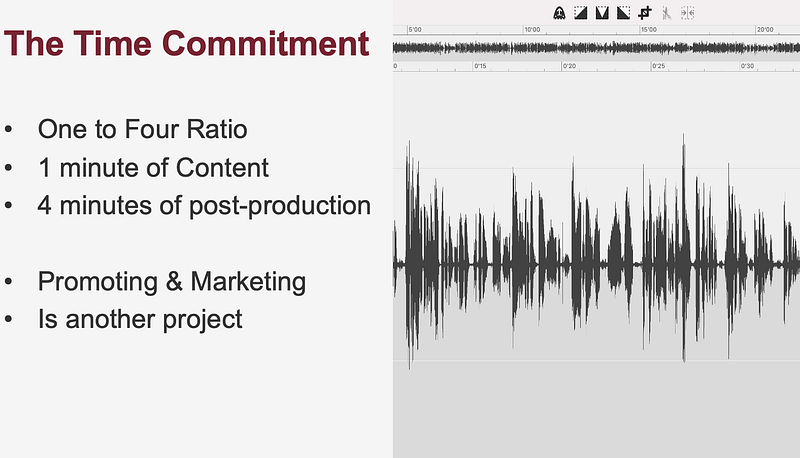
Our team uses Zoom to record our audio interviews because we know how to use it and so do the guests. You’ll need to decide what audio editing program to use and what platform to go on. I’ve included some programs that you might like below.
Audio production takes practice
Everything you learn about audio production will benefit you, whether it’s in your career or in your relationships.
You learn the importance of silence and start noticing the vocal tics that show someone is nervous. I choked when I was first interviewed. It was so bad that I deleted the file.
You will need to learn many types of technology. You will need to train on your own. Get out there and find a mentor to show you how to use the technology. Look online for resources to help you. (If you get more serious, there are degree programs for these specialties as a career.)
It’s a little like learning to play piano — with your computer keyboard. It’s best if that mentor is sitting next to you. (My husband worked in public radio for a decade.)
I am not a qualified sound engineer, so I use the automatic presets in the program to improve the sound quality. If I can’t figure out something, I get my husband to help me — and make him some fresh tea as a thank-you.
Audio podcasts are intimate
They have one or more people talking to each other. Yes, the host acknowledges the listeners, but they sound like they are at the kitchen table.
I prefer informational podcasts when the host asks subtle questions prompting the guest to talk about personal stories and experiences. When magic like that happens, the host and guest become friends and I feel like I’m right there with them.
There are two main reasons for that. They know the show gets edited to fit the time slot. They know the entertainment value of a great conversation.
If you enjoy people, you have the right stuff.
But what about the microphone?
Buy the best USB microphone you can afford, but be realistic — your guests probably won’t own one or know how to use one effectively. Be supportive about your sound check before you press record.
Buying a fancy microphone is not a priority for me right now. I’m focusing on lining up interesting guests and setting up a dedicated recording space. I’ll be auditioning microphones and getting recommendations from expert listeners on what mic works best for my voice.
Because so far, the little lavalier mic I bought with a $40 Vlogging kit has better sound quality than anything else I’ve used.
I want to thank George “Ace” Acevedo for writing about his experience in broadcasting. I hope to share more stories about my adventures in independent media.
Give “Ace” some love and get his followers to 100.
Examples of audio editing programs:
- GarageBand (free)
- Audacity (free)
- Sound Studio (Mac only)
- Hindenburg Lite
Some of the many podcast hosting platforms:
My list of Greatest Interviewers includes:
Terry Gross, Dick Cavett, Studs Terkel, Virginia Graham, and Arsenio Hall (when I was awake). These interviewers have a more relaxed style. Though highly educated, they did not plan to become interviewers. They all went to college. If you don’t have time to click on the links, here are some intriguing facts about them.
- One studied anthropology
- another practiced law
- another studied education & communications
- another studied drama and became a comic
- another became a comic after being a magician


