
What Makes JavaScript Popular?
Why is JavaScript so popular and what makes it so popular? Let’s find out!

JavaScript was created in 1995 by Brendan Eich while he was an engineer at Netscape.
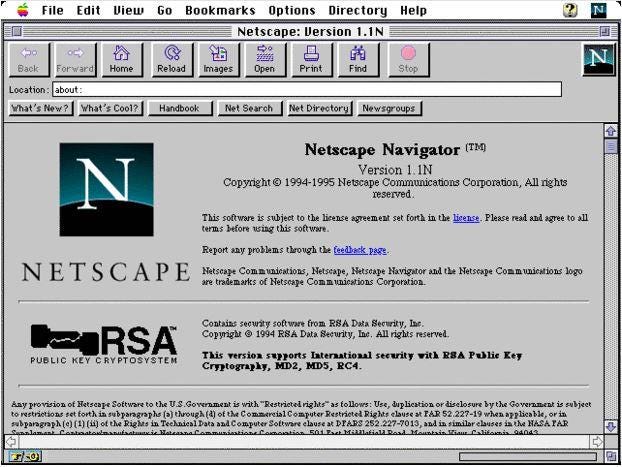
The JavaScript we know today was originally going to be called LiveScript, but it was renamed to JavaScript as a marketing decision that attempted to capitalize on the popularity of Sun Microsystem’s Java language, although the two have little in common.
JavaScript was first released with Netscape 2 early in 1996.
“Any application that can be written in JavaScript, will eventually be written in JavasSript.” — Jeff Atwood, 2007
How Popular Is JavaScript?
JavaScript is the crown jewel when it comes to programming language popularity. The most popular and used programming language is JavaScript, according to the 2019 StackOverflow developer insights.
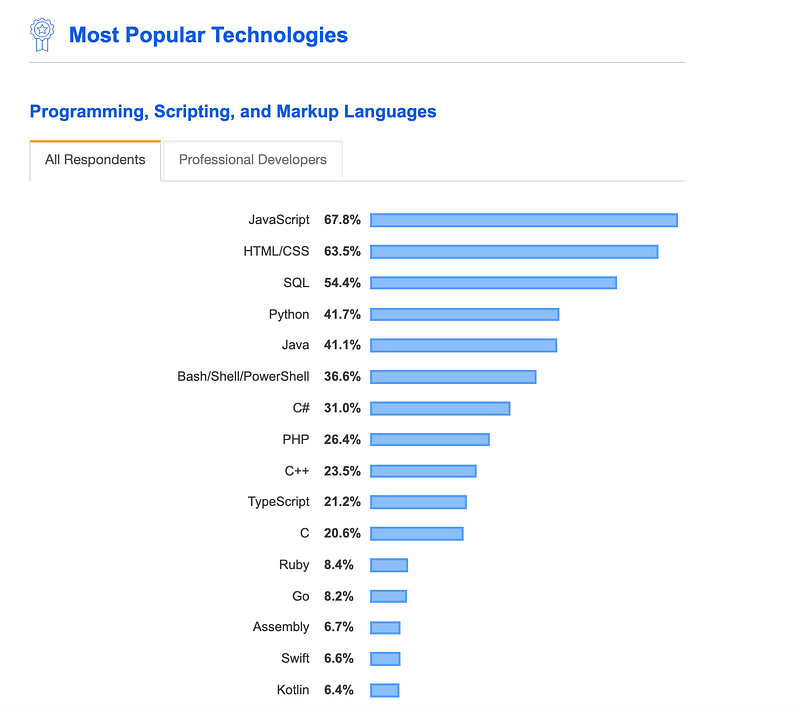
The question you’re probably wondering is, what makes JavaScript so widely adopted and popular? Here are some good reasons I personally believe contributed to the popularity of JavaScript.
Early to Market
JavaScript was the first widely supported language which was implemented across all browsers. If you wanted to show a popup, only JavaScript could do that. That led to a natural path of world dominance, which we still see as of today.
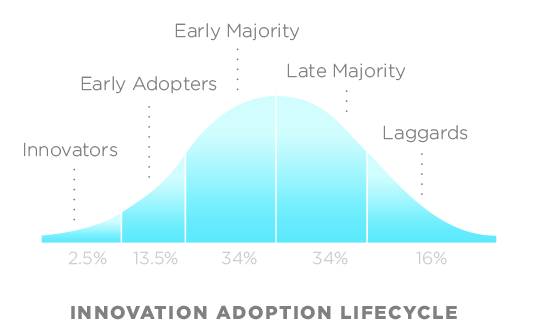
The process of adoption over time is typically illustrated as a classic normal distribution or bell curve.
JavaScript Code Is Executable on the Client and Server
We refer the client as the browser and the server as outside the browser context. You’re most likely reading the article on a browser or the native Medium app, which are both clients. The article is fetched from the server and served on the client.
In 2009, Node.js was released. Node.js is an open-source, cross-platform JavaScript run-time environment that executes JavaScript code outside of a browser.
That means you can take this bit of code and execute it outside the browser.
This was an absolute game changer. Before, you were constrained by the browser. With the release of Node, you could write your application in uni language manner, meaning your back and front end in one language.
Easy to Share Code Between Developers
JavaScript has package managers that are simple to use and intuitive. This is crucial since package managers let developers share their code between teams and save tons of time.

It’s never been easier to publish or install JavaScript modules.
Flexible and Dynamic
JavaScript gives us a lot of freedom and choices to make. To really understand how dynamic JavaScript is, let’s compare the widely known “hello world” between Java and JavaScript.
“Hello World” Java example
And now, JavaScript
JavaScript is significantly less bulky than Java. Not to bash on Java; its strict type system is useful at times. Some companies can’t afford to make mistakes, like banks; thus they’re willing to sacrifice speed for safety. It’s all about the trade-offs.
The gap to getting started and building something is much thinner for Javascript.
You don’t need a compiler to set up or learn type checking, classes, etc. You can just create your index.html and app.js and connect the two, and have a functional working prototype.
Huge Active Community
The JavaScript developer community hasn’t always been calm. Since the JavaScript ES2015 release, there are lots of new frameworks, build tools, and new language features to learn. This constant “keeping up” feeling led to the term JavaScript fatigue.
The term JavaScript fatigue was widely used from 2015 till early 2019.
JavaScript Fatigue: There are dozens of JavaScript frameworks, and all of them argue that their philosophy is best. And if you somehow found time to learn them all, after you learned the last one, you would hear that the first one has changed everything and you need to try it again. You would never get any actual work done. You’d spend all of your time just trying out frameworks.
Nevertheless, the more innovation, the better. I urge sticking to one language and framework for a longer period, in order to master the fine inner workings.
Bonus: Here’s a cool video I found that explains JavaScript concepts in depth.
If you’re new to JavaScript and want to learn the language, I recommend starting with reading books combined with building things. Start with the “A Smarter Way to Learn JavaScript” book and here’s a list of fun apps to build. Happy coding!
Thanks for reading! Stay awesome.


