avatarDani Mini

Free AI web copilot to create summaries, insights and extended knowledge, download it at here

1536

Abstract

whole assembled from the sum of the parts is different from the whole before it was broken down into parts.”</p><p id="7105">He’s referring, of course, to the marvel that is the gene, a creation of Nature (or a Higher Power if you will). The parts are a phosphate, a sugar and four bases (adenine, guanine, cytosine and thymine).</p><p id="0a88">What’s mind boggling about the gene is the way these six parts are arranged to form the genius double helix structure that encodes all living things, from corn to elephants, from bacteria to human beings.</p><p id="f51e">The whole structure is most definitely infinitely superior to the parts.</p><p id="f335">I was also reminded of Antoine de Saint Exupéry’s famous words from his memoir, <i>Wind, Sand and Stars</i>: “In anything at all, perfection is finally attained not when there is no longer anything to add, but when there is no longer anything to take away.” In this case, the author is referring to flying machines.</p><p id="bea1"><b>We can appreciate genius in the structures of nature, in the arts, in beautiful ideas and theories. It’s important to remember that complexity does not add to the genius of things. It often does the opposite.</b></p><p id="f1a6">This is my 27th piece for the ILLUMINATION 30-day writing challenge described by<a href="https://readmedium.com/dd3942a5498a"> Dr Mehmet Yildiz</a> in this<b> <a href="https://readmedium.com/quantity-matters-too-c50788e40a31"></a></b><a href="https://readmedium.com/quantity-matters-too-c50788e40a31">article<b></b><

Options

/a><b>.</b></p><p id="ade3"><b>Topic</b>: Quotes from Seneca’s <a href="https://en.wikipedia.org/wiki/Epistulae_Morales_ad_Lucilium"><i>Letters from a Stoic</i></a>. <b>Why this topic?</b> Because I can’t get over how timely and brilliant Seneca’s words are — 2,000 years after he wrote them.</p><p id="c9ee">Previous two pieces:</p><div id="a27f" class="link-block"> <a href="https://readmedium.com/how-can-you-become-a-natural-at-something-2b5d59e8405f"> <div> <div> <h2>How Can You Become a Natural at Something?</h2> <div><h3>Read what Seneca has to say and forget all the self-help books out there</h3></div> <div><p>medium.com</p></div> </div> <div> <div style="background-image: url(https://miro.readmedium.com/v2/resize:fit:320/0*qRjhuhMbCYVPmItP)"></div> </div> </div> </a> </div><div id="89a7" class="link-block"> <a href="https://readmedium.com/can-anger-lead-to-insanity-a321cf596cfa"> <div> <div> <h2>Can Anger Lead to Insanity?</h2> <div><h3>According to Seneca, it sure can</h3></div> <div><p>medium.com</p></div> </div> <div> <div style="background-image: url(https://miro.readmedium.com/v2/resize:fit:320/0*BRTB4VOzJQzSP6Gm)"></div> </div> </div> </a> </div></article></body>

What Makes a Work of Genius “Genius”?

This Seneca quote contains a great answer to this question
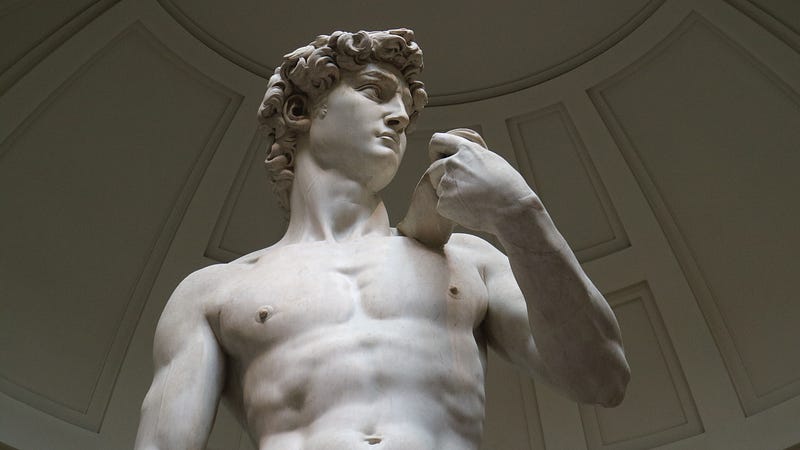
Photo by Igor Ferreira on Unsplash

“There is a sequence about the creative process, and a work of genius is a synthesis of its individual features from which nothing can be subtracted without disaster.” Seneca the Younger, in Letters from a Stoic

The feeling that “This piece is complete” is exactly the feeling you get when you behold a work of genius. Because there’s nothing superfluous about it, you can’t take away the smallest part. By the same token, adding to it would just detract from it. The Taj Mahal and Micheangelo’s David come to mind when thinking of genius works of art.

I so love this sentence from Letters from a Stoic — letter XXXIII to be precise — because it touches upon the idea of beauty and perfection.

Other thinkers from various fields have conveyed the same notion, just with different words and in different contexts.

For instance, in his fascination book, The Gene: An Intimate History, Siddhartha Mukherjee points out, “A whole assembled from the sum of the parts is different from the whole before it was broken down into parts.”

He’s referring, of course, to the marvel that is the gene, a creation of Nature (or a Higher Power if you will). The parts are a phosphate, a sugar and four bases (adenine, guanine, cytosine and thymine).

What’s mind boggling about the gene is the way these six parts are arranged to form the genius double helix structure that encodes all living things, from corn to elephants, from bacteria to human beings.

The whole structure is most definitely infinitely superior to the parts.

I was also reminded of Antoine de Saint Exupéry’s famous words from his memoir, Wind, Sand and Stars: “In anything at all, perfection is finally attained not when there is no longer anything to add, but when there is no longer anything to take away.” In this case, the author is referring to flying machines.

We can appreciate genius in the structures of nature, in the arts, in beautiful ideas and theories. It’s important to remember that complexity does not add to the genius of things. It often does the opposite.

This is my 27th piece for the ILLUMINATION 30-day writing challenge described by Dr Mehmet Yildiz in this article.

Topic: Quotes from Seneca’s Letters from a Stoic. Why this topic? Because I can’t get over how timely and brilliant Seneca’s words are — 2,000 years after he wrote them.

Previous two pieces:

Philosophy
Ideas
Quotes
Stoicism
Books
Recommended from ReadMedium