
What Makes a Good Writer? (originally written by Zadie Smith)
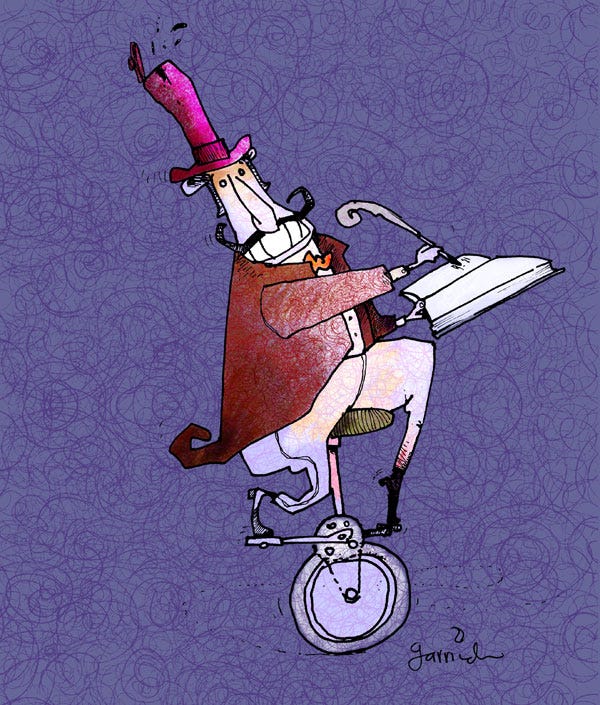
Writing as inauthenticity
Here is another novelist, in another email, answering the question: “How would you define literary failure?”
“I was once asked by a high-school student in an audience in Chennai: ‘Why, sir, are you so eager to please?’ That’s how I tend to define failure — work done for what Heidegger called “Das Mann”, the indeterminate “They” who hang over your shoulder, warping your sense of judgment what he (not me) would call your authenticity.”
That novelist, like me, I suppose like all of us who came of age under postmodernity, is naturally sceptical of the concept of authenticity, especially what is called “cultural authenticity” — after all, how can any of us be more or less authentic than we are? We were taught that authenticity was meaningless. How, then, to deal with the fact that when we account for our failings, as writers, the feeling that is strongest is a betrayal of one’s deepest, authentic self?
That sounds very grand: maybe it’s better to start at the simplest denomination of literary betrayal, the critic’s favourite, the cliche. What is a cliche except language passed down by Das Mann, used and shop-soiled by so many before you, and in no way the correct jumble of language for the intimate part of your vision you meant to express? With a cliche you have pandered to a shared understanding, you have taken a short-cut, you have re-presented what was pleasing and familiar rather than risked what was true and strange. It is an aesthetic and an ethical failure: to put it very simply, you have not told the truth.
When writers admit to failures they like to admit to the smallest ones — for example, in each of my novels somebody “rummages in their purse” for something because I was too lazy and thoughtless and unawake to separate “purse” from its old, persistent friend “rummage”. To rummage through a purse is to sleepwalk through a sentence — a small enough betrayal of self, but a betrayal all the same. To speak personally, the very reason I write is so that I might not sleepwalk through my entire life. But it is easy to admit that a sentence makes you wince less easy to confront the fact that for many writers there will be paragraphs, whole characters, whole books through which one sleepwalks and for which “inauthentic” is truly the correct term.
Click here to carry on reading the rest of the essay.
Cuban, Immigrant, and Londoner, on sale now.
You can buy me a coffee here.
This series of articles were first published in The Guardian Review and later on my blog, A Cuban in London.