
What Lives On Your Skin?
And how you can use that knowledge to promote your health and well-being.
As an aging adult, when I look at my skin I see all kinds of physical changes; wrinkles, spots, funny bumps and “tags”, scars, freckles and hair, to name a few.
But that’s what I can see.
What about what I can’t see?
Microbiologists have been using the new genomic sequencing methods to find out what microorganisms live on our skin; the good ones and the bad ones.
As you might expect, this has not been an easy task.
Think about it for a minute. You have all sorts of ecological niches within this protective layer we call our skin.
The physical barrier of the skin is our primary defence against attack from infectious pathogenic organisms. That’s why skin wounds in people of good health heal so quickly!
Skin also helps to break down natural products and educate or alert our immune system about incoming pathogens.
So I think before we talk about all the organisms that make up the skin microbiome, it might help to have a little review of human skin biology.
(Hey, if you already know all this, or want to skip it for whatever reason, scroll down to Skin Ecology and resume reading there)
Skin Basics
On the average human, the overall surface area of skin is estimated to be about 25 square metres.
Skin is composed of 3 cellular layers, the epidermis (outermost layer), the dermis (middle layer) and the hypodermis (innermost layer).
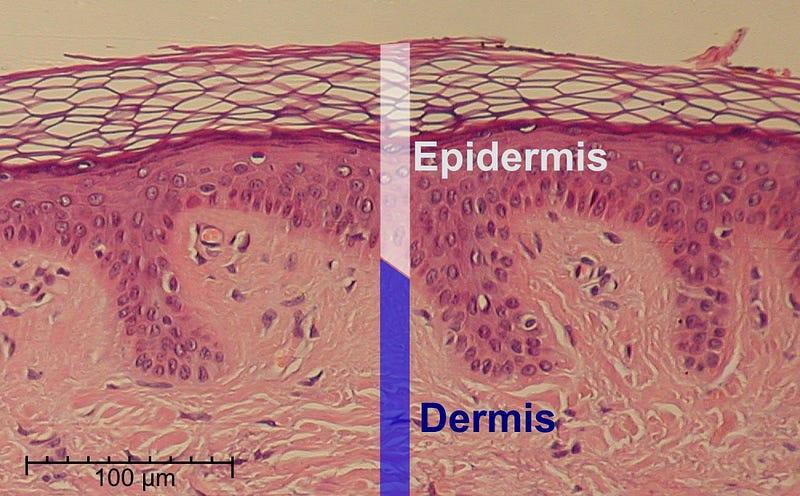
As you can see from the picture above, there are several different types of cells that make up the human epidermis, and not all of them are shown in the image.
In fact, the epidermis is made up of 4 or 5 different layers depending on location but for this article, detailing that is just a bit TMI!
What is important to notice is how thick, tight and dense the outermost layer of cells are arranged. That’s why it’s such an effective physical barrier.
And we’ll also refrain from detailing the dermis and hypodermis because as important as they are, that is not where the skin microbiome is located.
For all intense purposes, it’s part of the epidermis.
What other aspects of skin do we need to think about that would affect the composition of the skin microbiome?
How about temperature, exposure to light, humidity, level of acidity (pH), chemical composition, thickness, presence or absence of hair, oiliness and any other things that could affect our skin’s physiology?
For example, areas like the armpits and groin, which are not usually exposed tend to be higher in temperature than most of the exposed skin. And the extremities of our digits - the fingers and toes - are the coolest sections.
And there are concentrations of certain glands, like the sebaceous glands, that affect oiliness and pH and thus create areas that range from strongly acidic to mildly basic.
Here’s a short rundown of all these different possibilities taken from the article cited below by Byrd:
“…body sites provide diverse microenvironments that vary in ultraviolet light exposure, pH, temperature, moisture, sebum content and topography. On the basis of these characteristics, sites can be grouped into broad categories: sebaceous or oily (face, chest and back); moist (bend of elbow, back of knee and groin) and dry (volar forearm and palm).
The environment of these sites is influenced by appendages, such as sweat glands, hair follicles and sebaceous glands. More abundant in moist sites, sweat glands are important for thermoregulation through the evaporation of water, which also acidifies the skin, making conditions unfavourable for the growth and colonization of certain microorganisms. In addition, sweat contains antimicrobial molecules, such as free fatty acids and antimicrobial peptides, that inhibit microbial colonization.
Connected to the hair follicle and denser in oily sites, sebaceous glands secrete lipid-rich sebum, a hydrophobic coating that lubricates and provides an antibacterial shield to hair and skin.” (bolding is mine)
So we’re not looking at a simple ecosystem here.
We must also consider sex, drug use, antibiotic treatments, age, diet, geographical origin, season (winter, summer), and even pet ownership.
These have all been shown to have an impact on the function and composition of the skin microbiota.
Here’s a really cool figure from a study that looked at the chemical makeup of the human skin surface and correlated it to the microbes that live in various places.
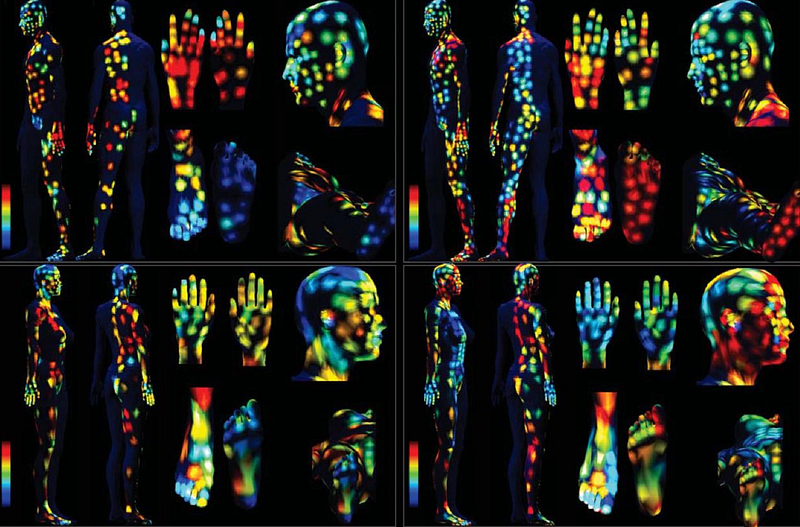
With all the different kinds of organisms that are found in these various niches; viruses, bacteria, fungi, archaea and mites you can see why it might be challenging to identify all the different components of the skin microbiome.
Let’s look at all these different organisms and niches and see how they might affect what diseases we contract, how we age and how they affect our health and wellness.
Then we can see what we can do to ameliorate any negative effects and promote the positive ones caused by these various beasties.
Skin Ecology
I have to admit, that I have never given much thought to my skin.
Oh, if I’m going out on a sunny day I put on some sunscreen to prevent getting a sunburn because I know that bad sunburns can have serious ramifications down the road!
And after shaving, I like to massage some skin lotion into the areas I just shaved but that’s about it!
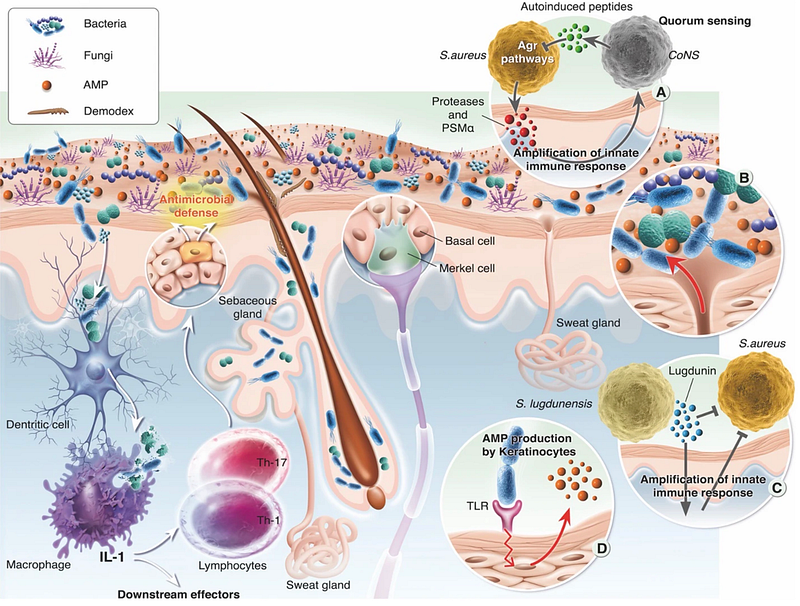
But thinking about skin ecology! Maybe I’m a typical “boomer male” in that respect. Because most women I know do pay a lot of attention to their skin and its maintenance.
I definitely pooh-poohed all the ads I saw everywhere for getting softer skin by using this or that product or probiotic.
So I have to admit to being pleasantly surprised by all the deep thinking required to accurately investigate and chronicle the skin microbiome.
As a result, now I’m a convert (as usual, the women were right!) and will definitely pay more attention to my skin and its upkeep! Because now I know, that not only does proper skin maintenance make you look and feel better, it also boosts the skin’s protective abilities!
Ok, let’s look at the skin’s microbiome.
The Skin Microbiome
In the articles I looked at, scientists investigating the skin microbiome sampled 4 different places on our body to represent the different skin ecological niches; oily, moist, dry and feet.
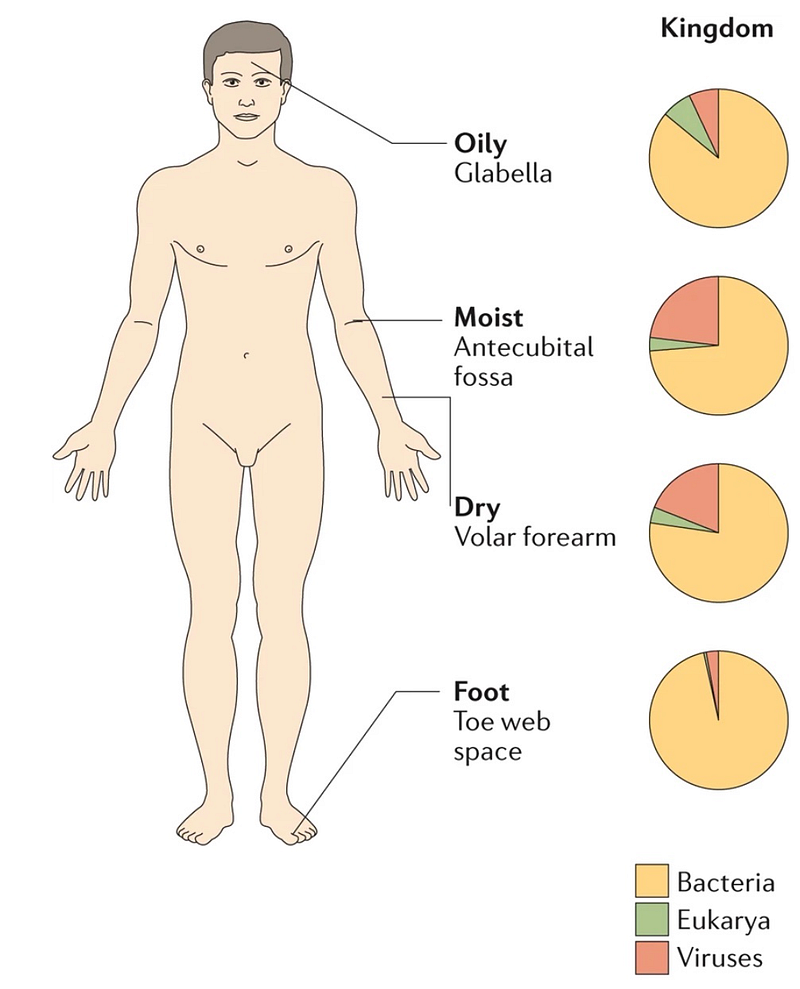
Obviously, there are lots of other places to sample but these 4 seem to give pretty good coverage of our overall skin microbiome.
And as the previous figures above illustrated, there are lots of different kinds of microorganisms found on our skin. In order of complexity, they are viruses → bacteria → fungi → other small creatures like mites, etc.
Here is a really complete table of the top 10 bacteria, eukaryotes and viruses that are located in these 4 different skin sites on our body. (Warning: it’s a lot of scientific names!)
And here’s what a study by Sfriso found.
Generally, the skin microbiota exhibits a great variety of resident … bacteria such as Staphylococcus, Cutibacterium … and Corynebacterium species…. The most abundant fungi on human skin belong to the genus Malassezia, which predominates most body sites, aside from the feet where a higher fungal diversity is found…human skin also harbours resident or transient viruses. As an example, cutaneous beta and gamma human papillomaviruses have been identified on the skin of most individuals…
As we already mentioned, there are lots of factors not directly associated with the skin that can affect the composition of the skin microbiota.
These include factors such as ethnicity, gender, age, lifestyle, hygiene routines, cosmetics, antibiotics, geographical location, climate, seasonality, sampling methods and so on.
As an example, here’s a figure showing the impact that aging can have.
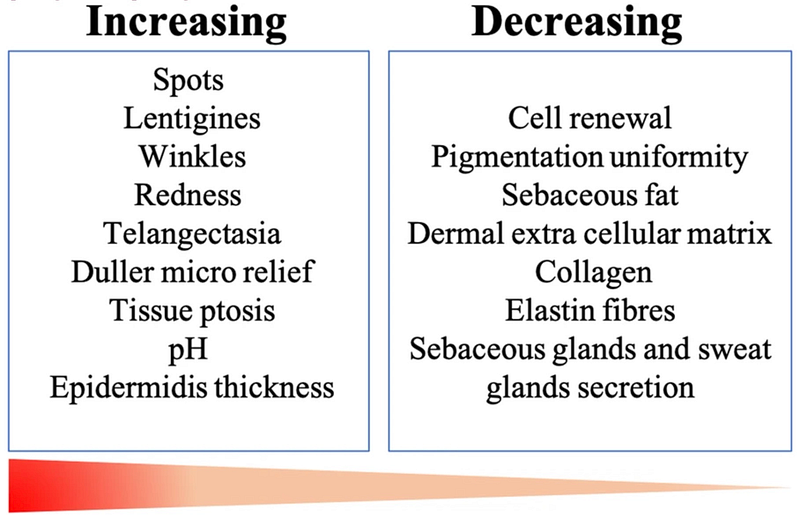
I know, there are a bunch of technical names but you get the idea. With skin ecology changing like that, it’s easy to see how the microbiome is also going to change as we age.
And another study that looked at hand microbes in men and women found that
Cutibacterium and Corynebacterium were more abundant in men than in women. In women, Enterobacteriales, Moraxellaceae, Lactobacillaceae, and Pseudomonadaceae were more abundant than in men. From here.
Well, you might be asking how does all this affect me?
Maintaining Healthy Skin
That’s the ultimate goal, isn’t it?
Keeping our skin healthy so it can do the best job possible in protecting us from infectious pathogens.
Let’s talk briefly about how the skin does that and what might help it when it gets into a bit of trouble.
Diseases
So far, we’ve mostly talked about microbes associated with healthy skin. When the skin is healthy it is able to resist or thwart an attack by a disease-causing organism by setting up an impenetrable barrier or by alerting the immune system to get on the job.
But if the skin environment shifts or is wounded, we have a different story.
Now the pathogens that attack may find conditions that favour their establishment.
You probably know that one of the ways that bacteria can establish themselves and protect against agents that might destroy them is to form a biofilm.
Under normal conditions, the skin doesn’t allow the formation of biofilms.
In a biofilm bacteria enable multicellular functions and metabolic changes and benefit from advantageous survival mechanisms allowing them to survive in hostile environments which often translate into virulence, resistance to antibiotics and pathogenesis. From here.
But when the skin is wounded, bacteria are often able to form a biofilm. To do that, they activate a class of molecules called “autoinducers” that can synchronize their behaviour, induce secretions that help form biofilms and reduce the effectiveness of antibiotics.
If the skin is able to degrade or block these autoinducers, the bacteria can’t synchronize to form a biofilm or resist antibiotics they are still sensitive to so although they still enter the wound, they are harmless and there is no signs of infection.
And it turns out that there are molecules derived from plants that can block the original bacterial signals that initiate synchronization and also break up biofilms that are already established.
So don’t you want to know what these are?
I did!
Fighting Skin Diseases
Keep your skin healthy so it can do the best job possible in protecting you from infectious pathogens.
Nutrition and cosmetic sciences define 2 types of substances that can help in prevention and healing of skin diseases; prebiotics and probiotics.
Prebiotics are non-viable food components that confer a health benefit on the host associated with modulations of the microbiome structure and functionality.
Probiotics are live microorganisms which when administered in adequate amounts confer a health benefit on the host.
Prebiotics
Let’s look at these in more detail, shall we?
Most cosmetic skin products fall into the prebiotic category.
A recent study looked at how personal care products affected the skin microbial and molecular composition.
What they found was:
- Molecules associated with personal skin and hygiene products last on the skin for weeks after their first use despite regular showering.
- Molecular and bacterial diversity were altered following beauty products usage.
So consistently using deodorants, antiperspirants or makeup shifted the ecological balance and lead to the establishment of a new balance.
But we don’t really understand the effects of these shifts. Their influences on skin health and disease susceptibility needs to be further investigated.
With all the current interest in microbiomes and how they might be “managed” to promote health, cosmetic companies are now promoting products that are “biome-friendly”.
Probiotics
Probiotics are one such set of biome-friendly products or treatments being looked at.
One bacteria, Staphylococcus epidermis had already been noted for its beneficial affects.
It can inhibit Staphylococcus aureus, a bacteria known to be pathogenic to skin, by establishing environmental conditions unfavourable for S. aureus growth.
A study was set up that isolated S. epidermis from skin and grew it in culture. Then they lyophilized it and incorporated it into a gel.
They applied this gel to study participants over a 4-week period. What they found was that the treatment greatly influenced the retention of skin moisture, reduced water evaporation and increased relative lipid content. They suggest that this increase in lipid content is most likely the reason why a moisture retention effect was observed.
And there from studies in animals there is the suggestion that there is a gut-skin-brain connective network and any improvements one of these three components may lead to positive benefits in the other two.
So ingestion of specific probiotics that are known to promote the gut microbiome will also benefit the skin.
Again, all these studies are still in their infancy and in time, we will know whether or not these suppositions hold true.
What can I do?
Here’s where it gets tricky.
As you know, advertising always puts things in the best possible light so that you will buy the product. And nowadays, probiotics are all the rage in a variety of products.
But what exactly are these probiotics?
Yogurts and other fermentation products can have significant amounts of live organisms and we know that many of them are beneficial to our health.
But what about cosmetics that are applied directly on the skin?
There are a number of challenges that need to be surmounted.
Most of them contain a lot of water and preservatives to increase shelf life and prevent them from spoiling. So that makes it difficult to include live probiotic organisms. How to include beneficial live organisms and have a sufficient shelf life still needs to be worked out.
And currently all the probiotic materials are bacterial in origin. But we know that fungi and other eukaryotes are also integral components of a healthy skin biome. This is another significant challenge to overcome.
We know that fecal transplantation can have dramatic benefits on gut microbiomes. Will a similar strategy be work for skin microbiomes? Can we take microorganisms from a person with a healthy skin microbiome, grow them in culture and then apply them to another person whose skin microbiome lacks these creatures?
Could this work for acne or dermatitis?
Nowadays, probiotics are all the rage in a variety of products. Read the labels carefully!
Interesting questions!
If they use non-viable bacteria or products from fermentation or cell lysates, can they still be called probiotics? And would they have the same effect?
What this says to me is that if I buy any skin product that says it will be doing wonderful things for my skin and health, will it really deliver?
I know I’ll be reading the labels and the reviews with much greater care now!
What next?
As you can see, we have just begun to scratch the surface of the skin microbiome and how we might work with it to promote health of both the skin and possibly the brain and gut.
I think you’ll agree that we need to continue this kind of research to understand the composition and function of the microorganisms found on our skin!
The summary from this article states:
1. The skin microbiome is composed of a variety of organisms, including bacteria, archaea, fungi, and even small arthropods, which interact with each other and could be implicated in the host health status.
2. The skin microbiome composition depends on many factors. These factors form an intricate network that novel sequencing technologies allow us to better understand. However, standardization of studies is required to reach strong conclusions on which innovation process could be best.
3. Optimized evaluation tools, such as 3D skin models, offer ways to study the impact of modulation factors on the composition of the skin microbiota as well as its implications for the skin response.
But so many questions still remain:
1. What role do microorganisms have in our skin and how do they contribute to the maintenance of skin homeostasis?
2. Is dysbiosis the cause or the consequence of a pathological status?
3. Can pathological strains be replaced with non-pathological ones and ameliorate disease or skin disorders?
4. How is the microbiota involved in sensitive, irritated and dry skin?
I hope you enjoyed learning more about our skin microbiome and have a better understanding of this complex but important topic. I’m sure you’ll be hearing more about this microbiome in future articles and news reports.
Until next time,
Rich
If you’d like to get Updates from Biology4Everone, you can sign up here. The updates also include short pieces about my naturalist activities and what I’m reading. They come out every couple of weeks so you won’t have your inbox flooded with emails from me, I promise! 😄
Sources:
- Challenges in exploring and manipulating the human skin microbiome, by Manon Boxberger et al., in Microbiome, (May 2021).
- The human skin microbiome by Allyson L. Byrd et al., in Nature Reviews Microbiology, (January 2018)
- Human Skin page on Wikipedia.
- Molecular cartography of the human skin surface in 3D by Bouslimani et al., in PNAS, (March 2015)
- Revealing the secret life of skin — with the microbiome you never walk alone by Sfriso et al., in Int. Jour. of Cosmetic Science, (November 2019)


