What Life Was Like for Lesbians in the Middle Ages
Certainly not pleasant, what with those annoying Church penances, strange beliefs and in some cases, risks of execution
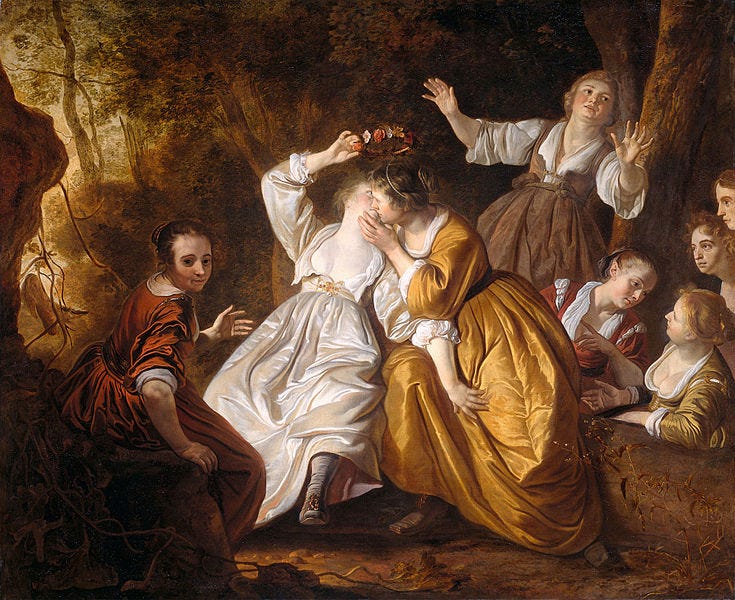

One of the most frustrating things for those investigating LGBT life during the Middle Ages in Europe is of course the relative lack of information. Yes, a lot of things were hush-hush but fear not, there are in fact some intriguing clues hidden in plain sight in the laws of the time.
Penitentials
Early Irish monks were obsessed with sin, going to the extent of writing detailed manuals describing acts deemed criminal by the Church as well as the various penances for each “crime”. These manuals were known as “penitentials”.
According to one such penitential a woman who “practices vice with a woman” should be given three years of penance. “Penance” in the Middle Ages encompassed various acts imposed on the sinner including rigorous fasts, prostrations, alms, prayers, and pilgrimages. Another example — forty days’ penance was demanded of nuns who “rode” each other or were discovered to have touched each other’s breasts (the fact that this penance even exists obviously implies that these “acts” were common enough).
According to another Irish penitential:
“Anyone who performs the fornication of the lips [i.e. cunnilingus], penance for four years if it is their first time but if it is usually their custom seven”.
Apparently, this punishment was specifically meant for women who performed such acts on other women. Fear not, for men who performed homosexual acts were not spared too.
Whoever fornicates with an effeminate male or with another man or with an animal must fast for 10 years. — Canons of Theodore
And the list goes on and on, the worst punishment being for oral sex involving men. Once again, from the Canons of Theodore:
Whoever ejaculates seed into the mouth, that is the worst evil. From someone it was judged that they repent this up to the end of their lives.
Bizarre beliefs
Sex in the Middle Ages was strictly for procreation. Women were not supposed to enjoy sex and men and women were expected to have sex with the sole purpose of having a baby.
Despite this there was a strange mediaeval medical theory that a woman could quite literally die if she didn’t get enough sex, due to what was known as “womb suffocation”.
Yes, bear with me now as we move into weird territory.
The best way to avoid this was through regular intercourse with one’s husband. Failing that (for any number of reasons), physicians recommended various cures, including masturbation. Yes, mediaeval doctors were telling their female patients to masturbate frequently otherwise their wombs would suffocate!
This applied particularly to nuns, who couldn’t marry but obviously didn’t want to die from “womb suffocation”. Some doctors were even telling midwives to help women in danger from the affliction: “insert[ing] a finger covered with oil of lily, laurel or spikenard into her womb and move it vigorously about.”
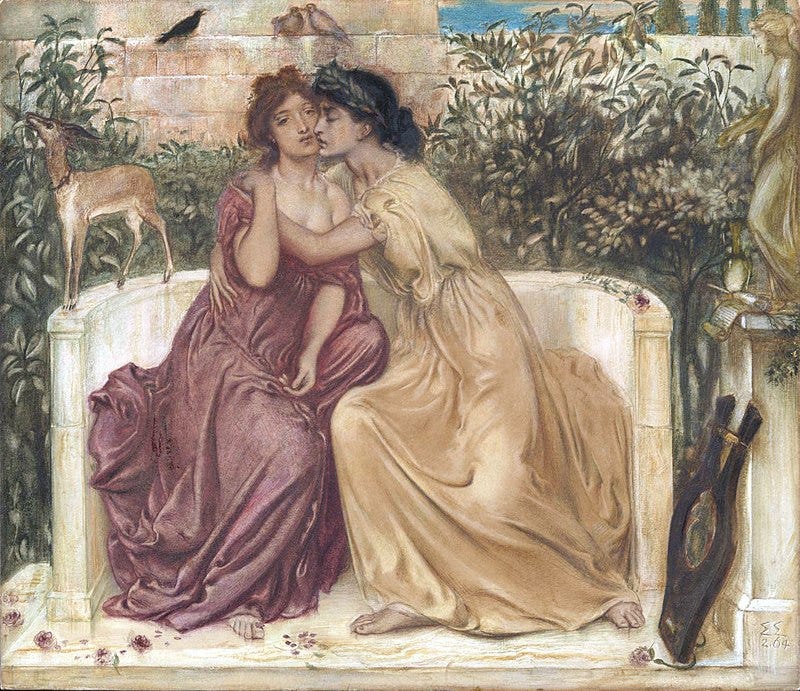

The Church was not amused. Masturbation was a sin, no matter how well-intentioned. Especially if the assistance of an “instrument” was involved. In fact, a woman named Katherina Hetzeldorfer became the first person executed for female homosexuality, after she was put on trial in 1477 in Germany. She was sentenced to death by drowning in the Rhine. Katherina was likely transgender, unfortunately during a time when crossdressing was a serious offense in the eyes of the Church.
Her crime? Dressing as a man and apparently, living with her sister as husband and wife! She also slept with two other women, both of whom did not realise her biological gender even during sex. However, one of the women eventually noticed that she had been using a strap-on “instrument” during their encounter. During the trial, the witness explained that Katherina had made a dildo from a red piece of leather filled with cotton at the front and had stuck a wooden stick into it. She had also made a hole through the wooden stick, putting a string through to tie it on.
Yes, sex toys has been around for a long time and during the Middle Ages, depending on where and when you were, might cost you your life. In fact, some of the more sensational trials in Europe at the time involved women caught for performing “unnatural acts” on each other with “instruments”.
When “just being yourself” often meant cruel punishment and death
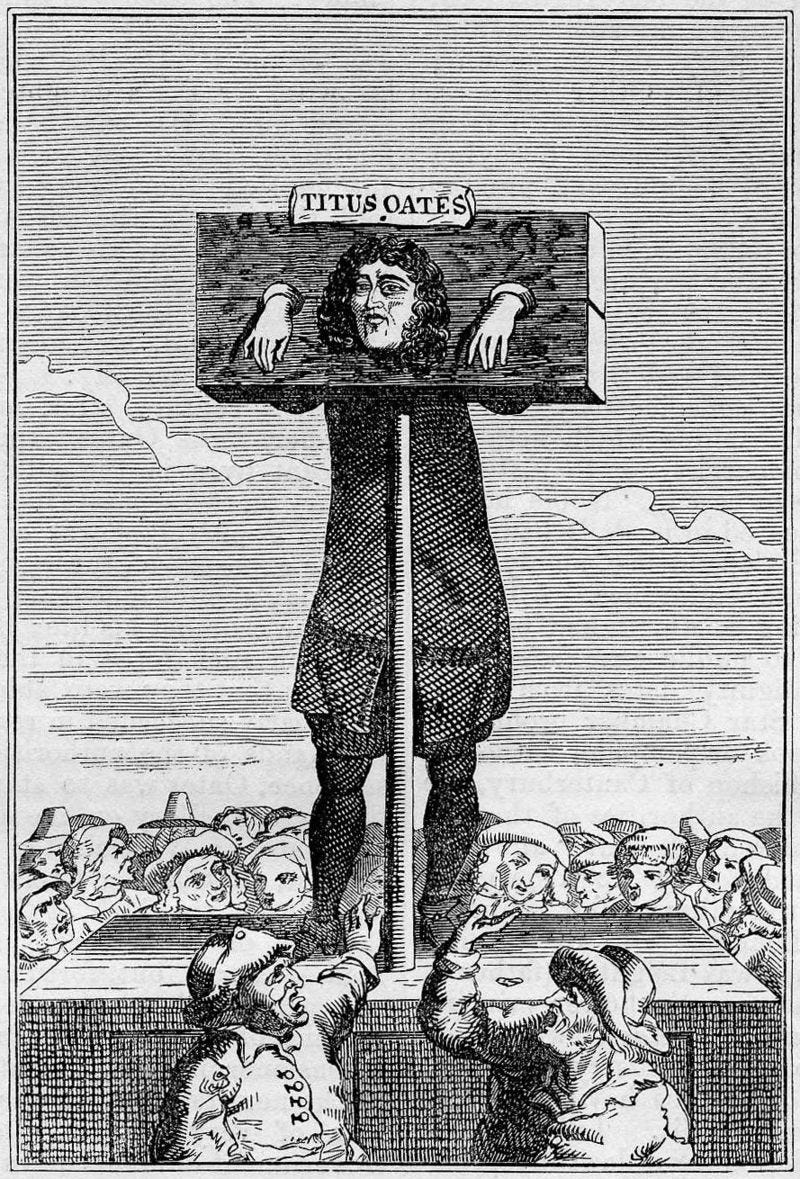
Another famous case was that of Agatha Dietschi, a 16th-century German lesbian (or more likely, she was transgender) who lived as a man and was even married to at least two women (not at the same time, of course). Agatha escaped the death penalty fortunately, but was pilloried and sentenced to exile.
In case you’re wondering what being pilloried meant, here’s an image and yes, the experience wasn’t a pleasant one.

The last lesbian/transgender to be executed for “unnatural acts” in Europe was Catharina Margaretha Linck who was sentenced to death by beheading for “sodomy” in 1721 in Prussia.
Catharina had lived sometimes as a man and sometimes as a woman and was even a soldier at one point. During the trial prosecutors determined that Catharina had used a “device” (sounds familiar?) when she was with her wife. The wife, also named Catharina was sentenced to three years in prison followed by banishment.
To be fair, homosexual men were also persecuted and severely punished. In German-speaking areas men, even nobles, were executed for such “sinful practices”. One such famous case was that of the nobleman Richard Puller von Hohenburg and his servant Anton Mätzler, accused of sodomy and burned at the stake in Zurich in 1482.
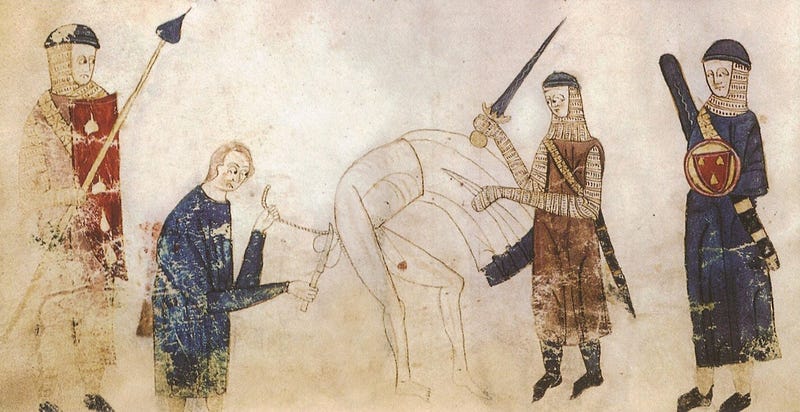
The French beat the Germans by a couple of centuries. The Old French legal treatise Li livres de jostice et de plet from 1260 made the earliest reference to legal punishment for lesbianism together with male homosexuality. It prescribed dismemberment on the first two offences and death by burning for the third (what “dismemberment” could mean for a woman is unknown but we can imagine with a fair degree of certainty that the experience was a painful one). For a man, well, refer to the (very graphic) image below.
.jpg)
FYI, on the first offence the male sodomite was to be castrated, on the second dismembered (for a man, this clearly referred to the removal of his penis) and on the third burned alive (as if by some miracle, a man after having had his testicles and penis painfully cut off still had any interest in sex). All their goods accrued to the crown (how convenient, which is why accusations of homosexuality against certain wealthy nobles were fairly common — if proven “guilty”, they could be brutally tortured, executed and their wealth confiscated by the crown).
In Spain, Italy, and the Holy Roman Empire as well during the later Middle Ages, “unnatural acts” between women were punishable by burning to death, although actual instances of this are few.
Restricted lives
Lesbians (along with gay men) lived hidden lives during the Middle Ages and — as late as the early 18th Century for lesbians and the early 19th Century for homosexual men — risked being executed. They were forced by society and the Church to conform to heterosexual gender norms or else were regarded as sexual deviants. Even words like “lesbian” or “gay” only began taking on their modern connotations in the late 19th and early 20th centuries.
References
A.J. Frantzen, The literature of penance in Anglo-Saxon England (New Brunswick, N.J., 1983)
Boswell, John (1981). Christianity, Social Tolerance, and Homosexuality: Gay People in Western Europe from the Beginning of the Christian Era to the Fourteenth Century. Chicago: University of Chicago Press.
Brundage, James A. (1987). Law, Sex and Christian Society in Medieval Europe, University of Chicago Press.
Helmut Puff (June 2003). Sodomy in Reformation Germany and Switzerland, 1400–1600. University of Chicago Press.
Kenneth Borris Same-sex desire in the English Renaissance: a sourcebook of texts, 1470–1650, Routledge, 2004
R. Flechner, “The making of the Canons of Theodore”, in Peritia 17–18 (2003–2004)