
What I’ve Learned After Writing Over 6000 SEO Articles Just for the Robots
Traffic is useless without user interactions

The story of how I started full-time blogging:
Do you know that feeling when you want to do a lot of things but don’t know where to start from? That is what happened to me 10 years ago when I started blogging.
I have been a blogger for over 10 years now. For 5+ years, I had blogged full time, writing about tech and Linux tips & tricks. Back then, I was living from the Google Adsense paychecks.
At first, I wanted to build a community around my blog and to focus on quality, but this did not bring me any money and I felt the need to adapt.
I have studied how Google works, hunted keywords, and developed a writing style that helped my articles perform well on the search engine. I wrote all my articles with SEO in mind.
What I’ve learned from blogging the wrong way
5 years later, I wanted again to build a community and discovered that it was impossible. After 6000 articles performing on Google, the truth struck me. Nobody was enjoying my work. The users were just getting the instructions they needed and exited the website shortly after.
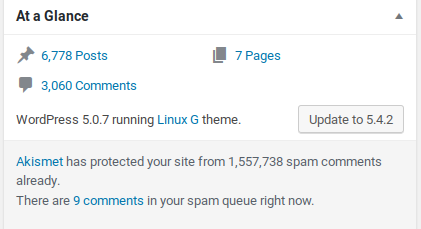
No interaction, a few comments, only SEO, SEO, SEO, SEO. My articles were written as if they were read by mindless robots.
Below, I have listed a few things I have learned from this episode.
Writing articles 100% SEO is a big compromise
Despite the high traffic, my articles had almost zero user interactions. My site was surviving only because people did hit-and-runs on my articles. The problem was that the readers did not navigate on the website at all. A lot of them did not even visit the homepage.
This experience has taught me not to write SEO anymore, if I don’t have a keyword that stands a chance of getting on top of Google pages; or if I write down a personal experience.
Why on earth would someone write about a personal experience in an SEO manner? Let’s say I want to tell you, guys, how was the party last night…
Why would I write that article SEO?
The basic SEO principles are the following:
- starting the title with the SEO keyword
- mentioning the keyword every 2–3 paragraphs
- mentioning the keyword in subtitles
If you want to learn more about this, read Neil Patel’s post on SEO.
It’s very difficult to do creative writing with SEO in mind. And you really should do this.
SEO spam brings traffic, but no clicks and no interactions
If your blog is everything SEO, you will not be able to sell anything on it. The reason is very simple. People don’t navigate on your website, they don’t read it. By not reading your work, you don’t establish a connection with them.
Users finding the required information on Google are not readers, they’re just random clickers. And random clickers don’t buy from you, because they don’t know you. This traffic is useful for making clicks, but you cannot easily convert it. With zero engagement, it only helps your stats grow.
It shocked me when I had solicited advice from the readers and I received 5 comments in the entire week, although the site had 35k unique users daily.
This type of writing was a little annoying. I mentioned the keyword a lot in the articles, sometimes in unnatural ways. Also, I had the same subtitle saying something like:
In this article, I will show you how to do SOMETHING on your Linux system.
It was like people were watching the same movie over and over again.
If I were to start the same project over, I would write the articles SEO, but I would also focus on building a community. I would use a more personal approach, write as if I were asking the readers, and advising them on what to do and how to do things.
The community is more important than traffic
Having an active and involved community brings better results, in the long term, than random traffic. I have a smaller blog where I write a few times a week and it has more interactions than the 6k articles blog.
The community members feel like home on your website, interact a lot with you, and also write opinions to each other. They have the feeling they belong in that place, and this has a big value. It’s as if you were among friends, giving and receiving useful advice.
Only an active community will support you, follow your advice, buy from your affiliate links, or even donate.
Random traffic is just useful statistics.
The entire experience has taught me the things listed below:
Blogging:
- Use SEO strategies only for articles focused on a keyword you want to perform well on Google.
- Don’t try to use SEO for articles about personal experiences.
- Focus on building a community around your blog and try to interact with the users.
- Define your writing style.
- Don’t transform your blog into something you wouldn’t want to read.
Community:
- Promote your content on Social Media: Facebook, LinkedIn, Twitter, Pinterest
- Create a Facebook Group
- Talk to your community (and friends) on the group. Post things that generate interactions
- Ask the community how you can help them and request ideas for your next articles (this will make them feel more involved).


