
What It’s Like Walking the Camino de Santiago in 2021
How my 2021 experience walking Spain’s historical pilgrimage compares with other years
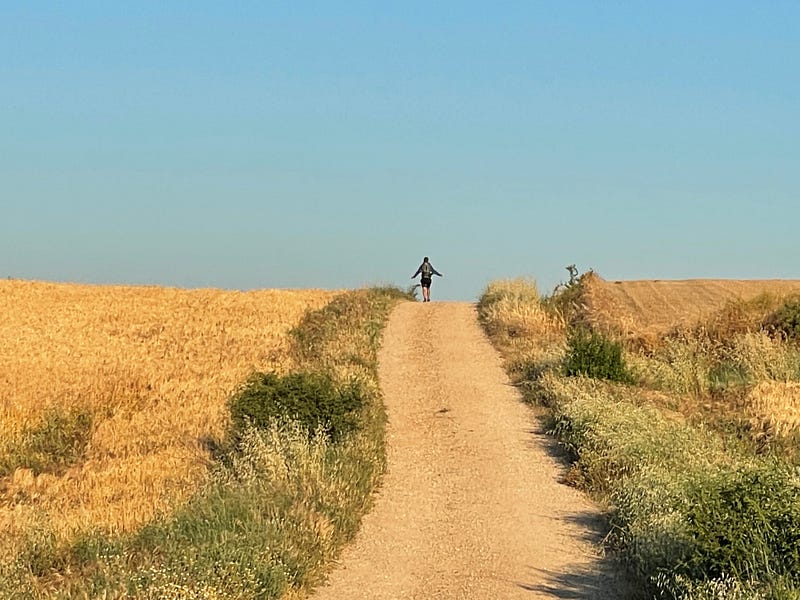
In June 2021, I walked part of the Camino de Santiago. I’d previously walked the entire Camino in 2018, at the height of the pilgrimage’s popularity. But I wanted to know what the experience would be like this year when much of the world is still pretty much grounded.
Before the pandemic struck, the Camino de Santiago was becoming increasingly busy with pilgrims from all around the world. In June 2021, I met pilgrims on foot and bike, but they were very few compared to my 2018 experience. I did, however, thoroughly enjoy my experience. It was wonderful to be back on the Way.
If you’re considering a 2021 Camino, I hope I can give you some useful insights. If you’re after a social experience, meeting and walking with many people from all around the world, then 2021 might not be the year for you. But if you’re seeking a more tranquil undertaking, meeting just a few fellow pilgrims as well as enjoying Spain’s diverse nature and villages, then 2021 might be the year for your Camino.
What is the Camino de Santiago?
The Camino de Santiago (the Way of St James) is not one, but a network of pilgrim routes across Europe that culminate in Santiago de Compostela, situated in Spain’s northwest.
The most popular route, the Camino Francés (French Way) runs from St Jean-Pied-du-Port in southwest France to Santiago de Compostela, capital of the Galicia, Spain. The Camino Francés is 769 kilometers (478 miles) and takes approximately five weeks to walk (including a couple of rest and half days).
If you don’t want to walk, you can go by bike or horse and still receive your Compostela (a document certifying you completed the Camino de Santiago). You also need to complete the Camino for religious or spiritual purposes to be granted a Compostela. I walked for spiritual purposes, if you count self-reflection and a cultural interest as spiritual.
According to Spanish tradition, the Camino de Santiago dates back to the ninth century when pilgrims began making the journey to visit the tomb of Saint James the Apostle, which is located, according to Spanish tradition, in Santiago de Compostela.
Why I Love Walking the Camino
If you have the time, money and basic physical health, then I recommend you consider walking one of the Camino de Santiago pilgrimages at some point in your life. You don’t need to be a Catholic or religious person to get a lot out of this lengthy but life-changing walk.
The joyous freedom of simply walking
I love the Camino for the freedom and minimalistic walking experience it offers.
A Camino brings complete simplicity to your life. Carrying two changes of clothes in your backpack, it’s nothing but walk, eat, sleep, repeat for five weeks.
There is no space for material possessions, stresses about work or even blow-drying your hair. It’s just you and your feet, which are going to take you to a destination almost 800 kilometers away.
The diversity of people you meet
I loved meeting so many different people from all around the world. Even in a quiet year like 2021, the types of people I met were interesting and diverse. Everyone has a fascinating story and a unique perspective on life.
As you walk along the Way, wish everyone a Buen Camino. Some will simply return the greeting and move on. Others will talk with you. You might walk together for a mile or so, a day, or for much of the Camino. You develop an intuitive feeling for when people want company or when they want to be alone.
When you undertake a Camino, it’s common to end up making lifelong friends or even meeting your significant other.
I’d recommend walking the Camino in spring or autumn. Spanish summers are very hot, so start walking very early if you want to walk in summer. I prefer spring with its flowers, greenery and new life. I’d never experienced a European spring and it was magical.
Nature, villages and cities
The Camino Francés traverses a variety of landscapes, villages and cities. From the stunning Pyrenees where you can see free-range horses wandering the mountains, to the vineyards of La Rioja, to the flat plains of La Meseta and the forests and farms of Galicia, you’ll see so many different sights. Each day is a treasure.
Learning to appreciate feet
I’d never felt so grateful for my feet until they carried me 25+ kilometers (15 miles) every day for five weeks. According to my Fitbit, they hit the ground about a million times. They became blistered, swollen and felt like they’d been punched in the sole. And yet they took me all the way to Santiago.
Never again will I take my feet for granted or dismiss them as unsightly.
Life-affirming
Most people who walk the Camino de Santiago say it changed their life. A lot of them undertake this pilgrimage to help process something pretty big. The three Ds (death, disease and divorce) are common reasons why people walk the Camino. A lot of newly-retired folk walk it too, to help decide what they want to do next or to finally spend some quality time with their partners.
For me, walking the Camino confirmed things I’d been considering for a while — that I wanted a simpler life free from the pursuit of a stressful career and material possessions, and that friendships and experiences are what matters most to me.
Some people have epiphanies, some (like me) receive confirmation about what they want, some gain strength and fitness they never knew they had, and others simply have a jolly good time.
I met a lot of people walking the Camino and they all loved it, some returning year after year to walk the Way.
My 2021 Camino de Santiago — Pamplona to Logroño
The entire Camino Francés takes around 35 days to walk. This year, I had a week of vacation time, so I walked just one section with a friend — from the capital of Navarre, Pamplona, to the capital of La Rioja, Logroño. This was totaled 95.5 kilometers (59 miles).
We walked this stage over six days instead of the usual four because it’s hot in June and we wanted to enjoy the walk rather than suffer from heatstroke. That’s the beauty of the Camino. While there are recommended itineraries, you can walk it any way you want.
There’s a popular saying that often gets repeated ad nauseum, but it makes sense. “It’s your Camino.”
Beginning in early May 2018, I walked the entire Camino Francés. The weather was mild, sometimes rainy, and I wore my fleece a lot of the time. In early June 2021, the temperature had risen to around 30 degrees Celsius (86 in Fahrenheit). When you’re walking in full sun, often uphill, this is hot and thirsty work. I also have pale Celtic skin and burn even after multiple applications of 50+ sun cream. So we started walking early in the morning, drank plenty of water and took it slow.
It was great to see the Spanish countryside in another season, but I’d recommend May for better walking weather and beautiful springtime sites such as fields full of poppies, baby animals and lush, green fields. By early June things were getting dry and dusty.
How has COVID-19 Impacted the Camino de Santiago?
Fewer people
When I walked the Camino in 2018, there were always pilgrims within sight. That year, 327,378 people received their Compostela (57% of them, like me, walked the Camino Francés). In 2020, this dropped to 53,905. As of 31 May 2021, 5587 people received their Compostela.
I did see other people walking or cycling, either alone or in pairs. After a couple days, we started to recognize fellow pilgrims and have a chat with them. The people I met came from Spain, France, Switzerland and the Netherlands. I was the only Australian. As usual, they were diverse people and all very lovely. A Spanish gentleman and a Dutch couple both told me they walk at least one Camino every year, despite whatever is going on in the world.
Masks
When I walked the Camino in early June, masks were mandatory across Spain. As of 26 June 2021, they will no longer be required outdoors.
It was hot and there was at least one uphill portion each day, so most people removed their masks when no one else was nearby. In towns and indoors we put them back on.
If you don’t want to wear a mask at all, maybe don’t plan a Camino for 2021 as I think they will be required indoors for much of the year. However, you’re outside walking most of the time, then eating and sleeping, so you can get away with minimal mask time.
Less communal activities
I shared private twin rooms with my friend, so I’m not sure how communal sleeping is arranged in albergue (hostel) dormitories. I think so few people were walking that albergue owners could probably allocate each person to a private room, or safely spread out the people sleeping in the large municipal albergues.
One good thing about not sharing sleeping quarters with other people was the absence of snoring, a normally quintessential Camino experience.
Unfortunately, only one albergue offered communal dinners, one of my favorite things about the Camino.
If you want to walk a Camino for the social aspect, 2021 might not be your year. However, you will still meet other people.
More time with the locals
In 2018, I mainly spent time with English-speaking foreigners. In 2021, due to international travel being so difficult, most of the people I met were Spanish.
The proprietor of one albergue told us that although he was making less money because of the lack of pilgrims, he enjoying spending more time with the people who did stay at his establishment. In another place, my friend and I were given a whole apartment instead of the twin room we booked, simply because things were quiet.
In 2021 you have the opportunity for a lot more personalized attention and conversation in the places where you stay.
We also spoke to non-pilgrims staying in the villages we passed through, often being invited to join their table at the bar. This was a lovely experience.
A lot of the people who we met were Spanish. So if you’re planning a 2021 Camino and want to socialize a little, I recommend learning a little Spanish. Just a few words if often all you need to bond with a person.
Should You Walk the Camino in 2021?
Well, that’s entirely up to you. The Camino is open and is as wonderful an experience as ever.
It depends on what your expectations and needs are. If you prefer a quiet walk, you’ll love it. I’m sure the number of pilgrims will ramp up in 2022 and continue increasing each year like they were doing pre-2020. Now might be the perfect opportunity to enjoy a quiet Camino and not have to worry about sleeping accommodation filling up or the path being full of people.
If you don’t mind wearing a mask indoors and in crowded places, then a 2021 Camino won’t phase you at all.
The other factor to consider is the travel restrictions from your home country. Spain is pretty much open but a lot of countries, like Australia, are not.
I would say that if you can get to Spain relatively easily and you’re looking for a solitary experience, or spending some time with your walking partner, then 2021 is a great year for a Camino.
At the End of the Day…
The Camino de Santiago has been around for 1200 years. It’s not going anywhere. If you had to postpone your 2020 or 2021 Camino, it’ll be right there waiting for you when you can travel again.
That said, if the recently changed Camino conditions suit you, I recommend planning your pilgrimage for this autumn. I thoroughly enjoyed my 2021 Camino, and you will too.
Whenever you go, the Camino de Santiago is always a great way to de-stress, regroup and process what’s been going on in your life, or simply to enjoy some time with your walking partner.

You just read another post from In Fitness And In Health: a health and fitness community dedicated to sharing knowledge, lessons, and suggestions to living happier, healthier lives.
If you’d like to join our newsletter and receive more stories like this one, tap here.