What It’s Like Travelling on Eurostar for the First Time in 2023
It was an incredible experience — here’s what happened
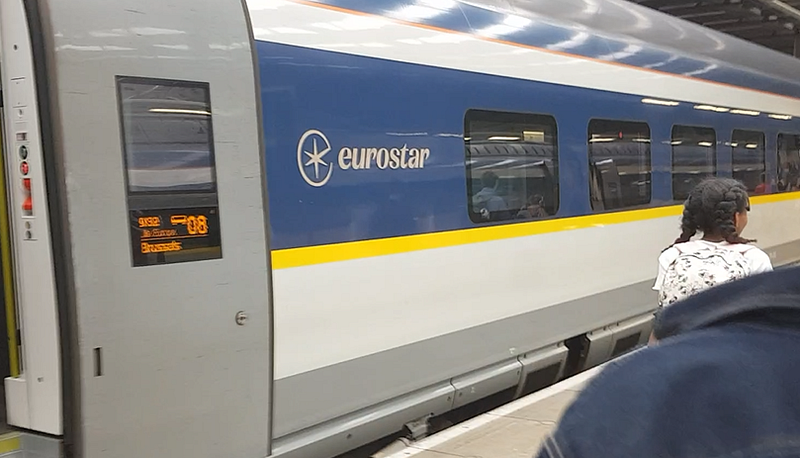
It’s been a while since I’ve written anything on Medium. This is because I’ve been abroad travelling to Europe via train for the first time. This has been a life-changing experience. I had been invited to a climate change event in Germany. Plus, given my costs will be reimbursed, I figured now is the chance to try out a new way of travel.
Additionally, I’ve developed an interest in flight-free travel, which is unsurprising given the worsening climate crisis and the need to avoid flying where possible. While forced degrowth of the aviation sector is necessary, mass expansion of the railway sector also must happen. Not just practically, but also in terms of positive framing. Hence, this is another reason I’m writing this piece.
I bought an interrail ticket for the purposes of my trip, which made navigating the trains easier to navigate. I love travelling in Europe partly because the inter-Europe borders are porous, thanks to various treaties and schemes designed to make international travel within Europe easier. Interrail is one of them. Plus, interrailing is cheaper than buying direct train tickets in many cases.
The morning of travel
All interrail services in the UK start and end at London St Pancras International. It’s a beautiful station, having opened way back in 1888. The inside of the station has this unique feeling of classic and modern architecture with various high-end and low-end shops weaved throughout.
Additionally, St Pancras is unique in the UK given that it serves both major domestic and international services on standard and high-speed rail, with services throughout the Midlands and North, Southeast, and Continental Europe starting from here. Plus, it’s right next to London King’s Cross Station (with its own unique history).
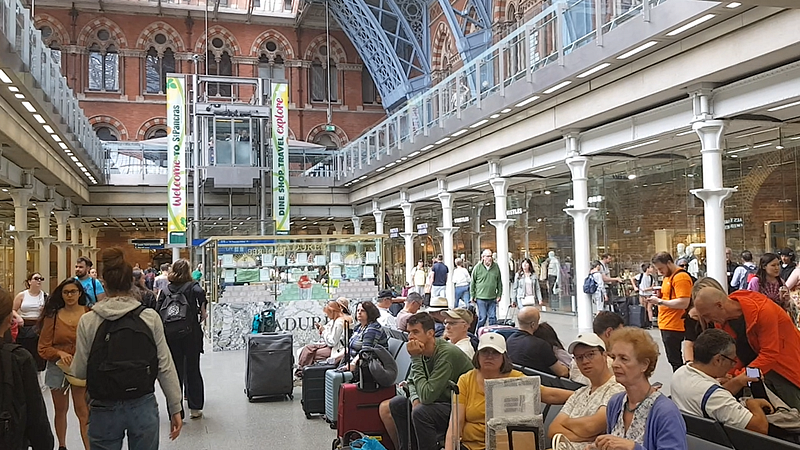
Getting lost in St Pancras Intl is easy on your first visit. The hustle and bustle of holidaymakers, the overstimulating sounds of trains, announcements, and various food and drinks from restaurants all create a unique atmosphere.
Because the station roof is covered in translucent material, natural light beams onto the open concourse, thus creating a unique blend of natural and artificial light when you traverse it during the day. Additionally, with a maze of platforms for domestic travel in the UK, you must make extra time to find your train if you’re travelling domestically within the UK. That said, even for international passengers like me, you must make time for check-in.
The process of checking in
Eurostar desks are among the easiest to find. The bright blue banner is distinctive, it’s well-signposted across the station and is easy to access. And of course, the staff are bilingual, speaking both English and French. One thing that stuck out to me is that I was surprised at how much of it was like checking in at an airport. Obviously, I expected security checks as it’s an international border, but the meandering queues around taped barricades and bulky airport scanners.
Alongside the gluttony of sweet treats and merchandise at the duty-free shop tucked away at the back of the waiting area combined together to produce a familiar, nostalgic feeling. I really am leaving the UK for the first time since before the pandemic started. My dream is becoming reality.
A big downside to all this though? The waiting area was extremely cramped due to everyone waiting for their train. There wasn’t just my service to Brussels but an earlier service to Paris that hundreds of people were waiting for. Like sardines packed in a tin can, people filled the waiting hall as much as physically possible. People filled the seats with their bodies, their suitcases placed alongside them on the floor. Once passengers filled all the seats were filled, they sat on the floor or stood around. Indeed, demand was high for international travel on that hot summer’s day.
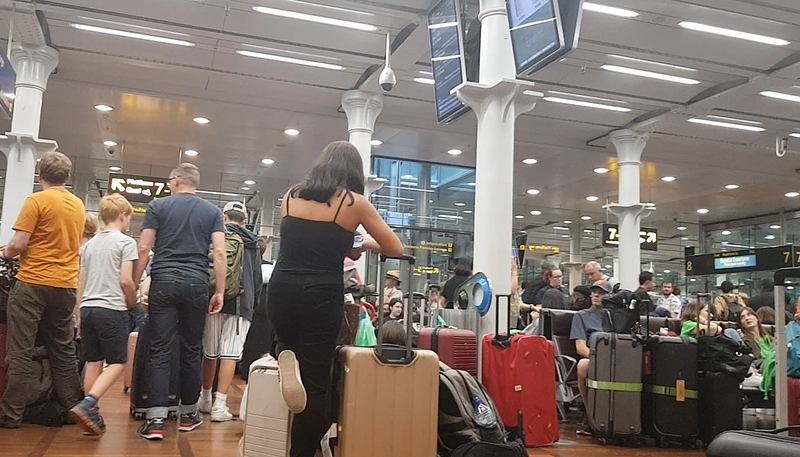
Soon the earlier service for Paris started boarding. The gates on the far-left side of the crowded departure lounge opened following an announcement. As soon as the coast was clear, passengers flocked to the pathway, thus congesting that part of the entrance. I hadn’t even started travelling yet the excitement that comes with travelling hit a fever pitch.
Shortly after, my train to Brussels started boarding. I made sure to dash over there as soon as it became clear which set of doors would open as I didn’t want to be caught in the congestion myself and become overwhelmed. Brexit-related delays meant I had to be at London St Pancras up to 2 hours before departure. I’ve already waited a long time and want to settle down for the 2-hour trip as soon as possible.
While I’m on the topic of Brexit-related delays and changes, every intermediate station between the UK and the Channel Tunnel hasn’t had any international services since the onset of the pandemic. Eurostar says services to these intermediate stations will resume in the next few years. However, in reality, this will never happen while the UK remains out of the EU or EFTA because there are far too many delays and issues caused by Brexit. Some services for stations within France are currently suspended. However, these will likely return to service eventually.
The train ride itself
I’ve split this portion of my journey into three sections — before, inside, and after through the Channel Tunnel.
Before the Channel Tunnel
Seeing the English countryside as the train speeds through Kent on the HS1 (High Speed 1) track is a unique perspective. Various roads and areas I was already familiar with go by rapidly in the blink of an eye. The Dartford Crossing, the clean, white bridge that towers over the Thames, looks comparatively small travelling by train when you’re not in a car.
Additionally, there are multiple spots on HS1 where you are riding alongside train tracks used by regional services within Kent, and you can sometimes see these slower trains travelling alongside you. It’s surreal travelling alongside comparatively outdated trains and low-tech in comparison. I loved it so much.
Inside the Channel Tunnel
I remember highly anticipating the Channel Tunnel itself, and luckily the train driver on this journey announced to the passengers when we were about to enter the channel. Various white walls were lined up on both sides of the track, another sign that the channel’s entrance was near. These white walls keep the channel tunnel entrance secure and free from intruders and animals alike.
The transition into the tunnel was sudden but pleasant. Despite the carriage being full of passengers, a quiet ambience beamed throughout. The sound of the train on the tunnel’s rails was strangely peaceful and relaxing in juxtaposition to the eerie black void outside. It felt so surreal knowing I was travelling at high speed underwater, bringing a childish sense of magic alongside it. Yes, the outside world is all black and you can’t see the sea like in aquarium tunnels. However, in this case, that doesn’t really matter.
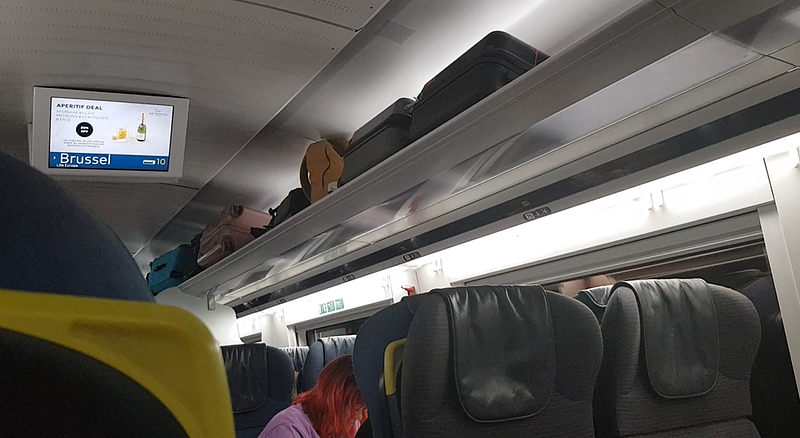
The Channel Tunnel is a technical marvel that showcases what humanity can achieve when countries and individuals are willing to work together for a common purpose. That is the feeling of magic that comes with travelling in the Channel Tunnel.
After the tunnel
The exit of the Channel Tunnel was equally as sudden as it was coming in. The French countryside broadly looks like the UK but with subtle differences. The most notable one is seeing cars drive on the opposite side of the road. Farmland and pristine natural fields are omnipresent, which is especially noteworthy since Brexit, given the state of UK farming. The train line navigates through northeastern France to Lille, one of the largest cities in France.
I didn’t get to see much of Lille. Most trains from London call at the “Lille Europe” station within the city. Yep, they really want to remind you that Lille is in Europe. The station itself felt cramped and sheltered from within the train, given that it was difficult to see anything outside the station. Part of this is because Lille Europe is underneath a motorway. However, the various walls and barriers of Lille Europe also obstructed the views. What I did see was part of the “Euralille” complex, a modern entertainment and business district in the heart of the city. It looked clean and colourful and is somewhere I want to explore another day.
Deeper reflections
As my journey neared its end, the Belgian countryside came into view. It looked quite like the French countryside although by this point, I became lost in my own thoughts regarding the journey. As I touched on before, I developed a strong interest in sustainable travel. I hoped that by doing it myself, this form of travelling would meet my expectations. Safe to say, it did.
The stunning views and experiences I had on this (and other) legs of my trip are things I would never have if I had taken a flight. Additionally, travelling flight-free is a rewarding experience because I’m helping to fight climate change while experiencing the world and travelling more slowly. I believe others should do the same whenever possible. Yes, even if it costs more money.
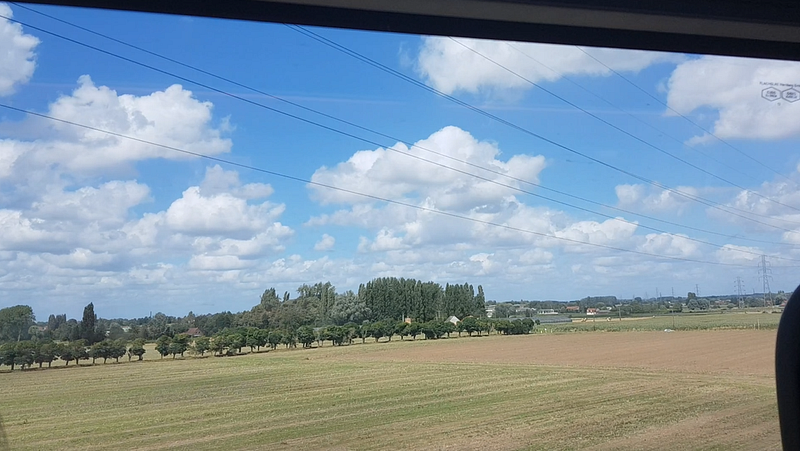
Finally, the outskirts of Brussels came into view. Surprisingly, it felt a lot cleaner and more open than I expected. I’m too used to the chaotic, cramped nature of London, which exists even in its outskirts. The train increasingly slowed down as it entered the spider’s web of electricity pylons outside Bruxelles-Midi (aka Brussel-Mid, and Brussels South in English), our destination station. There were multiple deviating tracks trains could be assigned to, with various modern buildings in the background.
Arrival in Brussels
The train finally arrived in Brussels. Due to the policy of juxtaposed controls, I had already cleared customs in London, so legally I’ve been in Belgium since before I got on the train. Hence, I could walk straight into the bustling, chaotic station concourse. The station is a sprawling, vibrant maze of platforms and various restaurants and travel shops.
Announcements echoed throughout the station in French and Dutch. Some announcements in English were peppered throughout on occasion. As the train platforms were on the high level, the low level was lit by various lights installed on both the concourse ceilings and the restaurants. Blue lights backlit the signs for the international travel portion. In many ways, navigating Bruxelles-Midi is like navigating London St Pancras Intl.
I still had some time before my next train, so I stepped outside of the station to do a bit more exploring while I had some time. But that’s a travel experience to recall another day.
Thanks for reading! If you want to support my work, you can:
- subscribe to me so you get an email whenever I publish something new at https://nomadmills.medium.com/subscribe
- follow me on Medium via my profile.
This ensures I can keep doing what I love. Thank you so much!