
What It’s Like to Travel in Europe During The Weird Covid Summer
Conclusions from roaming around Europe during the Pandemic
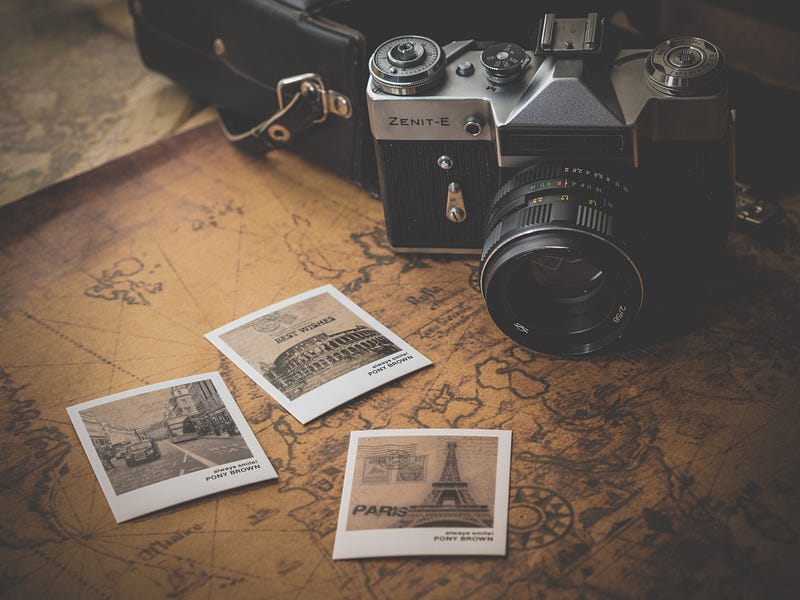
There will be no international holidays this summer.
Maybe, with a bit of luck, we will travel around our own countries.
But we certainly won’t cross European borders on a whim like before.
Those were the phrases we heard in April. Over and over again.
The situation looked bleak. Summer seemed canceled, and most Europeans prepared for a long stint within their borders.
Unfortunately, my country is small. Very small.
Luxembourg is just under 1,000 square miles (2,500 square kilometers), making traveling a rather short undertaking.
Worse still, as a digital nomad, I am used to full-time travel. I chose this lifestyle because I wanted to change countries frequently and perform geo-arbitrage.
I work online and leverage the cost of my location. I am also a die-hard adventurer, always seeking novelty and cultural immersion.
In short, my professional circumstances make Luxembourg unattractive.
Don’t get me wrong, I am not complaining.
This year, I spent more time at home than in the previous two years combined and I was glad to see my family more often.
Nevertheless, around May, anxiety started to kick in.
What if the borders don’t reopen soon? What if my digital nomad lifestyle gets canceled, like all those prominent events?
Fortunately, the tide turned in June. Most European borders reopened and most countries got ready for a Covid-conform tourism season.
So, at the end of May, I packed my bags and set off once again.
I re-embarked on the same digital nomad lifestyle I had lived prior to 2020. There was one slight difference: I moved around Europe instead of Asia and Latin America.
So, what’s it like?
Spoiler alert, it’s weird.
Summer in Europe has never been like this, and it probably won’t ever be again.
On this basis, here are 8 conclusions from my first two months of post-Covid European travel.
1. Travel is possible…
The first main conclusion from Covid summer traveling in Europe is the fact that not much has changed in terms of connections.
Yes, there are fewer flights and probably more delays, but other than that, you can travel around Europe on cheap flights, excellent train connections, and night buses — just like before.
The vast majority of services resumed and the quality has remained the same.
There are naturally a few changes. Many train companies leave every other seat free, but this is not the case everywhere.
In-flight meals were scrapped, but I don’t think anyone misses Ryanair sandwiches.
And finally, border controls and entry restrictions for certain citizens exist in many places. That might be the most annoying change to traveling in Europe.
In normal times, we enforce something called the “Schengen Agreement.” This treaty prohibits border controls and guarantees free movement between its member states.
Schengen provides for various exceptions, and these are used to the max at the moment.
Consequently, I have to check whether I am allowed to enter country X before going there.
In the European Union, this is unheard-of.
2. But there is no uniformity in terms of rules
This is no political article, but at the height of the Pandemic, the member states of the European Union played a familiar tape, the tape of disagreement.
Ireland wants a quarantine for 10 EU countries. Slovenia classifies every country with color codes. The green ones can enter, the others cannot. And Italy opens every border without restrictions.
The member states of the EU are not known for agreeing on much, but this year, the lack of uniformity in terms of border rules is simply mind-blowing.
The same goes for Covid-related sanitary measures, face mask rules, and hospitality norms.
The European Commission did publish guidelines on all these topics, but as always, countries go their own ways.
Consequently, every border crossing is now a challenge.
Not just the question of whether I am allowed in with my Luxembourg passport, but also a new lesson in finding out what the rules are.
3. Most tourist attractions are open
On a more positive note, tourist attractions are generally open.
You don’t need to spend your time in a closed resort or an overly-disinfected Airbnb, you can venture out and see the Colosseum, the Acropolis, and the Charles Bridge.
Having spent the last few weeks in Italy, I can safely that the country more or less returned to normal.
It’s baffling when you think about Italy’s early Covid woes, but as of mid-July, the tourism industry is up and running.
There are fewer tourists, mostly because Asians and Americans aren’t allowed into Europe, but other than that not much has changed.
You can get a tan on the beach, take an overpriced gondola in Venice, and get lost in the narrow alleyways of Naples’ quaint Centro Storico.
In short, you can do all the touristy things you would have done before.
There are some restrictions in many places — social distancing is supposedly guaranteed — but nothing is shut.
4. Accommodation hasn’t changed much
Aside from a strong smell of disinfectant, I haven’t noticed any major changes in hotels and Airbnbs.
Some hotels require face masks in common areas, but this has more to do with country-specific laws.
In that same vein, many international hotel chains pride themselves on adopting strong sanitary measures.
Breakfast buffets have become rare and online check-in is finally possible in most hotels.
Aside from those small changes, however, booking a hotel or apartment is no different than before.

5. The rules change frequently
One of the most annoying aspects of traveling in Europe this summer is the ever-changing legal environment.
One minute, you’re allowed into country X and the next minute, you need a negative PCR test.
I faced this exact problem a couple of weeks ago.
On June 26, I took a bus from Austria to Slovenia.
No problems, Luxembourg was still on Slovenia’s “green list.” I spent a few days in Ljubljana and continued to Croatia. I had planned to stay in Croatia for a few days before heading back through Slovenia into Italy.
One week later, both people with a Luxembourg passport (myself) and people traveling from Croatia (myself as well) were banned from Slovenia.
Luckily, Slovenia still allowed transit through one small border crossing.
That way, I made it to Italy, but the experience wasn’t great. We weren’t allowed to get off the bus before crossing the Italian border.
My recent experience is just one example of many countries’ unpredictable entry regulations.
Last week, I could have gone to Switzerland. This week, I can’t.
I spent nearly a month in Germany this summer, but now I need a negative PCR test to go back.
And even if I am allowed into Austria today, I might not be tomorrow.
These incessant developments make traveling in Europe a frustrating affair.
The EU set up a website to check entry requirements for each destination, but rule changes are so frequent that you could refresh the page just to find yourself unable to enter destination X.
Wouldn’t it be much more effective to adopt common health standards and leave the borders open?
It’s Europe after all — the continent that loves to boast about its supposedly unique Schengen system.
6. Sanitary measures and their enforcement vary greatly
Much like entry restrictions, the enforcement of sanitary measures varies greatly throughout the continent.
Some people say that travel is not safe right now.
Just stay home. Travel when there is a vaccine. And most importantly, don’t go to places with lower hygienic standards.
Those people certainly have a point, but for me, it’s not an option.
This might be controversial, but I don’t think we can stay at home for an entire year or even 18 months — because that’s the earliest we can expect to have a vaccine.
We have an innate desire to travel — pandemic or not. And we cannot control how much the authorities in our destinations enforce sanitary measures.
Besides, enforcement doesn’t matter. Personal responsibility does.
If nobody else wears a mask, you can still wear one. If passersby don’t socially distance, you can lead by example. And if there aren’t enough places to wash your hands, you can bring your own sanitizer.
Consequently, some countries’ laxness doesn’t prevent me from traveling there.
I believe that no matter how well sanitary measures are enforced, people still need to play their part.
And if most people take their responsibility seriously, enforcement isn’t even required.
7. Tourism-reliant countries are generally more accessible
Southern Europe is highly reliant on foreign tourism.
Tourism accounts for 13 percent of Italy’s GDP, 17 percent of Portugal’s GDP, and 27 percent of Malta’s GDP.
Small wonder that these countries reopened their borders rather quickly. The same applies to Spain, Greece, Turkey, and Croatia.
They are trying to salvage their summer revenues, already decimated by the loss of American and Asian tourists. That’s why Europe’s beach hotspots work well as Covid summer destinations.
Some experts claim that many tourism-reliant countries doctor their numbers to appear like “Covid-free” destinations.
That might or might not be the case, but I believe that going to Italy, Croatia, or Spain is a great idea this summer.
If you take your responsibility seriously, you could have a unique and memorable experience.
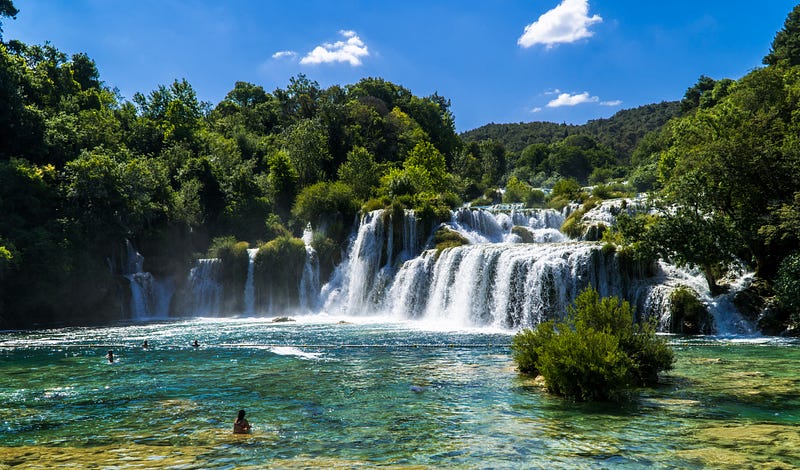
8. It’s a lot quieter, everywhere
If you’re trying to decide whether European travel is a good idea this summer, there is one overriding argument: it’s quiet everywhere.
Prior to revisiting Croatia this July, I had been three times. I always loved the place, but it was extremely overrun.
Croatia’s accession to the European Union, it’s Insta-famous natural sights, its popularity among cruise ship companies, and the recent Game of Thrones craze brought millions of diverse tourists to Croatia — way more than the country could handle.
This summer was different. No cruise ships, no Game of Thrones tours, and exclusively European tourists.
The incredible Plitvice Lakes National Park was empty. So was Dubrovnik. And even the beaches weren’t crowded.
My experience in Italy has been similar. European tourists flock to the Vatican, the canals in Venice, and the streets of Bologna, but the overall numbers are only a fraction of what they used to be.
Summary and final thoughts
- In the summer of 2020, traveling in Europe is weird and frustrating at times, but also worth it.
- If you take your responsibility and protect yourself, the risk levels are arguably similar anywhere on the continent. Some local hotspots still exist, but most countries are now in a phase of “coexistence with the virus.”
- Navigating the incessant changes in entry restrictions is the biggest challenge at the moment.
- The best reason to travel around Europe this summer is the fact that the continent’s tourist hotbeds are quieter than ever before.
If you enjoyed this article, join my email list to stay in touch.


