
What it’s like to be Codependent: Being Addicted to a Human
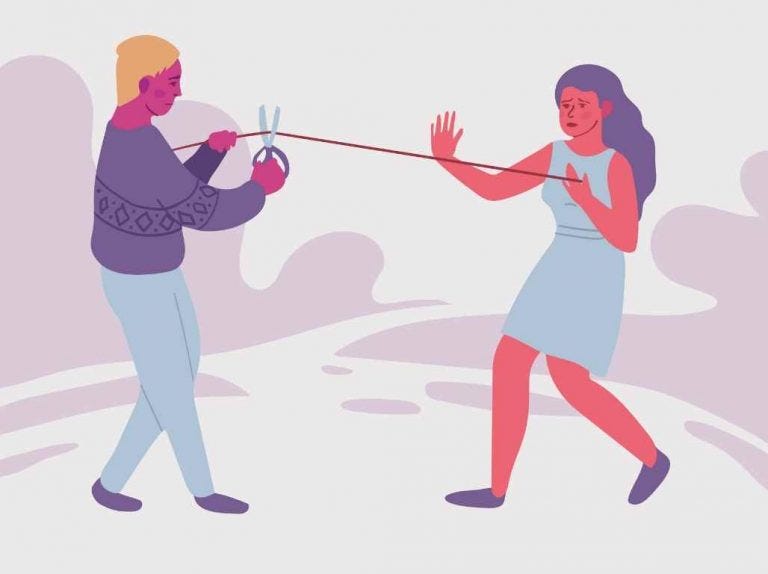
When you were born, your maker only put most of your heart in your chest. The rest was hidden inside others. This made you insecure because your heart could not flow all the love you needed. Instead, you had to go out and find the people who had the missing pieces of your heart. Your guide, Tinder, led the way.
When you found them, it didn’t matter that it had only been a few dates; your heart finally felt complete! Whenever you were with this person, you were cured of the disease of being alone. When they would go away or pull away, you would get sick. You were addicted to love.
Could love be an addiction? When the heart gets governed by the ego, it can be. So that when the person who carried the missing pieces of your heart stopped providing them to you, you suffered withdrawal symptoms, just like an addict: sweats, anxiety, nightmares, moods. You were ‘not yourself’ because you were not used to being yourself; you were used to being the relationship version of you.
You went into fear, sadness, shame, anger. How could they take my own heart from me? That’s how it felt: like you were grieving your own missing heart. I think the Spanish have understood this, for they call their lovers mi vida: my life, or, mi cielo: my Heaven. They even have the same words for spouses and handcuffs: esposas. I love my wife, and that is because I know where I end and she begins.
Then, they came back! And your heart felt better because again, it felt complete. And for a while, things were good. But, like an addict, you developed a tolerance. The validation, attention and affection that used to be enough, no longer were. So you asked for more, because that would make you feel better. Much of the time, they would do what you needed, because drugs miss their addicts, too.
The dependence made the love feel more intense, more passionate, more real. So you equated dependence with love until you could no longer tell them apart. If we don’t need each other, how can I tell we love each other?
And so you suffered from confusing your lover with a drug. And behaved towards them the way an addict does towards their drug, their dealer, their need.
You became confused when they treated you like their drug, or when they stopped. Sometimes this only happened when they couldn’t get the love they needed out of you, like a customer frustrated with a sold-out dealer. Sometimes, you only saw you were each others’ drugs when the relationship could no longer get you two high.
There’s a mythology for hiding an aspect of our very being inside another: Voldemort putting a piece of his soul in the living horcrux of Harry Potter. My soul is not only in me, it’s in you. To have my soul, I must possess you. (That Harry and Voldemort are adversaries rather than lovers only proves the point: it is in the most extreme loves and hates that we find our obsessions, our oneness and our path. The prophecy of Harry and only Harry killing Voldemort is analogous to lovers who were ‘meant to be’.)
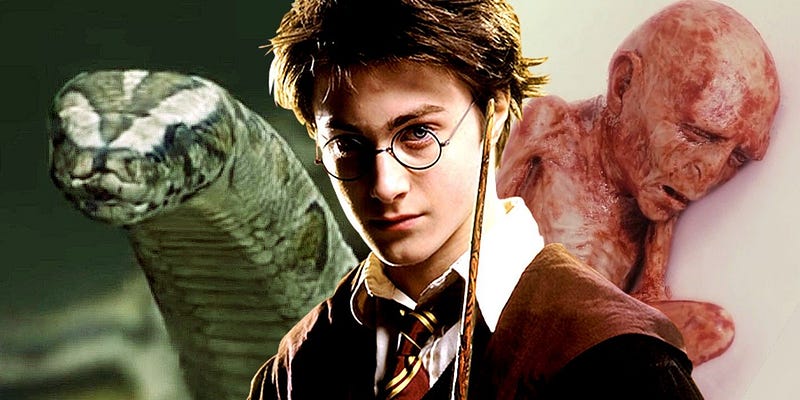
When Harry dies, he goes to the afterlife and sees a miserable, fetal version of Voldemort for whom, in the words of Rick and Morty, existence is pain. Harry sees the misery he was carrying within himself by taking on the pain of another. When Harry resurrects, embodying his own soul alone, he is better able to integrate his light, for he has let go someone else’s darkness.
There’s an allegory for codependence. Shel Silverstein’s The Missing Piece involves a Pac-Man shape who seeks a pie shape with which to merge and form a circle. The Missing Piece gets its wish only to find it loses its quality of life when it defines its own completion through merging with another. It detaches from its ‘missing piece’ and moves along, alone again.
In the sequel, the Missing Piece meets someone with whom he fits perfectly, but the fit goes away because he starts growing, and so he seeks someone who will not grow in relationship. Codependence relies on stasis, hence one partner’s growth manifests as the other’s disequilbrium.
Finally, the Missing Piece meets the Big O, an archetype of the Self that does not seek to merge with anyone, and instead encourages the Missing Piece to find its own way. Once the Missing Piece rolls itself instead of trying to roll with another, he rounds his sharp corners and turns into a Big O himself. Good stuff! The corners represent the sharp beliefs that round off into completion through finding its path.
We are all one, but only once we are one.
To follow me: https://medium.com/@myartman
To subscribe: https://medium.com/@myartman/membership
PS If you are curious how far codependence can go, try this.