
RACE
What It Really Means When You Say You Don’t See Color
And why it matters
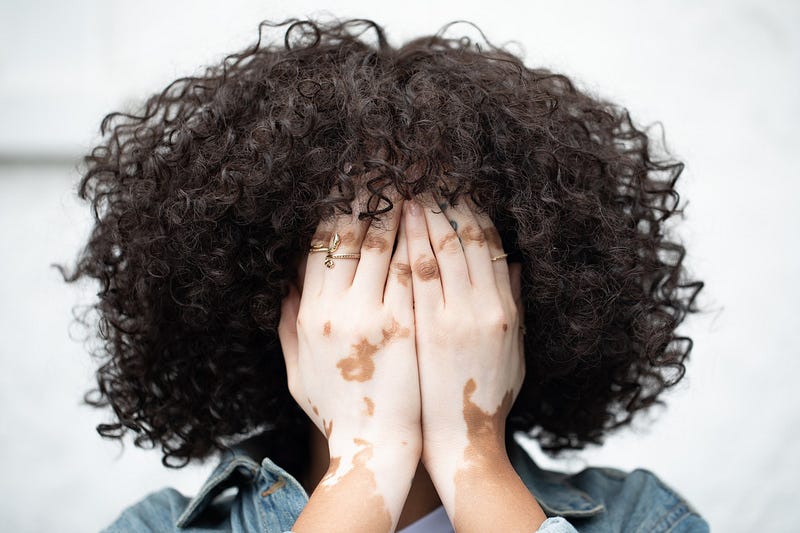
I’m asking you not to be color blind, but to be color brave. ~ Mellody Hobson
If you’ve ever heard the expression “I don’t see color,” you may have felt a sharp pain in your heart. Obviously, any multitude of factors will have played a role in your reaction: cultural identity, personal relationship [with the person who made the remark], lived experiences, and perception.
As an Afro-Boricua (aka a Puerto Rican who connects with her African heritage), I sometimes meet folks who don’t understand the vastness of our cultural identity. Those times when the conversation turns to racial association and colorblindness are challenging moments. For someone to willingly not see the beauty of me is to negate my being.
To be fair, I know some say they’re “colorblind” as a way to minimize the role of race in our society. For them, it might be their way of saying they do not focus on color or race, but rather on the person as an individual. That notwithstanding, the concept of avoiding the subject or not acknowledging us only serves to create further dividing lines.
The Messages
On the surface, being race-neutral might seem harmless — it’s an easy out to avoid uncomfortable conversations. By saying you “don’t see color,” you’re touting yourself to be just like Switzerland.
Keeping yourself out of any talk about race and racism means you can’t be criticized for potentially saying something inflammatory. By distancing yourself from the discussion, you’re letting folks know you can’t possibly hold racist views.
Wrong!
A recent Forbes article, authored by Dana Brownlee, reflects on the messages many of us Black and Brown people process when we hear “I don’t see color.” Noting that it “often sounds like code for what they’re really feeling and thinking,” the story elaborates:
Thank goodness I don’t have to think about race.
Using an analogy of right-handed people, we see that “spiral notebooks, binders, scissors, school desks, and many other everyday items are designed for right-handed people.” In that sense, these folks don’t much have to think of how left-handed people struggle to adapt to a world of majority right-handers. “The world is configured to suit them.”
Ms. Brownlee highlights how similarly, white persons have “the privilege of not needing to think about, focus on or actively “see” race because they haven’t needed to do so in order to achieve their goals.”
Let’s get out of our comfort zone!
I’m not comfortable talking about race, and I’m not used to being uncomfortable, so can we please change the subject?
For many, they prefer talking about “safe” stuff. Life is easier that way. Easier for whom? Theresa M. Robinson, Anti-Racism Educator and Master Trainer TMR & Associates challenges the conversation “I don’t see color is the get-out-of-talking-or-doing-anything-about-racism card that ‘good white people’ carry in their wallet.”
If no one talks about the subject, nothing changes.
Please give me credit for not being racist.
Ms. Brownlee puts forth another point regarding those hoping to be viewed in a positive light surrounding their race-neutrality. “Perhaps the most obvious way to interpret the “I don’t see color” comment is one of self-congratulation. Indeed, they’re making it known that they’re not a “racist” white person. They are in fact, a “good” white person, and as a “good” white person, they are so non-racist that they don’t even have the ability to notice race.”
Taking Action
So how are we expected to react when we hear the dreaded remark? What roles do non-white folks have in bridging the dialog?
Take a stand!
I can hear that little voice in my head, annoyingly reminding me “Lola, it is not your responsibility to school these people!!” And while I can’t say I disagree, the flip side knows that by keeping quiet, I’m only contributing to their willful ignorance.
The conversation can be a firm, yet non-confrontational one. Something as simple as “can we talk about how I feel when you say you ‘don’t see color’?”
Another option can be to ask the person to explain what they mean by the remark and how they came to that perspective. This potentially will lead to further ignorant comments on the race-neutral end, but it also gives a chance to get the conversation going. It also allows the white person to hear themselves explain their rationale — when asked to do so, they might start to reflect more closely, questioning their own ideas.
Reminder: it matters!
Often, calling folks out on their words and behavior reminds everyone to be accountable. It’s not about building an “us against them” mindset. It’s about creating an honest dialog around the subject.
In getting uncomfortable, asking the tough questions, and being willing to take part in the conversation, we’re showing each other that we care about creating a kinder world. We’re teaching others that being “colorblind” is a copout — it’s unacceptable, and we shouldn’t pretend it’s ok.
Sharing cultural storytelling, Lola is an Afro-Boricua Poet and fierce advocate of decolonizing Borikén. Catch her on Twitter and her travel blog, LaTrekista.