
What It Means To Love A Dead Child
Motherhood is indelible — even if your child dies.
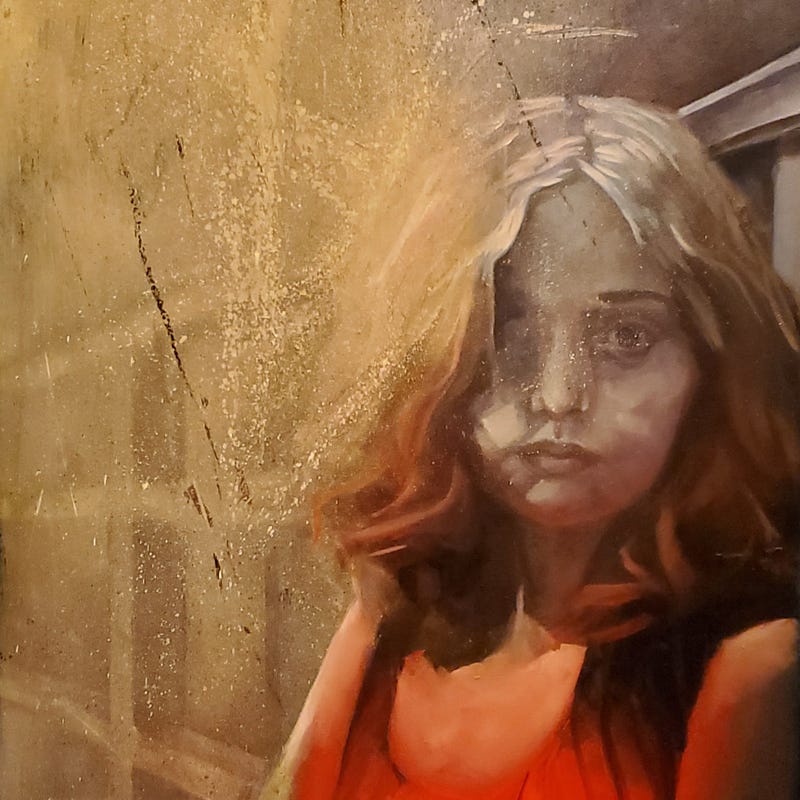
First, forget everything you think you know about grief. The rules don’t apply when it’s your child that dies. The landscape of your life has been demolished and now you’re standing in a place that’s unrecognizable. It expands out in every direction. You don’t know where to go. You are completely alone.
This is the place you find yourself in when your child dies. It is desolate. You are desolate. People keep saying things like, “I can’t imagine” and “this is my worst nightmare” and you realize that your life is now unrecognizable, not just to them, but to yourself.
You have become your own worst nightmare.
You don’t want to live, but you wake up and get out of bed every day, slogging forward and trying to learn the rules of this new life. You do this because that’s what it means to love a dead child.
Ana was beautiful. She was smart and funny and determined to live life for as long as she could live it. I had the gift of Ana in my life for almost 16 years.
Then, one day, Ana was simply gone.
Sometimes I think about the person I was in the years before I became a mother. I recall the people who knew me back then and wonder how many of them are luckier than me.
I think, “What if I’d known that, twenty years down the road, I was the one who would run out of luck? Would I have changed everything about the course of my life?”
But I know I’d do everything all over again — even losing her — if it meant I could relive the years I had with her. This is a selfish thought because I am selfish. Would she want to relive it — the pain, the fear, the sadness? How could I ever consider putting Ana through that hell again just for the chance to see her face? Because that’s what it means to love a dead child.
My memories of Ana are pixelated. They are embedded in the photos on my laptop. She appears before me when I log into Facebook — young, smiling, healthy. Ana is real on the screen, but when I step away from my computer or put my phone down, I am acutely aware that she is fading from the world’s memory. She will never fade from my memory.
Indelible. That’s the word that best describes motherhood. It’s permanent, even after our children grow up and become parents themselves. Motherhood is indelible — even if (even when) our child dies.
My love is indelible ink and Ana was the paper. The paper is gone, but the ink remains, crumbling, purposeless. It has no place to land. Paper is so fragile.
Memories are fragile too. Before Ana died, my memories of her bloomed, vivid. They lingered, then faded into new ones. I followed each year of her life as if it were a shining path to a certain future: prom, graduation, college, career, love, marriage, a family of her own. I anticipated Ana’s lifetime, stretched in front of me, a certainty.
What use were the old memories in the bright light of the new ones?
Death claimed Ana’s future. I have only the old memories and I’m holding onto them too tightly. They disintegrate under my scrutiny, slipping away like dust through my desperate fingers, showing me the truth whether I want to acknowledge it or not.
So much of Ana’s childhood exists in my unreliable, uncertain mind. The nuances of her are blurred, the memories are disappearing, and she’s not here to replace them.
It’s up to me, as her mother, to actualize Ana, to keep her fully realized, to hang onto the precious bits of her that remain even though I’m dealing with the limitations of a brain that can’t hold onto everything. It’s an impossible task. I know it’s time to let some of it go, let some of her go. That’s what it means to love a dead child.
After Ana died, I found a tiny replica of a book that she’d molded from polymer clay. She’d carefully sculpted the clay into a rectangle, painted it blue, and etched the word “Book” on the front to serve as the title. The book was slightly concave from the shape of her fingertip when she’d tried to press it flat. This flaw remained after she’d baked it into the finished piece.
I carried this small sculpture around in my coat pocket for over two years. I liked to rest my thumb in the curve of Ana’s warm, slender, living finger had made that slight indent. It felt like a secret between us.
I’d thought the sculpture was safe, but about two years after she died, I reached into my pocket to touch the little book, and it wasn’t there. It had fallen through a hole in my pocket, as things do.
I fell to my knees and searched for that book, needing to feel the shape of Ana’s fingertip one more time. I knew it was a lost cause, but I hunted for it anyway. I retraced my steps, casting my eyes down — on the lawn, on the kitchen floor, in the backseat of the car — I did this for days and my grief rose as my desperation grew until, finally and with a sob, I had to admit what I’d known all along. The sculpture was gone forever, along with the girl who made it. That’s what it means to love a dead child.
On unseasonably warm winter days, I go outside. I walk on nature trails and rail trails. On my cold, quiet walks, I study the sky and the leafless trees looking for owls or hawks or woodpeckers. I bring my dog with me even though he pulls on the leash, impatient as I drag my feet, looking up at the sky.
He watches me anxiously when I stop to study a bird or take pictures of the clouds. Sometimes I lift him up and carry him along the path and he settles into me, content to go where I take him.
He was our family’s first dog, adopted when Ana was 14. She’d begged for a puppy and she’d been so sick. How could I say no? Ana loved the dog and now I love the dog. He comes with me on almost every walk. He’s like a tiny surrogate of Ana, a living echo of her love. He is all joy and warmth and pink tongue kisses.
I imagine her approval as I slip him into his harness and take him outside into the brisk January chill.
When I walk, I look up. I tell myself it’s because I want to see the birds. I tell myself it’s because Ana loved the sky and by taking the time to notice its beauty, I am honoring her. I tell myself these lies because I know the truth makes me sound crazy.
The real reason that I keep looking up is because I’m searching for a sign that Ana still exists, that her soul survives above the painful reality of the physical world. I hope, with all of my heart ,that she’s there, floating behind a veil that’s just beyond my sight.
I look down too — for feathers and rocks shaped like hearts. I used to look for that lost Sculpey book as if it would miraculously find its way back to me, but I’ve long since given up on ever finding it. As the years pass, I’ve stopped caring if looking for evidence of Ana’s soul makes me seem crazy. Believing in the impossible is what it means to love a dead child.
In the ebb and flow of a given day, I am perpetually hanging on and letting go, finding my footing only to discover that I’m lost. It is exhausting, but it’s not all sorrow all the time. How could that be the case, when Ana brought me so much joy?
I’m aware of life now. I don’t mean my life. I mean the miracle of everything: the way the mist curls up from my humidifier in gentle spirals like cirrus clouds, how the birds sing their morning chorus about ten minutes after the sun comes up, the quiet hum of the pellet stove, the way my younger daughter’s hair shines beneath the glow of her fairy lights.
The world presents itself to me in stark relief and I am perpetually in awe of how much of it I’d missed before my life stopped and I had to figure out how to start it again.
On the days when the burden is too heavy to carry — which is most days by 1 p.m. — I crawl into bed full of gratitude because I work from home. I can pause whenever I need a break.
As I lie in bed, I imagine all the people in all the offices throughout the globe, click, click, clicking away on their computers while I let my weary bones rest on a bed that helps bear the weight of my grief. I doze beneath the soft warmth of my quilted comforter until the exhaustion passes and I can stand up again and finish the day.
First, forget everything you think you know about grief and now, reimagine it. It may take three years or seven or twenty, but there will come a time when you finally recognize the landscape that was once so strange it seemed impossible to comprehend — life without your dearest one, life without your baby.
You will understand, with time, how to navigate the darkest parts of your new normal and you will begin to recall your child with joy. This will happen slowly at first, but with increasing frequency. You will notice the light returning, like a faint line of breadcrumbs on a barren, winter trail.
You will accept the contradiction that joy and sorrow are inextricably linked, twisted together in a brand new emotion that keeps your child alive and present within your heart. You will welcome this, in the end. There is no way to go back to the life you once knew because you will understand, at last, that this is what it means to love a dead child.
This piece was originally published by Al Jazeera US.