
What Islam Really Says About Women
I spent a lot of time learning about the religion “Islam” in the Qur’an (the holy book of Islam) and the Hadith (statements and actions of the Prophet Muhammad ‘salallahu alayhi wasalam’). It’s very striking how ignorant so many people (Non-Muslims and even some Muslims) are about Islam, especially in some parts of the media.
When many people think of Muslim women, the common stereotype that pops in the mind is the portrayal of a mysterious veiled woman who is oppressed. However, according to Muslim tradition as well as the Koran women are portrayed in a much different light.
Most of the negative stereotypes about women in Islam didn’t arise from Islamic guidance but from historical and cultural practices, which not only denigrate the experiences and the rights of women, but also stand in opposition to the teaching of God (Allah) and his Prophet Muhammad (saw).
Far from the misconceptions, the Prophet Muhammad (saw) preached boldly on the big role of the woman, celebrating her importance and unique contribution to both family and society, campaigning for women’s rights, and condemning her ill treatment.
With all the confusion between culture, history, and Deen (religion), it is important that we question ourselves: What do the Qur’an and the Hadith really say about the status of the woman in Islam?
Women are partners with men
Women are portrayed positively in the Koran as well as the Hadith. The Qur’an frequently refers to women alongside men, and both are described as being friends and partners in the faith.
“The believing men and believing women are allies of one another”. (Qur’an, 9:71)
“Women have rights similar to those of men equitably” (Qur’an, 2:228)
“I do not allow the labor of any worker from among you, male or female, to go to waste. You are similar to one another” (Qur’an, 3:195)
“Women are counterpart of men” (Hadith, Sunan Abi Daoud 236)
Marriage’s Rights
Although Muslim parents traditionally play a very important role in arranging different marriages as well as helping find marriage partners for their children, both husband and wife must freely agree to the marriage. Women are allowed to reject forced marriages. The Prophet did grant the right for marriage annulments to girls who had been forced into marriages against their will, and they can also initiate divorce.
“A virgin should not be married until her permission has been sought” (Hadith 72, Sunan an-Nasa’i 3267)
Women keep their own names and identities after marriage. A girl’s name is always linked to their father’s name.
“Call them by (the name of) their (real) fathers; It is more equitable in the sight of Allah.” (Qur’an, 33:5)
Any money that a woman earns is her own to spend as she sees fit. Men are responsible for maintaining and supporting the family financially (of course women can do that too but the weight of each is just different)
“Men are caretakers of women, since Allah has made some of them excel the others, and because of the wealth they have spent.” (Qur’an, 4:34)
The relationship between husband and wife in Islam is really an interdependent one. It’s based on love and peace.
“And it is among His signs that He has created for you wives from among yourselves, so that you may find tranquility in them, and He has created love and kindness between you. Surely in this there are signs for a people who reflect.” (Qur’an, 30:21)
How was the Prophet treating his wives
Throughout his life, the Prophet (saw) treated his wives with love, respect, and affection.
“The best of you is the best to his wives, and I am the best of you to my wives” [Hadith 295, Jami’ At-Tirmidhi]
He always knew the feelings of his wives, and he was always respecting their emotions.
The Prophet (saw) once said to his wife Aisha (ra): “I know well when you are pleased or angry with me. Aisha replied: How you know that? He said: When you are pleased with me you swear by saying “By the God of Mohammad” but when you are angry you swear by saying “By the God of Ibrahim”. She said: You are right, I don’t mention your name.” [Bukhari 5228]
He was comforting for his wives, supporting them, hearing their complaints and caring for their emotions.
Safiyah (his wife) was on a journey with the Prophet (saw). She was late so the Prophet received her while she was crying. The Prophet wiped her tears with his own hands and tried his utmost to calm her down. [Sunan Al Kubra, 9117]
He was consistently demonstrating his loyalty and love to his wives
The Prophet (saw) told Aisha in the long tradition of Um Zara’ narrated by Al-Muslim : I am in my love and loyalty to you just like Abi Zara’ and Um Zara” Aisha replied: You are dearer to me more than my father and mother, you are even more loyal and loving than Abi Zara’ to Um Zara”. [Muslim, Hadith 5998]
Aisha said: When I drink water from the pot while in menstruation period and give the pot to the Prophet (saw) he drinks from the same place which touched my mouth. [Muslim, 300]
The prophet was once asked by his companions about the most beloved person to him, so he answered readily “Aisha” so they said “and from men?” and he replied “her father”. [Bukhari, 3662]
Importance of Girls’ Education
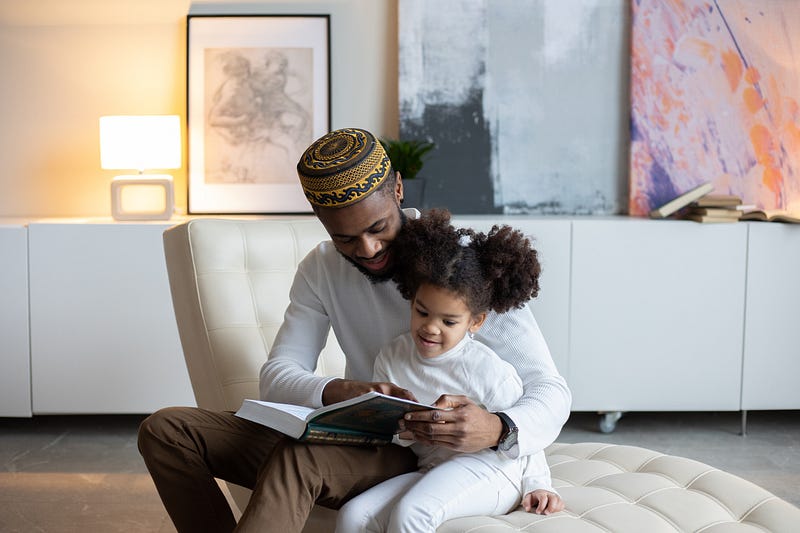
The Prophet (saw) came at a time when women and girls have been victims of abhorrent practices in many societies. They faced multiple barriers in the equal enjoyment of the right to seek knowledge. The Prophet Muhammad preached Islam, promoting equal access to education for both men and women. In Islam, education is equally important for women in the same way as in the case of men.
“Seeking knowledge is obligatory on every Muslim, male and female.” [Hadith 224, Ibn Maajah]
Women’s right to property

Islam was born when human societies underpin sexist practices and behavior. From Europe to the Arab world, women didn’t have the right to property. The Prophet Muhammad (saw) and his wife Khadija (she was a businesswoman) took a stand against all these racial stereotypes. Muslim women were granted the right to have their own businesses, inherit money, and they can own and sell their property as they saw fit.
“From what is left by parents and those nearest related there is a share for men and a share for women, whether the property be small or large,-a determinate share.” (Qur’an, 4:7)
Sexual and emotional intimacy

Women are to be a hundred percent respected in intimate acts as well. The Prophet (saw) had underlined the importance of foreplay as well as the emotional intimacy in sexual relations as the following Hadith outlines.
“Not one of you should fall upon his wife like an animal; but let there first be a messenger between you.” “And what is that messenger?” they asked, and he replied: “Kisses and words.” (Daylami)
Reward in childcare
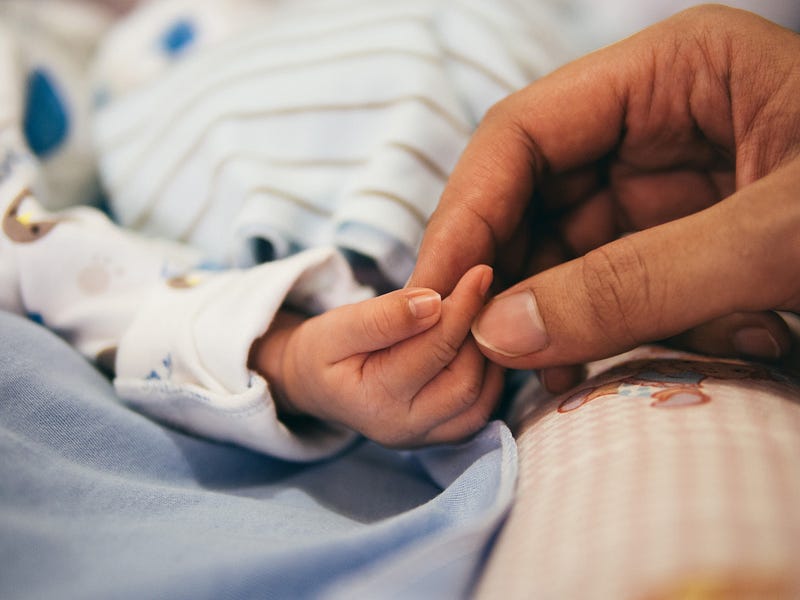
Pregnancy is a very complex and difficult period in a woman’s life. Islam, being a Deen (religion) of justice, can never neglect the reward of a mother.
“Every time a woman becomes pregnant, during the whole period of pregnancy she has the status of one who fasts, one who worships during the night, and one who fights for Allah with her life and possessions. And when she is giving birth, Allah grants her so much reward that nobody knows its limit because of its greatness.” [al-Kāfī, vol. 5, pg. 496]
Everyone must show love and respect to mothers.
The Prophet (Peace be upon him) said: “Paradise is under the feet of the mother.” [Mustadrak al-Wasāil, vol. 15, pg. 180]
Final thoughts
I’m not here to tell you that Muslims (or those who call themselves Muslims) are the best. I can’t really know that.
What I do know is that we can’t build our opinion about Islam (or anything for that matter) based on what we see in the media or even in the acts of Muslims. We don’t know if they apply what Islam really says. As we all know, only God is perfect, but we, humans, are not.
I invite you to do your research and seek the truth about Islam in the 2 trustful sources : The Qur’an and the Hadith.
“Truth, like gold, is to be obtained not by its growth, but by washing away from it all that is not gold.” -Leo Tolstoy
I’m always open to any ideas and perspectives, so feel free to leave your opinion in the comments.
References
- The Quran, the holy book of Islam.
- The Hadith (Sunna).