What Is Your DIR In Life?
2. I as Initiation
If you want to know what DIR stands for me, continue reading.
1. D as Departure
In the minds of a lot of young Senegalese and African people, leaving the continent was the only way to strive for a better life and to support their families back home.
In the late nineties, I graduated from high school, and I was also obsessed with going abroad, the magic land of abundance and joy, where everything was great.
Indeed, all I knew from Western countries then was mainly from 2 sources of information.
The first source of information was the media, mainly magazines and television. On TV, I used to watch movies and TV shows where everything was so beautiful.
I would imagine buying furniture from the Ikea catalog in the magazines. All the people featured were happy and smiling. And the price was not very expensive as it was in “francs” and our money was in “CFA”, a currency we inherited from our colonisation.
Everything seemed so cheap in “Francs,” I did not realize that 1 Franc = 100 CFA then.
The second source of information was the people coming for holidays from Europe, the USA, or other Western countries.
They had clearer skin before their leave. They were always bearing gifts for all the family.
Their clothes were beautiful and clean and had the latest shoes I saw ads for on TV.
They were cultivating the myth of abundance of the West, and I was impressed.
During my high school studies, I had a dream that one day, I would also go to Europe or the USA to be like those on TV or those coming back.
Those two sources of information were the “Western dream”.
In 2000, I left Dakar, Senegal to come to France for my engineering studies and mostly to fulfill my “Western dream”.
2. I as Initiation
I have always been fascinated by the magic of flying. Then in 2003, I joined the French Engineering school ISAE (Institut Supérieur de l’Aéronautique et de l’Espace).
After my engineering studies, I worked as an Airbus subcontractor and joined the company in 2012.
This year will mark the 20th anniversary of my arrival in France. In this timeframe, I learned a lot, failed a lot, and achieved a lot.
I had to learn and improve my English level to be able to work in an international company like Airbus. While studying at ISAE, we had a great Internet connection in the early 2000s.
As many international students in France come from modest families, we had little money to live.
Many of them combine studying with small jobs to go through their studies. This can explain the failure rate among that population to pursue their studies after.
I was lucky enough to be granted a scholarship from the Senegalese government to study in France. I still needed to work during the summer holidays to save for the following year.
I failed a lot, also. I failed multiple times before being hired by Airbus as an internal employee. Even before that, as a foreign student not part of the EU (European Union), I struggled a lot to find a job in France.
Like many non-EU students, after I got my engineering degree, I had to enroll in some studies each year to have my “titer de séjour” or resident permit. Then, I searched for a job and was told I could not be hired because I did not have a permanent resident permit.
That was the reason why I hated the period from September to November. It was the period where I had a lot of stress, wondering whether or not I would find registration to a university, then making sure that I went to the administration to apply for a resident permit and hoping it would work.
I achieved a lot. I achieved to study while being far away from my family and having to make all the decisions on my own
I enrolled in a French engineering school where most of my peers come from families of engineers, doctors, and highly educated people.
I was able to be hired by Airbus thanks to my hard work and thanks to the support of colleagues and friends.
Most importantly, I was able to have my own family here in Toulouse, France.
3. R as Return
In the 20 years I have been in France, I have only returned to Dakar, Senegal, three times, in 2006, 2008, and 2020.
From 2000 to 2006, I was mainly focused on my studies. The scholarship I had, and my savings were barely enough to live on. And I could not imagine going back empty-handed during that period. So I saved to go back and share a little bit of the “Western dream”.
Then I went back in 2008, 2 years later, to visit again.
Then, there was a gap of 12 years when I did not go back to visit my parents and siblings, who were still living there.
It all happened because of my difference in opinion with my father. Indeed, in 2008, when I went back, I was 28. My father thought that it was a great time that I got married. So he wanted me to be engaged to a “good” Muslim girl and then come back to marry her later.
I did not tell him then that I had a French girlfriend in Toulouse that I had been dating since 2004.
I did not have enough courage then to tell him my truth. So, I kept my mouth shut and waited to return to France. I promised myself I would not return to Senegal single again, no matter how long it took.
It took me ten years to get married. Then I became a dad.
That is where everything changed. My wife is a French white woman, and our son has two cultures: Senegalese and French.
I needed him to know where I came from, his black side.
That gave me the courage to return to Dakar, Senegal, at the beginning of 2020.
During those 12 years, I failed to find the courage to face my fears and to accept that I would not have the same life as those who are married to the “right” person as defined by their home society.
I was driven by my anger against my father for trying to push me on something that he thought was the best for me.
In that period, I missed many opportunities to connect with my parents, family, and friends.
I missed a lot of opportunities to visit my beautiful country.
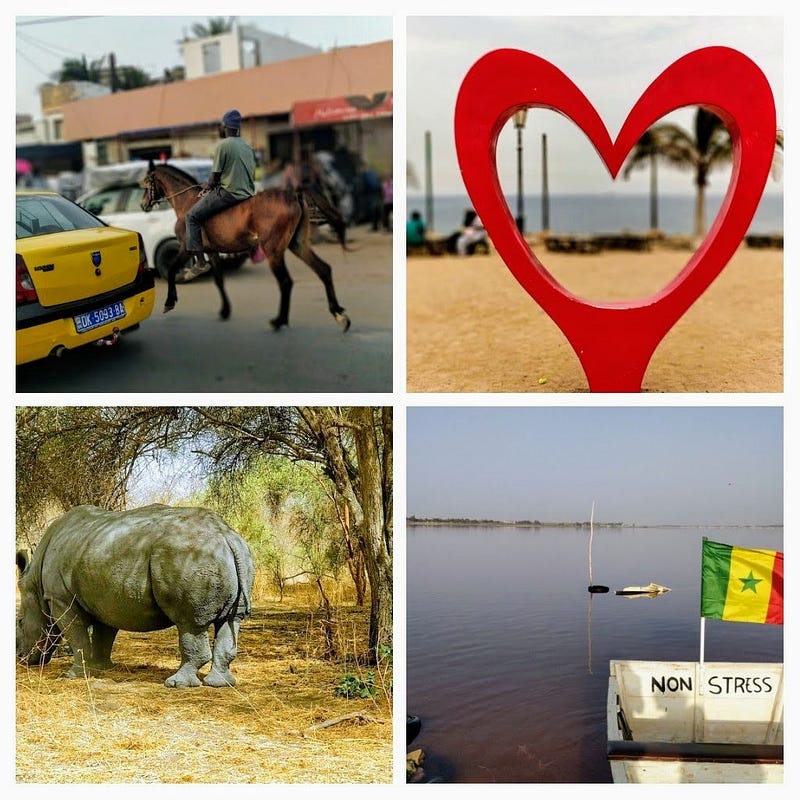
I also missed the opportunity to inspire young people in Senegal and show them another narrative.
Final Thoughts
That narrative aims not at destroying the “Western dream.” It seeks to inspire the Senegalese people and Africans to be the creators of “African Success” in this new digital era.
And I would like to thank Daouda Cissé, Ismaila Badji, Ousmane Gueye, and Barka Dia for allowing me to contribute and inspire.
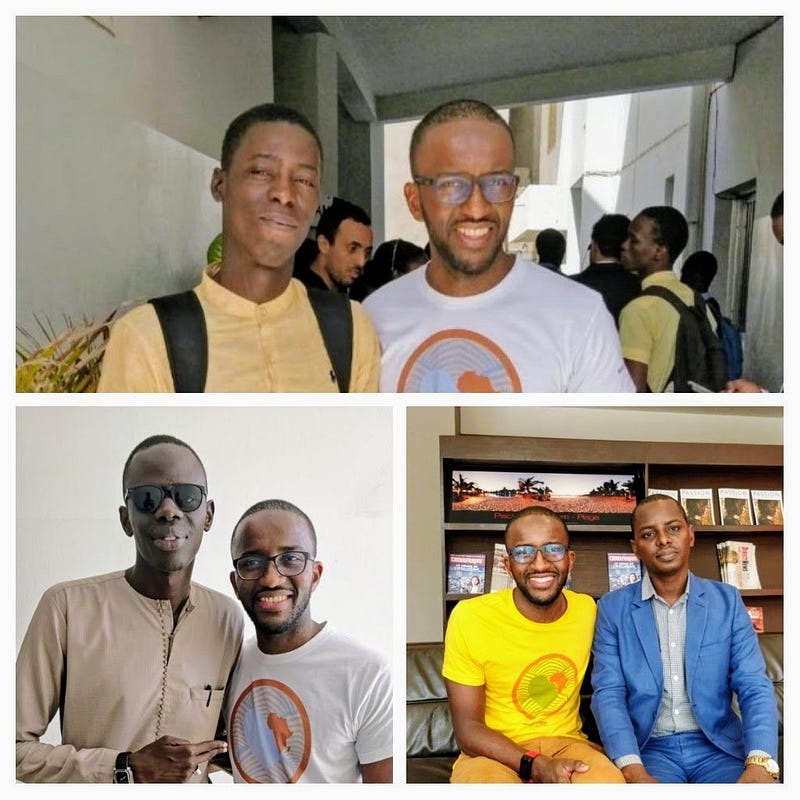
Top: Barka Dia, Bottom Left: Daouda Cissé, Bottom Right: Ousmane Gueye
I cannot wait to work with Saly Pouye, Bamba Fall, and his ASEMPA (Association SEnégalaise pour la Promotion des Métiers de l’Aéronautique) initiative to play our part in moving forward the African Aerospace industry, which has a lot to offer to the whole world.
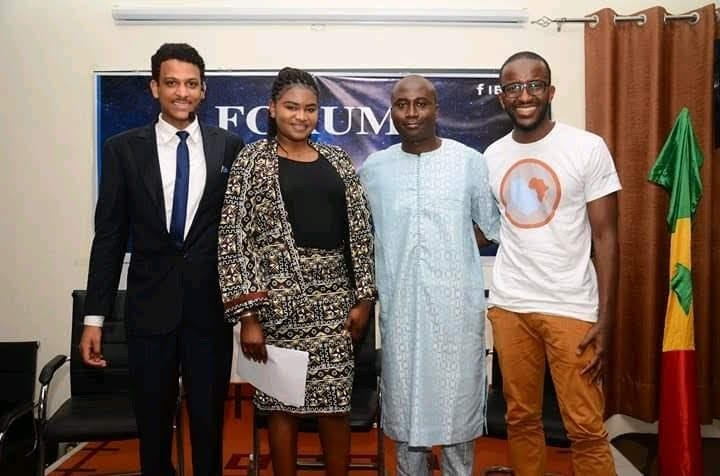
From Left to Right: Ismaila Badji, Saly Pouye, Bamba Fall (ASEPMA), and me.
From now on, I will not wait 12 years to return to Dakar, Senegal, to connect and contribute.
Because now more than ever, going back rimes with giving back for me.
Have you had a similar experience studying far away from your family?
Do you use going back as a giving-back opportunity?
Do you think I should share more stories like this one?
What is your DIR in life?
Leave a comment below.
If you find this article of value to you, please like it and share it within your sphere of influence.
You can read my previous article (Friendly Link):


