
What is Tower 22?
A Peek into America’s Vast Military Presence Around the World
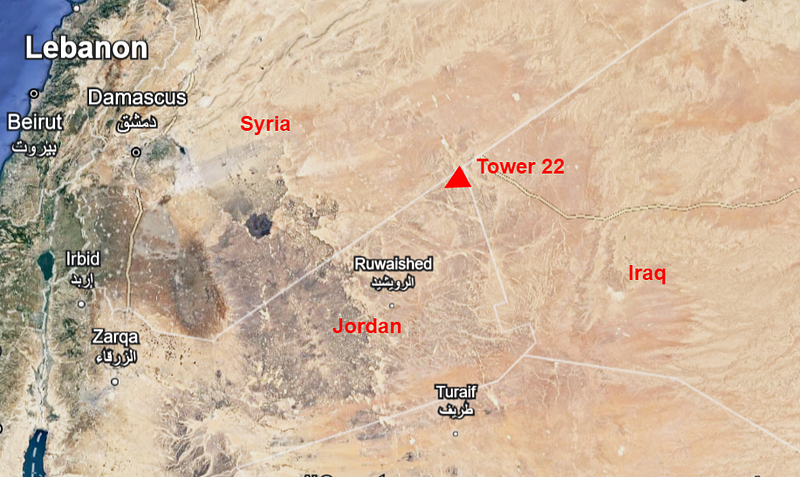
In the dry expanses of northeastern Jordan, where the stark, yet beautiful, desert landscape converges with the borders of Syria and Iraq, sits a little-discussed American military outpost called Tower 22.
This tiny remote base — recently thrust into the international spotlight following a deadly Iranian drone attack that claimed the lives of three American troops last weekend — embodies the complex tapestry of Middle Eastern geopolitics, American military strategy, and America’s far-reaching network of overseas military installations.
The US operates about 750 bases in at least 80 countries worldwide — the goal is to ensure global stability, respond quickly to crises, and keep conflict well away from American shores.
But what these bases really represent, especially when combined with the Navy’s eleven floating bases, (the supercarriers), is power projection.
It’s one of the reasons why I say that China won’t be able to challenge the US military any time soon; China only has one overseas military base — in Africa. Beyond their own borders, China simply doesn’t have the military infrastructure to assert its national will on other nations.
Some of America’s bases are massive, like Ramstein Air Base in Germany which covers over 5,100 acres and contains upwards of 50,000 US military personnel in the region.
But others, like Tower 22, are exceptionally small.
Situated near the demilitarized zone (DMZ) along the Jordan-Syria border, Tower 22 serves as a crucial lookout point and operational hub.
Originally a Jordanian border patrol site, the US took over after entering Syria in late 2015.
This is when the US gave it its distinctively American hexagon outpost design. Why hexagon? Hexagonal positions can create interlocking fields of fire, making it challenging for ground attackers to breach the perimeter.
Although the suicide drone didn’t care about the hexagonal shape. In this sense, Tower 22 is where the 20th Century just died.
America has just been introduced to modern war, where drones are cheap and plentiful.
If you’ve been reading my Medium content for a while, then you might remember when I said the US military hasn’t had to “look up” or worry about air threats in over 70 years. That has now changed.
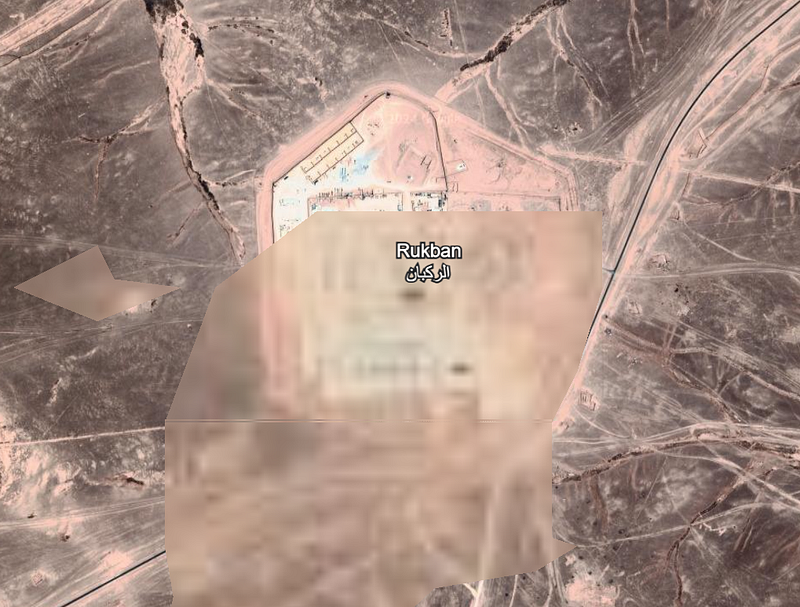
Approximately 350 US Army and Air Force personnel are deployed at this small installation; mostly engineering, aviation, logistics, and security units.
But Tower 22’s main function is to provide a pivotal vantage point for American forces to discreetly enter and exit Syria.
There is actually a much larger US military base at al-Tanf in Syria… a mere 20 kilometers to the north.
Al-Tanf sits along a highway that not only serves as a vital artery for the Islamic State but also acts as a potential route for Iranian arms shipments.
So, if the US has military sites in Iraq and Syria, why maintain a base in Jordan?
Jordan’s geopolitical significance to the United States cannot be overstated. Sharing borders with Iraq, Israel, the West Bank, Saudi Arabia, and Syria, Jordan is a linchpin in US military operations in the region.
The presence of approximately 3,000 American troops across Jordan puts an exclamation point on this fact.
The United States has provided military aid to Jordan since 1957, and total bilateral aid to Jordan through 2020 came to about $26.4 billion.
That’s not counting the $300 million per year in Foreign Military Financing (FMF) to support the Jordanian Armed Forces (JAF).
However, this partnership is not without its challenges. The US presence in Jordan walks a tightrope amid a population that has demonstrated against Israel’s actions in Gaza, reflecting broader regional tensions and local discontent.
The Jordanian land around Tower 22, known as Rukban, once housed a sprawling refugee camp on the Syrian side.
At its peak, during the rise of the Islamic State’s caliphate in 2014, it was home to over 100,000 people.
Jordan’s concerns about extremist infiltration following a 2016 car bomb attack at the camp led to stringent border controls, contributing to the camp’s gradual decline to its current population.
The recent drone attack on Tower 22 resulted in the deaths of three US Army reserve soldiers from an engineering brigade based in Ft. Moore, Georgia.
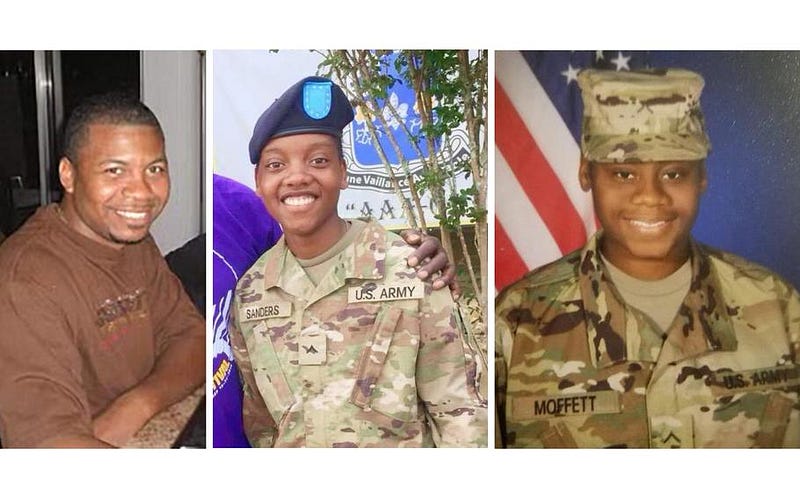
Understandably, this attack has heightened tensions in the Middle East even more… but as of this writing, Biden still hasn’t decided on a response.
Despite Iran’s denial of involvement, the attack has been attributed to the Iraqi Islamic Resistance (IIR), a coalition of Iranian-backed militias. The IIR’s actions are seen as a response to US support for Israel’s military actions in Gaza.
Iran learned in 1988 that a direct confrontation with the US would be disastrous.
In Operation Praying Mantis, the US Navy destroyed half of Iran’s navy in a single day — a claim so outlandish that Facebook fact-checkers classified it as fake news recently. But it’s true.
Ever since Praying Mantis, Iran has leaned on proxies like the IIR to accomplish military objectives in the region.
The fallout from the Tower 22 attack has been immediate and far-reaching. President Joe Biden’s vow to hold the attackers accountable, while trying to avoid getting dragged into yet another Middle Eastern war, shows the challenge that an increasingly unpopular Biden administration must face in an election year.
At the same time, the incident has provoked reactions from various international actors, including Jordan, who initially denied the base’s existence.
Former President Trumpty Dumpty, and other American political figures, have also weighed in.
Republican Lindsey Graham’s reaction was to strike Iran immediately.
I get it. I’m angry too. As a soldier, I take the deaths of fellow American servicemembers harder than most.
But rushing into war is foolish.
For the United States, balancing its strategic military objectives with the complexities of regional alliances and the internal dynamics of its partners like Jordan is a challenging endeavor.
This is an extremely dangerous time and I think we all need to slow down and take a breather here.
As for Tower 22 — well, it’s more than just a military outpost; it is a symbol of the intricate and often precarious balance of power, interests, and regional stability in the Middle East — and everywhere the US has a military presence.
As the situation evolves, the challenges posed by America’s many overseas military bases will continue to be a subject of interest and analysis in the years to come — especially as US global influence continues to decline.
Perhaps the most significant aspect of the Tower 22 attack is that America allowed itself to be attacked at all — given the vast US surveillance apparatus.
No doubt American military leaders are looking at the tactical failures that allowed the attack to happen — like confusing the enemy drone for an incoming friendly drone.
Lessons learned will, hopefully, be implemented at other high-risk installations.
No more soldiers need to die because of American hubris and dogma.
Слава Україні


