avatar'bumpyjonas…

Summary

The web content reflects on the centennial of T.S. Eliot's influential poem "The Wasteland," discussing its themes, impact, and varied interpretations by readers and scholars.

Abstract

"What Is 'The Wasteland' Really About?" ponders the enduring significance of T.S. Eliot's seminal poem as it marks its 100th year. The article acknowledges the poem's transformative effect on poetry, noting its widespread study in educational institutions and its comparison to Louis Armstrong's influence in music. It also highlights the poem's first line, which coincides with "National Poetry Month," suggesting a deliberate connection. Various interpretations of the poem are presented, ranging from it being a meditation on death and desire, an allegory for metaphor as myth, a reflection of the postwar era, to a representation of the death of the west and social collapse. The piece calls for engagement with the poem, inviting readers to clap for the article and contribute their interpretations in the comments section.

Opinions

  • "The poem is about death and desire," indicating a focus on existential themes.
  • It is seen as "an allegory for metaphor as myth," suggesting a deeper, layered meaning within the poem.
  • Some believe "The first section is our current moment," implying the poem's relevance to contemporary times.
  • The poem is viewed as "The Waste Land is the dejected lens of postwar," reflecting the disillusionment of the period.
  • Opinions include that it represents "The death of the west. Social collapse," pointing to a critique of cultural and societal decay.
  • Andrew Ross interprets it as "its metaphor of bankruptcy and the bankrupcy of the author," alluding to personal and societal insolvency.
  • Peter Egri sees it as embodying "a kind of finality which is about modern civilization itself…," indicating a broader commentary on the state of humanity.

What Is “The Wasteland” Really About?

T.S. Eliot’s classic poem turns 100 this year and I still wonder
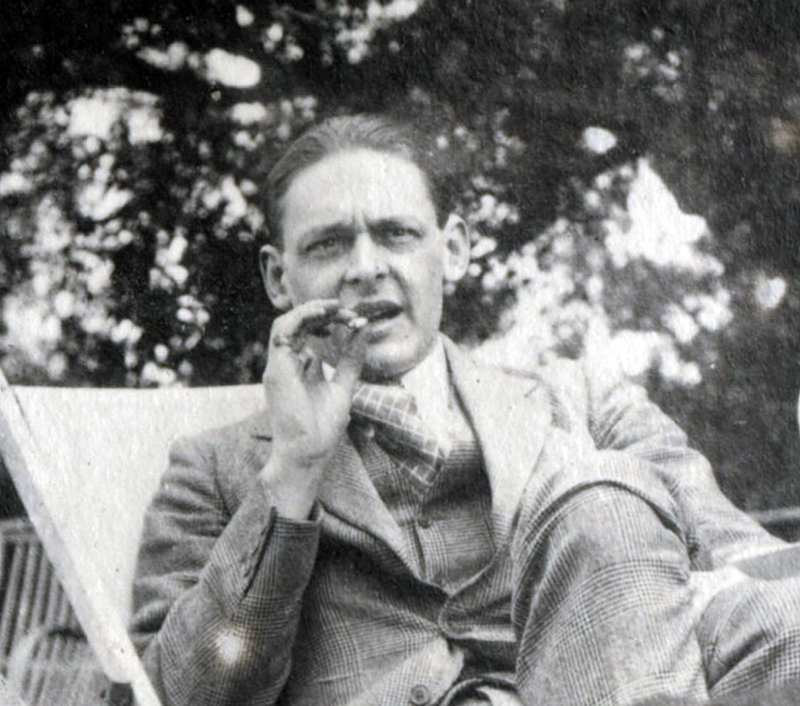
T.S. Eliot, Photo by Lady Ottoline Morrell, 1923 — Public Domain (PD — Art)

One hundred years ago, a man named Thomas Stearns Eliot was hard at work on his masterwork. He was writing “The Wasteland.

Originally born in St. Louis, Missouri, Eliot was living in England when he wrote the work of art that changed poetry forever and/or ruined it (depending upon who you ask).

“The Wasteland,” the poem, is well known these days. High schools, colleges, graduate programs, all teach “The Wasteland” and celebrate the author, T.S. Eliot like he is the Louis Armstrong of poetry.

“April,” the first line of the poem, is the month that is “National Poetry Month” and a few poets I know say that is no accident. It is because of “The Wasteland.”

I recently checked in with some random people, who have read the poem, asked them what is the poem about, and here are their responses, some anonymously.

“The poem is about death and desire.”

“It’s an allegory for metaphor as myth.”

“The first section is our current moment.”

“The Waste Land is the dejected lens of postwar.”

“The death of the west. Social collapse.”

“…its metaphor of bankruptcy and the bankrupcy of the author.” (Andrew Ross)

“a kind of finality which is about modern civilization itself…” (Peter Egri)

Prompt — That’s enough to digest. Give the piece 50 Claps please! And post more replies in the reply/comment section

Or, post a famous work of art of your own, and ask some for meaning? Tag me if you do. Lucy Dan 蛋小姐 (she/her/她) KSHernandez Berl’s Poetry Shop Haiku Poetry Electric Literature Medium Creators Medium Staff Kelsey Ogbewe L.A. Justice Obinna Morton ILLUMINATION ILLUMINATION-Curator GEN MAG An Injustice! Voices VONA: An Arts Forum

Alec Guiness reads The Wasteland by T.S. Eliot.

Art
Poetry
Writing
English
Life
Recommended from ReadMedium