
GUIDE TO CHILE
What Is the Money in Chile?
6 things I learned about their money from traveling to Chile four times.
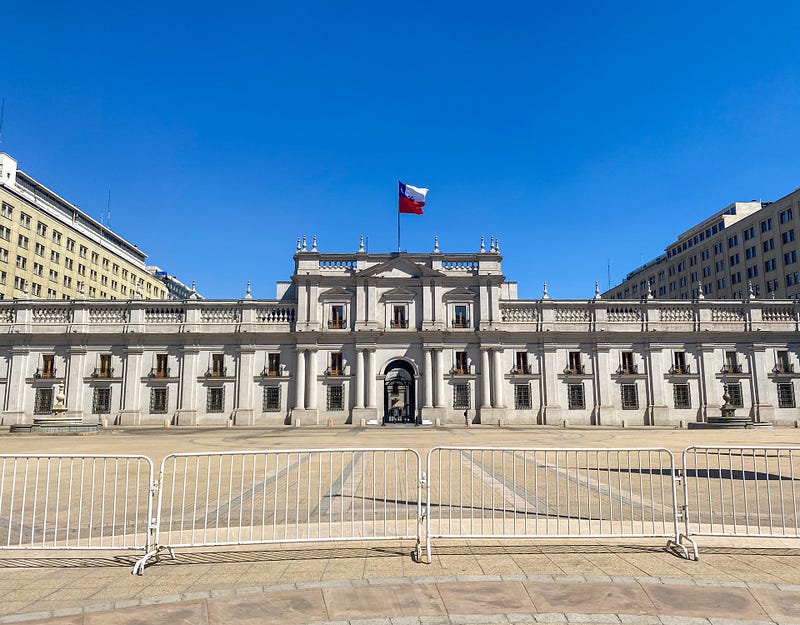
Gambling in the streets of Santiago
One time when Hugo and I were in Santiago, we saw small crowds of people gathered throughout the street. Curious, we walked up to one of the crowds.
A young woman was playing a game on a makeshift cardboard box table and people were placing bets. Her movements were practiced and with every round, she dolled out money to the winners and added bills to her stack from the losers.
I was fascinated by this little gambling station and although we didn’t put any money down, we stayed and watched. I stood in front of Hugo so he could keep an eye on my pockets and backpack just in case there was an accomplice wandering the crowds looking for easy targets to pickpocket.
Suddenly, I heard a whistle and the young woman got up, took her money and walked quickly away while the crowd that had surrounded her dispersed.
“What was that about?” I asked Hugo.
“They probably have someone watching out for Carabineros. It’s not legal what they’re doing,” he replied.
It was an interesting cultural moment that stayed with me. In Canada, so few people carry cash in their pockets that they likely wouldn’t even have money to put down on an impromptu gambling table.
But Chile isn’t Canada. And if you’re from a similar country to my own, here are six things I’ve learned about money in Chile from the four times I’ve traveled there so far that can help you:
#1 — The currency in Chile
Their national currency has been the Chilean peso since 1817 (except for when it was briefly replaced by the escudo between 1960–1975) and the code is CLP. You can use the Chilean peso only within the country so you’ll want to make sure you either use up all your money or exchange it for another currency before you leave the country.
#2 — 3 reasons to have a small amount of cash in Chile
First, Chile still largely operates by cash so it will come in handy if you want to buy souvenirs from locals or stop at a food market, especially if you travel off the beaten path. You never know when a craving for a big hunk of goat cheese will hit you as you’re driving through a small country community in the mountains and you don’t want to be stuck without cash.
Second, negotiating prices is part of Chilean culture and if you pay with cash you have a higher chance of successfully haggling for a better price.
Third, carrying a small amount of cash will give you more options for everything from tours to hostels to souvenirs to restaurants. Especially if you visit small, local towns as you won’t always be able to use your credit card.
#3 — What $1 USD is to CLP
Chile has one of the most stable economies in South America but since 2020, they’ve felt the effects of the global financial crisis. The value of the peso, especially during June and the first half of July in 2022, is the lowest I’ve seen it since I first traveled there in 2016.
That’s good news for tourists as you’ll get a higher exchange rate. In mid-July, it was exchanging as high as $1 USD for 1,050 CLP. The value of the CLP is rising again (which is good for Chile) and is currently exchanging at $1 USD for around 890 CLP.
Of course, if you went to Chile today, you wouldn’t actually receive 890 CLP as according to Investopedia you’ll be charged anywhere from a 3–5% fee for exchanging your money.
And if you’re from Canada, in the past a more typical exchange rate has been $1 CAD = 500 CLP during the summer months but in January 2022 it was as high as $1 CAD = 660 CLP.
#4 — The best place to exchange money in Chile
This is the big question — where is the best place to exchange your hard-earned dollars so you can get the best rate?
The best place to get Chilean pesos is by withdrawing what you need from an ATM. Chile has a lot of ATMs in convenient locations, especially in tourist areas.
If for some reason (although I don’t recommend this) you need to exchange a larger amount of cash, one of the best places is in Santiago near La Plaza de Armas on a street called Augustinas. There are a lot of businesses on that street that will exchange your money for Chilean pesos. Just look for the place that will offer you the best deal as they post their rates where you can easily see them and compare.
The reason I don’t recommend exchanging a big wad of cash in Santiago is that it’s not the safest city. And you’ll make yourself more vulnerable to pickpockets or being robbed by carrying a lot of money.
One place you should definitely not exchange your money is the airport (which you likely already know if you travel any amount). If you’re just starting to travel, keep in mind that the airport is one of the worst places for exchanging money because they’ll charge you higher fees.
#5 — How much cash to carry on you
I recommend having only a small amount of cash to get yourself to your next destination and maybe a little extra just in case. It’s not wise to have a large amount as there are pickpockets in some areas of Chile and you will obviously stand out as a tourist.
Remember that you can always withdraw more money as needed from an ATM. And if you’re not comfortable carrying cash because you’re worried about getting pickpocketed, simply pay as much as you can with a credit card and that will cover most things like plane tickets, hotels, and tours if you book online.
#6 — 4 places you will need cash in Chile
Here are 4 things you will need cash for:
- Taking collectivos (shared taxi, which is cheaper than private ones)
- Taking a micro (local bus or public transit)
- Eating at local restaurants
- Buying food from local market stands
Keep in mind that smaller, local businesses will not always accept credit cards, so if you want to have more of a local experience, you will need some cash on hand.
Carry some cash — just not too much
Regardless of the kind of trip you’re planning, you don’t want to rely solely on your credit card. You never know when you might end up somewhere that doesn’t accept credit cards and you don’t want to be stuck. So always make sure you have some Chilean pesos on you.
I’d love to hear from you! What are your questions about traveling in Chile?
This article is part of a series of 30 blog posts about traveling to Chile. If you’d like to read more from this series, visit Guide To Chile.
Hannah Visser Pavez is a writer, blogger, and digital marketer. She splits her time between Canada and Chile with her Chilean husband. She’s also working on a children’s fantasy series that she hopes to finish before her nieces and nephews grow up.


