
What is the Mandela Effect
And 18 Examples
What is the Mandela Effect
The Mandela Effect is an unexplained phenomenon in which people worldwide seem to have forgotten key aspects of history — or a large number of people remember something incorrectly, despite it being verified as true.
The Mandela Effect, the subject of many conspiracy theories, is the belief that various aspects of reality are somehow different from how they really are.
There are dozens of examples of the Mandela effect that have been reported by people from all over the world.
The Origin of the Mandela Effect?
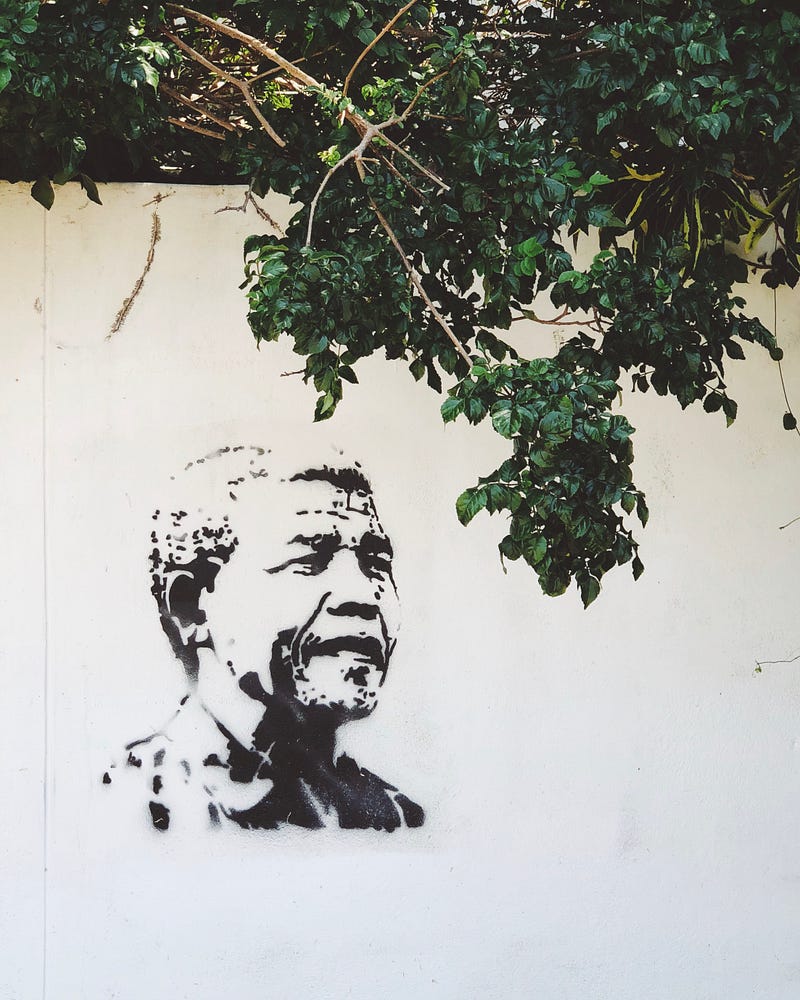
Countless people remember Nelson Mandela, a political, social, and philanthropic activist, dying in prison in the 1980s. However, the truth is that he went on to live until December 5, 2013. How could there be a collective memory of something that never happened?
Fiona Broom, in 2010, coined the phrase the Mandela Effect describing her experiences while discovering others who had false memories similar to hers. A paranormal researcher, she engaged in further exploration of the Mandela Effect.
Some people suggest that it’s a psychological issue called a false memory.
Others think there are alternate realities and multiverses in which there are differences in how life plays itself out.
There are those who believe that the government has discovered how to bend the fabric of space and time, the consequence of which is altered reality.
If you believe in time travel, you wouldn’t be alone because that’s yet another explanation for how masses of people could swear by a thing even though there’s hard evidence against it.
What is False Memory?
A false memory is where a person recalls something that didn’t happen. False memories are the result of suggestion, misinformation, or faulty inference. False memories can also be caused by external factors such as age and other life experiences, which may lead to incorrect recollections of prior events.
Sometimes a false memory is created when a person recalls something that didn’t happen. This may be the result of suggestions, misinformation, or faulty inference.
False memories can also be caused by external factors such as age and other life experiences, which may lead to incorrect recollections of prior events.
False memory might be a suitable answer if we were talking about one person’s memory. But how can a false memory apply to thousands of people?
As a result of the number of people who have this memory, some believe that there’s a glitch in reality, and we’re living in an altered version of it.
What are Alternate Realities and Multiverses?
The concept of alternate realities and multiverses suggests that there may be various versions of reality, each with its own set of events. This idea is based on the theory that every decision we make creates a new alternate reality.
Some people have the idea that the Mandela Effect is proof of alternate realities and multiverses. If this is true, it would mean that there are many different universes in which different things have happened.
This could also explain why people have different memories of certain events.
Is it possible we could be slipping, unknowingly, through realities?
Government Bending Space and Time
The theory that the government has discovered how to bend the fabric of space and time is another possible explanation for the Mandela Effect. If this is true, it would mean that reality is not fixed but can be changed by those in power.
This theory suggests that the government has been using this knowledge to manipulate the general population for years.
Time Travel
The idea of time travel is one that has been explored in science fiction for many years. If time travel were possible, it would mean that we could go back in time and change the course of history.
Some people think that the Mandela Effect is evidence of time travel. They suggest that the reason so many people remember Nelson Mandela dying in prison is that he did die in prison, but someone traveled back in time to change the course of history.
Examples of The Mandela Effect
Nelson Mandela: He was thought to have died in prison in the 1980s but didn’t really. Instead, he lived to the ripe old age of 95 when he passed away in 2013 from a respiratory infection.
Star Wars: The famous line “Luke, I am your father” is actually, “No, I am your father.
C-3PO: Also, in star wars, many people don’t remember that one of the beloved characters, C-3PO, had a silver leg in the movies.
Berenstain Bears: Many people distinctly remember the name being spelled Berenstein, but in reality, it’s spelled Berenstain.
Curious George: Did Curious George have a tail? Some people remember him hanging upsidedown from a tree branch using his tail. But historically, he never had one at all.
Pikachu: Speaking of tails, didn’t Pikachu’s used to have a black tip? Apparently not. According to experts, it’s always just been yellow.
Snow White: The Queen is remembered to have said, “Mirror, Mirror, on the wall…” Nope. Today’s version of reality states that it’s “Magic mirror on the wall.”
Looney Tunes: Who didn’t love those Saturday morning cartoons, right? Lots of us remember it being Looney Toons, with double o’s in toons. Instead, it was always spelled correctly as tunes.
Sex And the City: You wouldn’t be alone if you remembered this as Sex In the City. But the in was always an and.
Shazaam: Sinbad was the star of a movie about a genie called Shazaam. According to Sinbad and other experts, that movie never existed.
KitKat: To some who grew up loving the candy bar with a cookie crunch, it was known as Kit-Kat, with the hyphen. The chocolate company denies that the hyphen was ever part of its logo. It’s always been Kit Kat.
Oscar Meyer: If you ever sang the theme song to the Oscar Meyer commercial, then you probably thought that Meyer was spelled with an a, like Mayer. Not true. The jingle has apparently always been Meyer.
Jif Peanut Butter: There were times when thousands of people remembered Jif Peanut Butter as being Jiffy. Apparently, that’s not the case. It’s always been a single syllable: Jif.
Froot Loops: Some people grew up thinking that the word fruit was spelled correctly in the favorite fruity cereal Froot Loops. Kellogg says it’s been spelling “froot” this way the whole time.
Febreze: The household smell-good spray used to, according to some, be spelled Febreeze, with two e’s in the second syllable. According to the company, it’s always only had one e and is spelled Febreze.
Skechers: Somewhere along the way, the t in Sketchers shoes disappeared. Apparently, it’s never been there.
Monopoly: Did the mascot on the Monopoly game have a monocle? Some people remember that it did, but that’s a false memory, too. The monocle was never a part of the character’s costume.
Fruit of the Loom: Today’s version of the Fruit of the Loom logo shows an apple, grapes, and greenery against a white background. Many of us remember that fruit is tucked into a cornucopia. that cornucopia is a false memory.
Conclusion
The Mandela Effect is a mystery that has yet to be solved. It’s a strange phenomenon that has been occurring for years. It often seems like people remember things differently than what they actually are. Researchers have proposed many explanations, but there still isn’t one answer as to why this happens and how it could possibly be fixed or reversed. With so many inconsistencies in people’s memories, it’s hard to know what to believe. You’ll just have to check in with your own memories to see how they align with other examples of the Mandella Effect. What do you remember?
Another writer worth reading is Lady Dr. Gabriella Korosi