
What Is The ‘Asian Squat’ and Why Can’t Caucasians Do It?
The ultimate guide to getting your body in shape.
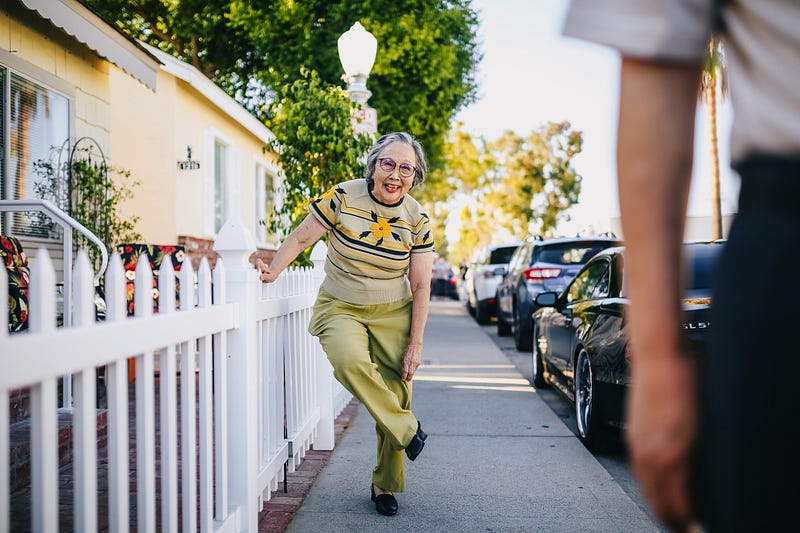
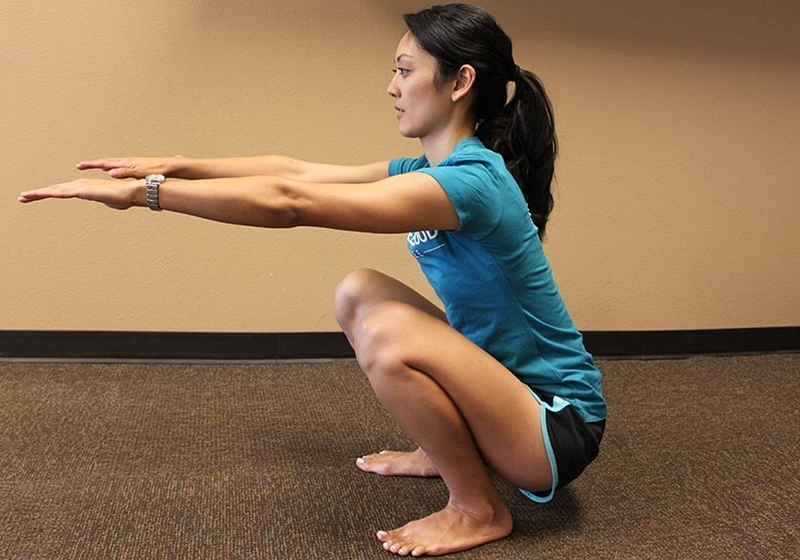
The Asian squat is a position where your butt is all the way down towards the ground, knees are bent, hips are flexed, and heels are planted. For us westerners, it’s best know as the ‘deep squat’. It’s a fantastic pose for overall health, but one that’s drastically more foreign to those living in chair-dominant societies.
The reason why this pose has been labeled the ‘Asian squat’ is that you’ll find people all over the continent resting in this position for hours, regardless of age or occupation. I had the privilege of living in South Korea for over a year, and I kid you not, todlers and seniors had the same level of hip mobility. Whether it’s people smoking in alleyways or working in a market, the Asian squat is real and something that many westerners are missing out on.
Why is this squat so important for health, however? Do some people groups have anatomical and biomechanical advantages over others? Finally, what does it take to master this position for those who didn’t grow up doing it?
Well, without further ado, it’s time to answer your burning questions and get to the bottom of the deep squat…literally.
Mastering the Deep Asian Squat in 3 Simple Steps
Before going any further, I want to make it clear that the deep squat isn’t a pre-requiste for being a healthy, functional human. I recognize that there are certain populations, whether due to injuries, conditions, or aging, won’t be able to achieve this position…and that’s okay. You are no lesser than the rest of us, and I hope the warm-up exercises and deep squat regression tips can help you get the most out of your current mobility and fitness.
If you’re curious why the Asian squat is so much more common in the East, it really comes to one thing: lifestyle. While there are arguments that certain asian populations’ anatomical structure (shorter femur length on average, variances in bone composition, etc…) can come at an advantage, these differences are minimal and hardly worth being mentioned compared to the main drivers of culture and lifestyle.
Most Asians perform deep squats multiple a day while performing their activities of daily life. Whether it’s traditional restaurants, bathrooms, or religious practices, many aspects of daily life require strong lowerbody mobility and endurance. While most of us westerners live in a constant state of residing on the chair or couch, other populations are challenging and utilizing the body as it was designed to work.
You’re not genetically blocked from being able to do the Asian squat. You just need to incorporate it more into your lifestyle.
So if you can’t Asian squat, what are you missing out on? Well, quite a lot actually. This position requires you to have a healthy amount of hamtrings, adductor, and glute flexibility, good ankle mobility, strong shins and hip flexors, and spinal mobility/control to help balance and position yourself comfortably.
In other words, this is about as whole-body of a movement as there is out there, testing key areas of your musculoskeletal health such as endurance, stability, coordination, strength, and flexibility. It’ll also give you a chance to rest your body without the need for a chair (*a drastically underrated benefit*). Once you master this position, you’ll become far more functional and resistant to injuries, especially as you age.
Now without any more background, it’s time to dive into some practical tips so you too can achieve this illusive movement and brag about it to your friends. Below I’ve dropped 3 warm-up exercises and 3 deep squat variations that you can build on over time. I’ve prescribed this routine to many of my clients, and all of them have taken massive leaps in their lower body health in a matter of weeks. If you stay consistent with this training, you too will be comfortably resting in the Asian squat in no time!
Let’s dive into it.
W/U 1) Ankle Dorsiflexion Drill
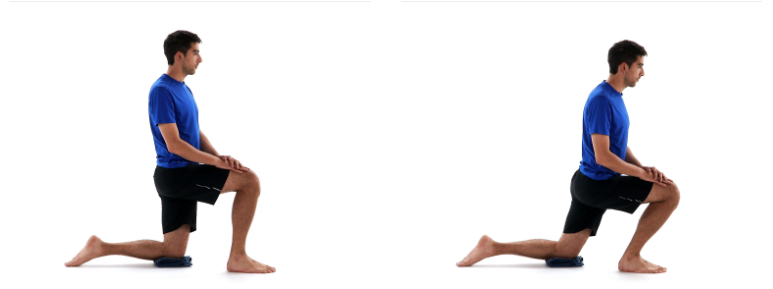
Application: 10–12 reps/side
Cues: Get into a comfy, passive lunge position using a pillow or towel. To go through a rep, slowly lean to bring the knee forward while keeping the front ankle completely on the floor. After a 2-second hold at the end range, reset and complete another rep. This is one of the simplest and most accessible ways to restore range of motion at the ankle.
W/U 2) Windshield Wipers
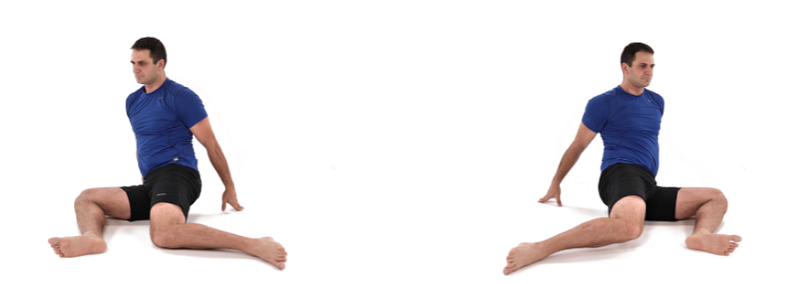
Application: 5–8 reps/side
Cues: Staying upright through the trunk, slowly fan the legs over and back. Ensure that the knees stay at approximately 90d of flexion. Use your hands for support as needed. The goal here is to keep the heels pivoting on the floor so that you’re truly isolating at the hips.
This exercise is especially great for those who struggle with hip internal rotation (bringing the leg in towards the midline). Always remember to breathe deep and take your time with each rep!
W/U 3) Superman Lunge
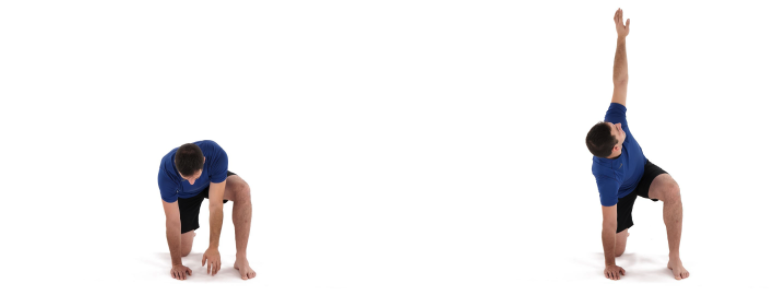
Application: 5–8 reps/side
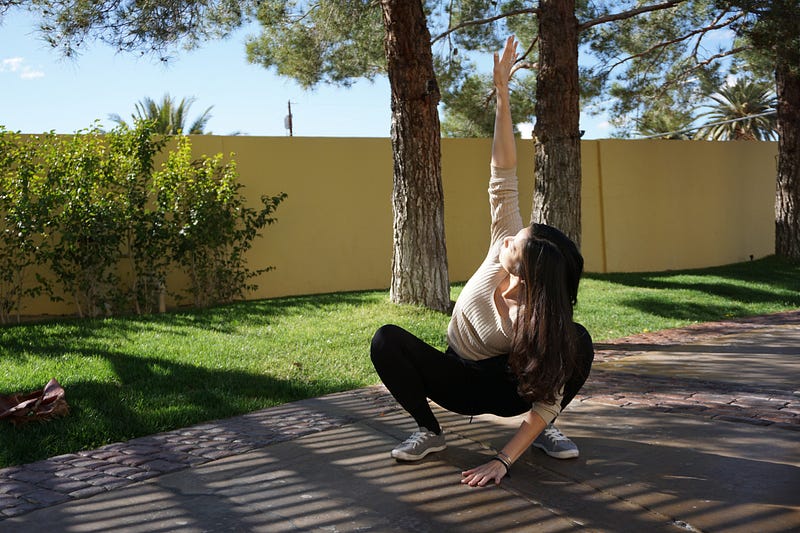
Cues: Start in a lunge position with the back knee rested. Next, plant your opposite hand (to lead leg) on the floor beside your foot. On an exhale, rotate your arm up towards the sky while tracking along with your head. Go until your maximum range of motion and then slowly return to the starting position.
If this is feeling very challenging, consider putting a block under your planted hand to lower the mobility requirements throughout the hip and spine. Feel free to do this on a padded mat if you struggle with knee or wrist pain.
1) Assisted Deep Squat
Application: 3–5 x 20 seconds
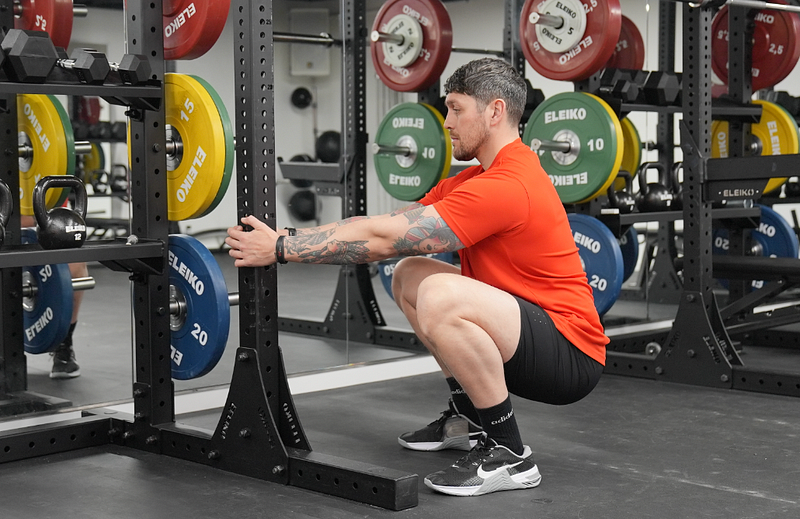
Cues: Now we’re getting into Asian squat-specific work. For the first step, find a sturdy handle or surface you can grab ahold of. You can also use TRX handles or olympic rings at a gym. Next, drop into a deep squat, keeping the heels firmly planted on the floor while lightly holding onto the object in front of you.
The goal here is to have most of the load remaining in the legs while receiving a tiny bit of help from the support. From here, shift your weight slightly side-to-side to get into all the tight spots within the hip. Eventually we’ll focus on taking away this ‘safety net’ and transitioning to a full deep squat, but this is a good (and necessary) start.
2) Counterweight Deep Squat
Application: 3–5 x 20 seconds
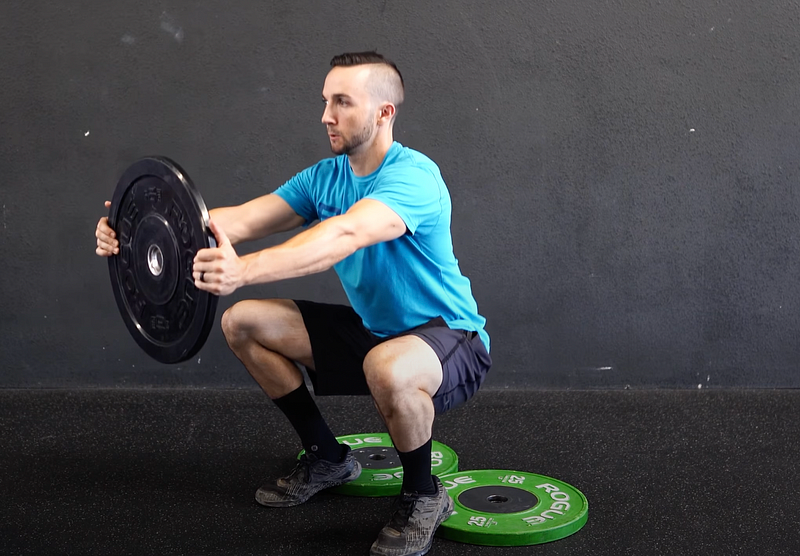
Cues: This is a subtle progression from the first squat that’ll open the door to more hip mobility while still having some level of support. For this one, you’ll need a light counterweight to carry in front of you, along with some kind of book or riser to place under the heels. As mentioned above, your ankle mobility is commonly the most limiting factor for getting into a deep squat position, but having these two sources of biomechanical support will solve this problem nicely.
The goal here is to start with a taller platform and gradually lower it until you’re able to squat comfortably with just the counterweight. While this may take several weeks or even months to master, it’s a long game worth being patient for as your functionality and mobility will be massively upgraded.
3) The Asian Squat
Application: 3–5 x 20 seconds working up to 2–5 minute holds
Cues: Congratulations! You’ve made it to the full position. You can now do the proper ‘Asian Squat’! For your last mission, increase the length of each rep to enhance your active mobility and endurance until you can sit for 5 minutes at a time and beyond. Take things slow and progress by 5–10 seconds at a time. As always, listen to your body and never push through any pain or unusual stiffness. Good luck!
In Closing,
You’re not genetically blocked from doing the Asian squat, you just haven’t shaped your lifestyle to let you achieve it. It’s high time we follow in the footsteps of our neighbours on the other side of the planet and begin challenging the body more in everday life. With a few simple tweaks to your movement patterns, you too can enjoy all of the wellness benefits that come from being able to rest in the illustrious deep squat positon. Are you ready to get the last laugh with aging and optimize your lower body health?
You got this.
-DavidLiira.Kin


