
What is StarLink broadband?
SpaceX is leveraging its experience in building rockets and spacecraft to deploy the world’s most advanced broadband internet system.

Starlink broadband is a satellite constellation being constructed by SpaceX to provide satellite internet access. The constellation will consist of thousands of mass-produced small satellites in low Earth orbit (LEO), working in combination with ground transceivers.
SpaceX CEO Elon Musk has a Starlink terminal at his house and he used it to send a tweet early on Oct 22, 2019 “Sending this tweet through space via Starlink satellite,” he tweeted to his 29 million followers. ”Whoa, it worked!!”.
Internet Speed
SpaceX’s satellite internet system is designed to offer blazing fast speeds up to 1 gigabit per second. Within the next few years, Starlink expects to offer satellite internet to the entire planet, including remote locations where internet isn’t currently available.
Cost
Musk previously said the cost of user terminals will be $100–$300 — and we have reason to believe Starlink satellite internet will cost somewhere around $80 a month.
HIGH SPEED INTERNET ACCESS ACROSS THE GLOBE
With performance that far surpasses that of traditional satellite internet, and a global network unbounded by ground infrastructure limitations, Starlink will deliver high speed broadband internet to locations where access has been unreliable, expensive, or completely unavailable.
Starlink is targeting service in the Northern U.S. and Canada in 2020, rapidly expanding to near global coverage of the populated world by 2021.
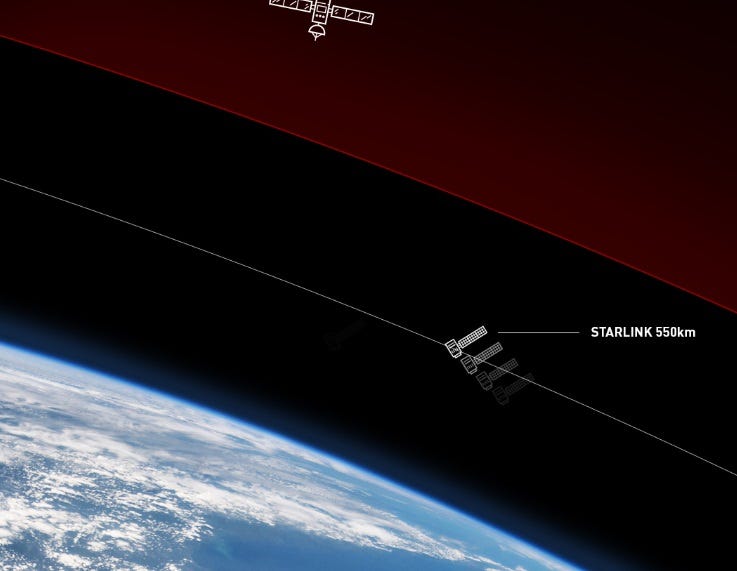
KEEPING THE SPACE CLEAN
Starlink is on the leading edge of on-orbit debris mitigation, meeting or exceeding all regulatory and industry standards.
At end of life, the satellites will utilize their on-board propulsion system to de-orbit over the course of a few months. In the unlikely event the propulsion system becomes inoperable, the satellites will burn up in Earth’s atmosphere within 1–5 years.
SpaceX now has more than 400 flying routers in orbit, with plans to more than triple that number in the coming months. While it has the go-ahead to launch more than 12,000 satellites in the coming years. Musk said in a tweet that a “private beta” test of the service is about to begin, followed by a public beta for testers at northern latitudes.
LESS MASS, MORE COMPACT
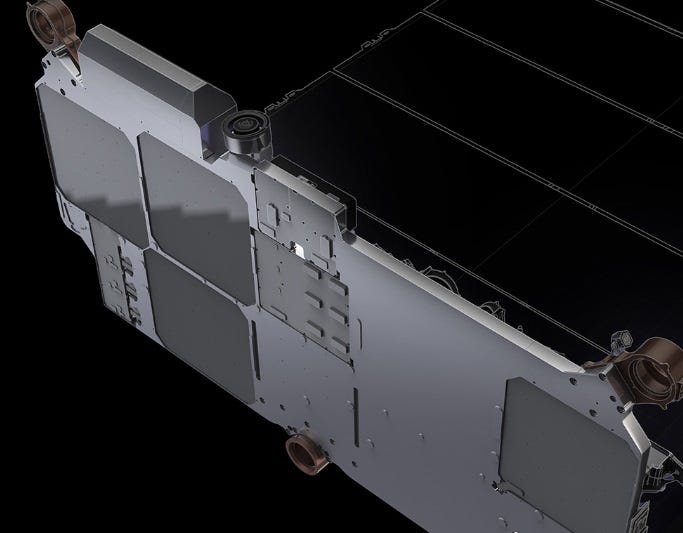
Each satellite weighs approximately 260kg and features a compact, flat-panel design that minimizes volume, allowing for a dense launch stack to take full advantage of the launch capabilities of SpaceX’s Falcon 9 rocket.
ANTENNAS
With 4 powerful antennas on each satellite, extreme amount of throughput can be placed and redirected in a short time, for an order of magnitude lower cost.
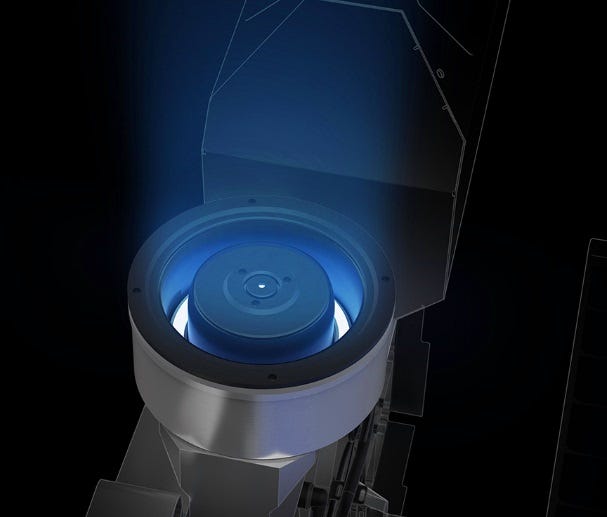
PROPULSION SYSTEMS
Starlink satellites are equipped with efficient ion thrusters powered by krypton that enable the satellites to orbit raise, maneuver in space, and deorbit at the end of their useful life. Starlink is the first krypton propelled spacecraft ever flown.
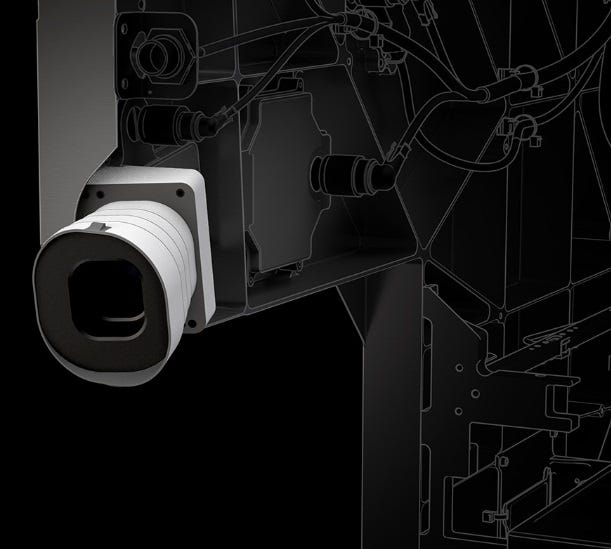
STARTRACKER
Custom-built in-house navigation sensors tells each satellite its attitude, which helps enable precision placement of broadband throughput.
AUTONOMOUS COLLISION AVOIDANCE
Starlink satellites utilize inputs from the Department of Defense’s debris tracking systems to autonomously perform maneuvers to avoid collisions with space debris and others spacecraft's. This capability reduces human error, allowing for a more reliable approach to collision avoidance.
What do you think about the Starlink Broadband? Let us know with a comment in the response section below.
As SpaceX has started asking people to provide their address for a better public testing in different regions, I believe that the Starlink Broadband is on the edge to be a big thing as it can provide less latency and real-time online gaming is also possible.


